
Studying at home can be comfortable, but it can also be difficult when there are many distractions around you. Your phone, television, family members, social media, and even a messy study table can make it harder to concentrate. In my experience, studying successfully at home is not only about spending more hours with books. It is more about developing good study habits and following them consistently.
The best study habits for students at home are simple and practical. You do not need an expensive study room or complicated system. A quiet place, a realistic schedule, proper breaks, and a focused mindset can make a big difference. In this article, I will share some study habits that students can use to improve concentration, manage time, remember information, and make studying at home easier.
Create a Dedicated Study Space
One of the first things I recommend is creating a dedicated study space. When you study in the same place regularly, your mind can gradually associate that place with learning and concentration.
Your study area does not have to be large. A small desk in a quiet corner of your room can be enough. Keep your books, notebooks, pens, and other important materials nearby so you do not waste time searching for them.
Try to keep the area clean and organized. A messy desk can make studying feel stressful before you even begin. Good lighting is also important because poor lighting can make reading uncomfortable.
Make a Realistic Study Schedule
A study schedule can help you decide what to study and when to study it. Without a plan, it is easy to spend too much time on one subject and ignore another.
I prefer making a simple schedule rather than creating a very complicated timetable. Write down the subjects you need to study and divide your available time between them.
For example, you might study mathematics in the morning, science in the afternoon, and English in the evening. Try to give more time to subjects that you find difficult.
The important thing is to make your schedule realistic. If you plan to study for ten hours every day but normally study for three hours, you may quickly lose motivation. Start with achievable goals and gradually increase your study time.
Set Small Study Goals
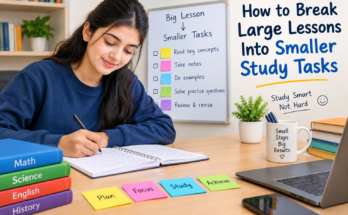
Large goals can sometimes feel overwhelming. Instead of telling yourself that you need to finish an entire textbook, divide your work into smaller goals.
For example, your goal could be to understand one chapter, complete twenty questions, or revise ten important definitions.
Small goals give you a clear direction. When you complete one goal, you also get a sense of progress. This can encourage you to continue studying.
Before starting a session, I recommend asking yourself one simple question: What exactly do I want to finish during this study session?
Keep Your Phone Away
For many students, the phone is one of the biggest distractions while studying at home. A quick look at a notification can easily turn into twenty or thirty minutes of scrolling.
If you do not need your phone for studying, keep it away from your desk. You can put it in another room or switch it to silent mode.
If you need your phone for educational videos, research, or a study application, turn off unnecessary notifications. Use the phone for the specific task and avoid opening social media during your study session.
Controlling phone use is one of the most effective study habits for students at home because it protects your attention.
Study in Focused Sessions
Studying for several hours without a break may sound productive, but it does not always mean you are learning effectively. Your concentration can decrease when you continue working for too long.
I find it more useful to study in focused sessions. You can study for around twenty five to fifty minutes and then take a short break.
During the break, stand up, drink some water, stretch, or walk around for a few minutes. Try not to spend the entire break scrolling through social media because it can make it difficult to return to your studies.
The goal is to give your brain enough time to recover before the next session.
Take Active Notes
Simply reading a textbook again and again is not always the best way to learn. Active note taking can help you understand information more clearly.
When studying a topic, write down the important points in your own words. You can create short summaries, question and answer notes, diagrams, or lists of key terms.
Do not try to copy every sentence from the textbook. Instead, focus on the information you really need to remember.
Writing information in your own words can also help you identify areas that you do not understand.
Use Active Recall
Active recall is another useful study technique. Instead of repeatedly reading your notes, close your book and try to remember what you have learned.
For example, after studying a chapter, ask yourself questions about the main ideas. Try to answer without looking at your notes.
If you cannot remember something, check your notes and try again.
This habit can make your study sessions more meaningful because you are actively testing your memory instead of simply looking at information.
Practice With Questions
Practice is especially important for subjects such as mathematics, science, accounting, and other subjects that require problem solving.
After learning a concept, try solving related questions. If you make a mistake, do not simply erase it and move on. Find out why you made the mistake.
I believe mistakes can be useful because they show you which areas need more attention. Keep a small record of difficult questions and review them later.
For exam preparation, practice questions can also help you become more familiar with the type of questions you may face.
Review Your Lessons Regularly
One common mistake students make is studying a topic once and forgetting about it until the exam. Regular revision is a better approach.
After learning something new, review it later. You can revise the same topic after a day, then after several days, and again after a longer period.
Regular review helps keep important information fresh in your memory.
You do not always need to spend a long time revising. Even a short review session can be useful when it is done consistently.
Avoid Multitasking
Many students believe they can study while watching television, chatting with friends, or checking social media. In reality, switching between activities can make it harder to maintain concentration.
When you study, try to focus on one important task at a time.
If you are studying history, focus on history. If you are solving mathematics questions, give your attention to mathematics.
Single tasking may feel slower at first, but it can help you complete your work with fewer mistakes.
Get Enough Sleep
Good study habits are not only about books and schedules. Sleep is also an important part of effective learning.
When you are tired, it can become difficult to concentrate, understand new information, and remember what you studied.
Instead of staying awake all night before an exam, try to maintain a regular sleep routine. Give yourself enough time to rest so you can approach your studies with a fresh mind.
A balanced routine can be more useful than sacrificing sleep for extra study hours.
Eat Well and Stay Hydrated
Your daily habits can also affect your study sessions. Keep water near your study desk and drink regularly.
Try to eat balanced meals and avoid relying heavily on sugary snacks or drinks while studying. If you feel hungry during a long study session, choose a simple snack that gives you steady energy.
Taking care of your basic needs can make it easier to stay comfortable and focused.
Remove Common Distractions
Home can have many distractions. Family conversations, television, household activities, games, and social media can interrupt your concentration.
If possible, tell your family when you need quiet study time. You can also use headphones if appropriate, although I recommend avoiding distracting music or videos.
Before beginning your session, remove anything that you know will interrupt you.
A few minutes of preparation can save a lot of wasted time later.

Reward Your Progress
Studying does not have to feel like punishment. Give yourself small rewards after completing important tasks.
For example, after finishing two study sessions, you might take a longer break, enjoy a favorite activity, or spend some time with friends.
The reward does not need to be expensive. The idea is simply to recognize your progress.
I believe students are more likely to stay consistent when they create a routine that includes both work and relaxation.
Stay Consistent
The most important habit is consistency. You do not need to have a perfect study day every day.
Some days you may complete everything on your schedule. Other days you may struggle to concentrate. That is normal.
Instead of giving up after one bad day, start again the next day.
Even one hour of focused studying every day can become valuable when you maintain the habit for a long period.
Final Thoughts
The best study habits for students at home are not complicated. Creating a dedicated study space, making a realistic study schedule, setting small goals, keeping your phone away, studying in focused sessions, taking active notes, using active recall, practicing questions, reviewing lessons, and getting enough sleep can all make studying more effective.
From my point of view, the biggest difference comes from consistency. You do not have to study perfectly. You simply need to build a routine that you can realistically follow.
If you are currently struggling with studying at home, start with just two or three habits. Once they become part of your daily routine, add more. Over time, these small changes can improve your concentration, organization, confidence, and overall approach to learning.
The goal is not to study all day. The goal is to study with purpose, understand what you are learning, and create habits that support your long term academic progress.