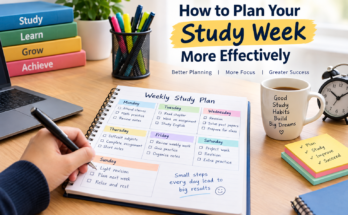

Managing time as a student can sometimes feel harder than studying itself. Between classes, homework, assignments, exams, family responsibilities, friends, and personal activities, it is easy to feel like there are not enough hours in the day. I have noticed that the real problem is often not a lack of time. It is the way we use the time we already have.
In my opinion, good time management does not mean studying all day or following a strict schedule every minute. It means knowing what needs to be done, deciding what matters most, and giving each task the right amount of attention. Once students develop a few simple habits, managing schoolwork can become much easier.
In this article, I will share some simple time management tips for students that can help with studying, homework, exams, and daily responsibilities.
Why Time Management Is Important for Students
Time management is an important skill because students usually have several responsibilities at the same time. A student may have an assignment due tomorrow, an exam next week, regular homework, and other activities to handle.
Without a plan, it is easy to delay important tasks until the last minute. This often creates stress and can affect the quality of the work.
Good time management helps students stay organized and focused. It can also create more free time because students spend less time wondering what they should do next.
I believe one of the biggest benefits of time management is peace of mind. When I know what I need to complete and when I plan to complete it, I feel much more in control of my day.
1. Make a Simple Daily Schedule
One of the easiest time management tips for students is to create a simple daily schedule.
You do not need an expensive planner or a complicated productivity system. A notebook, calendar, or phone can be enough.
At the beginning of the day, write down the important things you need to complete. Include classes, homework, study time, meals, rest, and other responsibilities.
For example, your schedule might include school in the morning, homework in the afternoon, a short break, study time in the evening, and some free time before bed.
The important thing is to make your schedule realistic. If you fill every minute with tasks, you may quickly become tired and stop following the plan.
2. Set Your Priorities
Not every task has the same level of importance. This is something students should understand when learning how to manage time effectively.
I like to separate tasks into three simple groups: important, less important, and optional.
For example, preparing for tomorrow’s exam may be more important than organizing old notes. Completing an assignment due tomorrow may be more urgent than watching a video online.
Start with the tasks that have the closest deadlines or the biggest impact on your studies.
When you know your priorities, you are less likely to waste your best study time on activities that can wait.
3. Break Large Tasks Into Smaller Tasks
Large assignments can sometimes feel overwhelming. When a task looks too big, students may keep delaying it.
A simple solution is to break the task into smaller steps.
For example, instead of writing “complete science project,” you can write:
Choose the topic.
Find useful information.
Create an outline.
Write the first section.
Complete the remaining sections.
Review the project.
This approach makes the work feel more manageable. Every small step gives you a sense of progress, which can make it easier to continue.
4. Avoid Procrastination
Procrastination is one of the biggest problems students face with time management. It is easy to say, “I will do it later,” especially when the task seems difficult.
The problem is that later often becomes tomorrow, and tomorrow can become the night before the deadline.
When I have a task that I do not feel like doing, I find it helpful to start with just a few minutes. Once I begin, the task usually feels easier.
You do not always need motivation before starting. Sometimes motivation comes after you start working.
5. Use Short Study Sessions
Studying for several hours without a break may sound productive, but it is not always the best approach.
Short and focused study sessions can be more useful. For example, you can study for around 25 to 45 minutes and then take a short break.
During the study session, try to focus only on the subject. Put your phone away, close unnecessary tabs, and avoid activities that can easily distract you.
During your break, stand up, drink some water, stretch, or simply relax for a few minutes.
The goal is not to study for the longest possible time. The goal is to make the time you spend studying useful.
6. Keep Your Phone Away While Studying
Smartphones are useful, but they can also become one of the biggest distractions for students.
A quick notification can turn into several minutes of scrolling through social media. Before you realize it, a large part of your study session is gone.
When I need to concentrate, I prefer keeping my phone away from my study area or using a focus mode.
You do not have to avoid your phone all day. The important thing is to control when you use it.
Giving yourself specific times for social media and entertainment can help you stay focused during study hours.
7. Do Not Forget About Breaks
Time management is not only about working. Rest is also an important part of a productive schedule.
If you study continuously without taking breaks, you may become mentally tired and lose concentration.
Short breaks can help your mind recover. You can walk around, have a snack, drink water, talk with your family, or simply relax.
I believe students should not feel guilty about taking breaks. The key is to keep breaks under control so they do not turn into hours of entertainment.
8. Use Your Free Time Wisely
Students often have small periods of free time during the day. These moments can be useful if they are used wisely.
For example, you might review vocabulary while traveling, read a few pages of a textbook during a free period, or organize your notes before going home.
You do not have to study during every free minute. However, using some small periods for simple tasks can reduce your workload later.
This is especially helpful when you have several subjects to manage.
9. Prepare for the Next Day
Another simple habit is preparing for the next day before going to bed.
Check your schedule and make sure you know what classes, assignments, or activities are coming up.
Pack your school bag, organize your books, prepare your clothes, and check your homework.
This may only take a few minutes, but it can make your morning much easier.
Starting the day without rushing can also help you feel more focused.
10. Learn to Say No
Students sometimes have difficulty saying no to friends, entertainment, or activities.
Of course, social life is important. However, if you agree to everything, you may not have enough time for your studies.
Learning to say no does not mean avoiding people. It means understanding your priorities.
If you have an important exam tomorrow, it may be better to finish studying before spending hours playing games or watching videos.
Good time management is partly about making choices.
11. Keep Your Study Area Organized
A messy study area can make studying more difficult. When books, papers, chargers, and other items are scattered everywhere, you may spend unnecessary time looking for things.
Try to keep your study space simple and organized.
Keep the books and materials you need nearby. Remove things that are not related to your current task.
A clean study environment can make it easier to begin working and stay focused.
12. Set Realistic Goals
Setting goals is an important part of student time management. However, your goals should be realistic.
Instead of saying, “I will study everything today,” choose a specific goal such as completing two chapters or practicing twenty questions.
Small goals are easier to measure. They also give you a clear idea of what success looks like.
When you complete one goal, move to the next one.
13. Plan Ahead for Exams
Exam preparation should not begin the night before the test.
One of the best study habits for students is to start preparing early.
If you know an exam is coming in two weeks, divide the material into smaller sections. Study one section at a time and leave enough time for revision.
This approach can reduce stress and help you remember information better.
Last minute studying may sometimes be necessary, but it should not become your regular strategy.
14. Get Enough Sleep
Sleep is sometimes ignored when students try to manage their time. However, staying awake all night to study can make the next day much harder.
A tired student may have difficulty concentrating, remembering information, or completing tasks efficiently.
For this reason, I believe sleep should be included in every student’s time management plan.
A balanced routine with study, rest, and sleep is usually more sustainable than constantly staying up late.
15. Review Your Schedule Every Week
Your schedule will not always work perfectly. Some days will be busy, unexpected things will happen, and some tasks will take longer than expected.
That is completely normal.
At the end of each week, take a few minutes to think about what worked and what did not.
Maybe you planned too much study time on one day. Maybe you spent too much time on your phone. Maybe you discovered that studying in the morning works better for you.
Use these observations to improve your schedule for the following week.

Common Time Management Mistakes Students Should Avoid
There are several common mistakes that can make time management harder.
One mistake is creating an unrealistic schedule. Another is trying to multitask constantly. Students may believe they can study while watching videos or checking social media, but these distractions can reduce concentration.
Another mistake is waiting for the perfect time to start. There may never be a perfect time. Starting with a small step is usually better than waiting.
Students should also avoid comparing their routines with other people. Everyone has different responsibilities, energy levels, learning styles, and schedules.
The best time management system is the one you can actually follow.
Final Thoughts
In my experience, simple time management tips for students can make a big difference without making life complicated. You do not need to study every hour or create a perfect schedule.
Start by planning your day, setting priorities, breaking large assignments into smaller steps, limiting distractions, taking regular breaks, and preparing ahead for exams.
Most importantly, give yourself time to build these habits. Good time management is a skill, and like any skill, it improves with practice.
If you can learn to control your time instead of constantly reacting to deadlines, you can become more organized, reduce unnecessary stress, and still have time for friends, hobbies, relaxation, and yourself.
The goal of time management is not to make every minute productive. The goal is to use your time in a way that helps you study effectively while also maintaining a balanced student life.