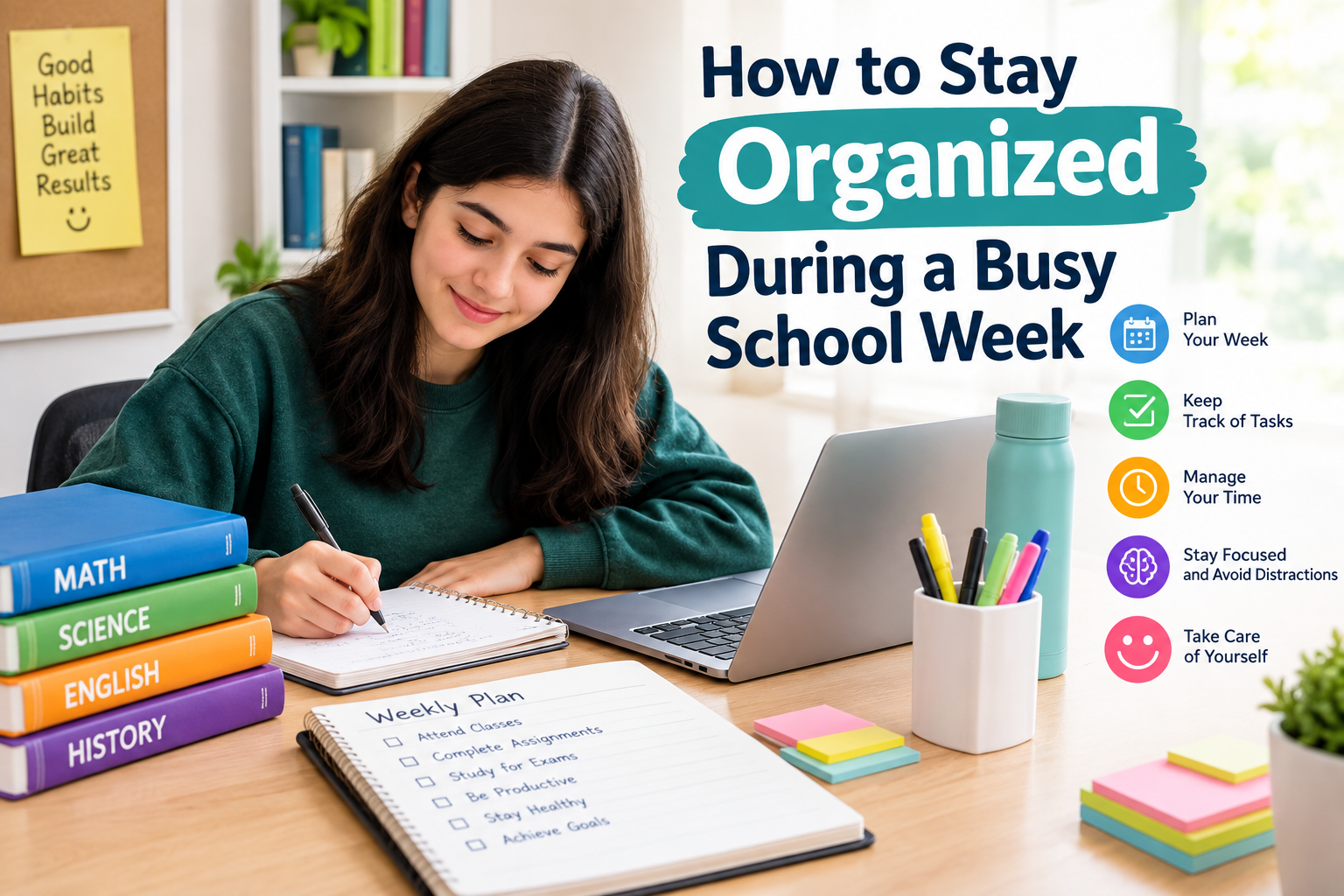
Staying organized during a busy school week can sometimes feel difficult. Between classes, homework, assignments, tests, projects, activities, and personal responsibilities, it is easy to feel like there is not enough time in the day. I believe that being organized is not about making a perfect schedule or studying all day. It is about knowing what needs to be done, when it needs to be done, and how to manage your time without creating unnecessary stress.
In my experience, a simple organization system can make a busy school week much easier to handle. You do not need expensive planners or complicated productivity apps. A notebook, calendar, to do list, and a few good habits can be enough to keep your school life under control.
Start Your Week With a Simple Plan
One of the easiest ways to stay organized during a busy school week is to plan your week before it becomes too busy. I recommend spending a few minutes at the beginning of the week looking at your classes, assignments, tests, projects, and other responsibilities.
Write everything down in one place. When tasks are only kept in your memory, it is much easier to forget something important. A weekly plan gives you a clear picture of what is coming.
For example, if you know that you have a science assignment due on Wednesday and a mathematics test on Friday, you can prepare for both instead of waiting until the last minute.
Your weekly plan does not need to be complicated. Simply write down your important tasks and deadlines, then decide when you will work on each one.
Make a Daily To Do List
A daily to do list is one of my favorite ways to stay organized. Instead of looking at a long list of everything you need to complete during the entire month, focus on what you can realistically do today.
At the beginning of each day, write down your most important school tasks. You can include homework, reading, revision, assignments, project work, and preparation for upcoming tests.
Try not to put twenty tasks on your list. A shorter list is easier to manage and gives you a better chance of completing your work.
For example, your daily to do list could include completing a mathematics worksheet, reading one chapter of a textbook, reviewing science notes, and preparing your school bag.
When you complete a task, mark it as finished. This simple action can make you feel motivated and show you how much progress you have made.
Prioritize Important School Tasks
Not every task has the same level of importance. One assignment may be due tomorrow while another is due next week. Learning how to prioritize school tasks can help you use your available time wisely.
I usually recommend looking at deadlines first. Tasks with closer deadlines should generally receive more attention. After that, consider the amount of time each task requires.
A large project due next week should not be completely ignored just because it is not due tomorrow. You can divide it into smaller steps and work on it gradually.
A useful approach is to identify three important tasks for each day. Once those tasks are completed, you can move on to smaller responsibilities.
Keep Your Study Materials Organized
Physical organization can also make studying easier. When books, notebooks, papers, and school supplies are scattered everywhere, finding something can waste valuable time.
Try to give every important item a specific place. Keep your notebooks together and organize papers according to subjects. You can also use folders for different classes.
Your study desk should be reasonably clean. It does not have to look perfect, but it should have enough space for you to work comfortably.
Digital organization matters too. Create separate folders on your computer for different subjects. Give your files clear names so you can find assignments quickly when you need them.
Use a Calendar for Important Dates
A calendar is another useful tool for staying organized during a busy school week. Add important dates such as tests, assignment deadlines, presentations, school events, and project due dates.
You can use a physical calendar, a school planner, or a digital calendar. The important thing is to use one system consistently.
I find that checking the calendar each evening can be helpful. It allows you to see what is coming the next day and prevents important deadlines from surprising you.
You can also look at the upcoming week every weekend. This gives you enough time to prepare for major assignments and tests.
Break Large Assignments Into Smaller Tasks
Large assignments often feel overwhelming because they seem like one huge task. Instead of trying to finish everything in one sitting, break the assignment into smaller steps.
For example, if you have to write a research paper, your steps could include choosing a topic, finding information, creating an outline, writing the first draft, checking the work, and preparing the final version.
This method makes the assignment feel more manageable. It also helps you make steady progress even when your school week is busy.
Starting early is particularly useful for large projects. Even fifteen or twenty minutes of progress can make a difference when repeated over several days.
Create a Realistic Study Schedule
A study schedule can help you decide when you will complete your schoolwork. However, your schedule should be realistic.
Do not fill every hour with studying. Students also need time for meals, sleep, family, hobbies, exercise, relaxation, and other responsibilities.
When creating a study schedule, consider your actual routine. If you are more focused in the evening, you may prefer to complete difficult subjects then. If you have more energy in the morning, you can use that time for challenging work.
The goal is not to create the busiest schedule. The goal is to create a schedule you can actually follow.
Avoid Multitasking While Studying
Multitasking can make schoolwork take longer. When you are trying to study while checking social media, watching videos, answering messages, and switching between different tasks, it can become difficult to concentrate.
I prefer focusing on one school task at a time. Put your phone away or silence unnecessary notifications when you need to concentrate.
Choose one task, work on it for a reasonable period, and then take a short break. After the break, return to your next task.
This approach can help you stay focused and complete your work more efficiently.
Prepare for the Next Day
One simple habit that can make mornings easier is preparing for the next school day before going to bed.
Check your schedule and pack the books and supplies you need. Make sure important assignments are ready to submit. If you have an early class or activity, prepare anything you need in advance.
You can also choose your clothes and organize your study materials.
These small steps can reduce morning stress and help you start the day with a clearer mind.
Keep Your Notes Easy to Review
Good notes are valuable when school becomes busy. If your notes are messy or difficult to understand, studying before a test can take much longer.
Try to keep your notes organized by subject and date. Use headings to separate different topics. Highlight only important information instead of marking almost everything.
After class, spend a few minutes reviewing your notes. You do not need to rewrite the entire lesson. Simply check whether there are any points you do not understand.
Regular review can make exam preparation easier because you are not learning everything from the beginning at the last minute.
Leave Some Extra Time in Your Schedule
One mistake students often make is planning every minute of their day. This can create problems when something unexpected happens.
A teacher may give you an additional task. A family responsibility may appear. An assignment may take longer than expected. You may simply need more rest.
For this reason, I think it is helpful to leave some free time in your schedule. Having extra time gives you flexibility when your original plan does not work perfectly.
Organization should make your life easier, not make you feel trapped by your schedule.
Take Care of Your Energy
Staying organized is not only about schoolwork. Your energy also affects how effectively you study.
Try to get enough sleep, eat regular meals, drink enough water, and take short breaks during long study sessions. If you constantly work without resting, your concentration may decrease.
I believe that rest should be considered part of a productive school week. Taking a short break can help you return to your work with better focus.
You should also avoid comparing your schedule with other students. Everyone has different responsibilities, learning speeds, and routines.
Review Your Progress at the End of the Week
At the end of the school week, take a few minutes to review what you completed.
Look at your to do list and calendar. Check which assignments were finished and which tasks still need attention. Think about what worked well and what caused problems.
Maybe you planned too many tasks on one day. Maybe you underestimated how long an assignment would take. Maybe you discovered that studying in the morning works better for you.
Use these observations to improve your plan for the following week.
Final Thoughts
Learning how to stay organized during a busy school week does not require a complicated system. In my opinion, the most useful approach is to keep things simple and consistent.
Start your week with a plan, create a daily to do list, prioritize important tasks, organize your study materials, use a calendar, and divide large assignments into smaller steps. At the same time, avoid multitasking, prepare for the next day, leave some extra time in your schedule, and take care of yourself.
You will not follow your plan perfectly every day, and that is completely normal. The goal is to create a routine that helps you understand what needs to be done and gives you enough time to complete it.
With regular practice, staying organized can become a natural part of your school routine. Instead of constantly worrying about what you might have forgotten, you can spend more time focusing on learning and making steady progress toward your academic goals.