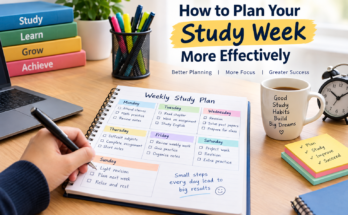

A simple daily routine for students can make a big difference in study performance, energy, and personal life. In my experience, students do not always need a complicated schedule to become more productive. What they really need is a routine that is realistic, easy to follow, and flexible enough to fit their daily responsibilities.
Many students struggle with managing school, college, homework, family time, sleep, and personal activities. When everything is left unplanned, it becomes easy to waste time and feel stressed. A good daily routine for students helps create structure and makes it easier to know what needs to be done.
In this article, I will share a simple student daily routine that can help improve focus, time management, study habits, and overall productivity.
Why a Daily Routine Is Important for Students
Having a daily routine gives students a clear direction. Instead of deciding what to do every few hours, you already know how your day should move. This can save time and reduce unnecessary stress.
A good routine also helps students develop discipline. You do not have to feel motivated every day. When studying becomes part of your routine, it becomes easier to start even when you are not in the mood.
Another important benefit is better time management. Students often think they do not have enough time, but the real problem can be poor planning. A simple schedule can help you find enough time for studying, relaxing, exercising, and sleeping.
Start Your Morning Early
I believe the morning is one of the most important parts of a student’s day. You do not necessarily need to wake up extremely early, but waking up at a consistent time can make your day more organized.
After waking up, avoid immediately checking social media. Give yourself a few minutes to wake up properly. Drink some water, wash your face, and get ready for the day.
A short morning routine can include making your bed, getting dressed, eating breakfast, and reviewing your plan for the day. These small activities can help you start your morning with a positive mindset.
If you have an important exam or assignment, you can also spend 20 to 30 minutes reviewing difficult topics in the morning.
Eat a Healthy Breakfast
Breakfast is another important part of a simple daily routine for students. Going to school or college without eating can leave you feeling tired and distracted.
A balanced breakfast does not have to be expensive or complicated. You can choose simple foods such as eggs, fruit, yogurt, oats, bread, or other foods that are available at home.
The main idea is to give your body enough energy to begin the day. I find that students usually focus better when they are properly rested and have eaten something before starting their classes.
Focus During Classes
Once classes begin, try to make the most of your time. Paying attention in class can reduce the amount of work you need to do later.
Keep your notebook organized and write down important points. If you do not understand something, make a note of it and ask your teacher or review it later.
Avoid unnecessary phone use during lessons. Social media notifications can quickly break your concentration. Even a few minutes of distraction can make it harder to understand what the teacher is explaining.
For me, active participation is much better than simply sitting in class and waiting for it to end. Asking questions and taking useful notes can make learning easier.
Take a Short Break After Classes
After school or college, do not immediately force yourself to study for several hours. Your mind may need some time to relax.
Take a short break when you return home. Have a snack, talk with your family, take a shower, or simply relax for a little while.
However, be careful with long breaks. Watching videos or scrolling through social media can easily turn a 20 minute break into two hours.
I recommend setting a specific amount of time for your break. Once the break is finished, return to your study routine.
Create a Simple Study Schedule
A study schedule does not need to contain every minute of your day. In fact, an overly complicated schedule can be difficult to follow.
Instead, divide your study time into simple sessions. For example, you could study for 45 minutes and then take a 10 minute break.
Start with the subjects that require the most attention. If mathematics is difficult for you, consider studying it when your energy and concentration are high.
After completing a difficult subject, move to something easier. This can make your study session feel more manageable.
Use Active Study Methods
Simply reading the same chapter again and again may not always be the best way to learn. I prefer active study methods because they require you to think about the information.
You can make short notes, answer practice questions, explain a topic in your own words, or test yourself without looking at your book.
For subjects that involve memorization, flashcards can also be useful. The important thing is to find a method that works for you.
Everyone learns differently, so do not feel that you must copy another student’s study style.
Manage Your Homework
Homework should be included in your daily student routine. Instead of waiting until late at night, try to complete assignments earlier in the evening.
When you receive a new assignment, check the deadline and estimate how much time you need. If the task is large, divide it into smaller parts.
For example, you could spend one day researching, another day writing, and another day checking your work.
This approach can prevent last minute stress and give you more time to improve your assignment.
Make Time for Exercise
Students spend many hours sitting in classrooms and studying. Because of this, physical activity should have a place in a healthy daily routine.
You do not need to spend hours at the gym. A short walk, stretching, cycling, jogging, or playing a sport can be enough to get your body moving.
I think exercise is also helpful for clearing the mind. When I take a break and move around, returning to study can feel easier.
Try to include at least some physical activity in your daily schedule, especially if you spend most of the day sitting.
Limit Screen Time
Phones and computers can be useful for studying, but they can also become major distractions.
One of the easiest ways to improve productivity is to reduce unnecessary screen time. When studying, keep your phone away from your desk if you do not need it.
You can also turn off unnecessary notifications. This allows you to focus on your books instead of constantly checking messages.
Technology is not the problem. The important thing is learning how to control your screen time instead of allowing it to control your schedule.
Spend Time With Family and Friends
A productive student routine should not be about studying all day. Students also need time to enjoy life.
Spend some time with family and friends. Talk to people, enjoy your hobbies, play a sport, listen to music, or do something that makes you happy.
Relaxation is not a waste of time. It can help you return to your studies with a fresh mind.
The goal of a good routine is balance. Studying is important, but personal time is important too.
Prepare for the Next Day
Before going to bed, spend a few minutes preparing for tomorrow.
Check your timetable, organize your books, prepare your clothes, and write down the most important tasks you need to complete.
I find that preparing at night makes the next morning much easier. You do not have to waste time deciding what to do because you already have a basic plan.
Keep your plan simple. Choose two or three important tasks instead of creating a huge list that becomes difficult to complete.
Get Enough Sleep
Sleep should be one of the biggest priorities in a student’s daily routine. Staying awake late every night to study may seem productive, but being tired can make learning much harder.
Try to maintain a consistent bedtime and wake up time. Create a calm environment before sleeping and avoid using your phone for too long in bed.
When you sleep properly, you can wake up with more energy and concentrate better during classes.
A student who manages study time properly should not have to sacrifice sleep every night.

Example of a Simple Daily Routine for Students
Here is an example of how a normal school day could look:
7:00 AM: Wake up and get ready
7:30 AM: Eat breakfast
8:00 AM: Leave for school or college
8:30 AM to 2:00 PM: Attend classes
2:30 PM: Lunch and relaxation
3:30 PM: Review class notes
4:30 PM: Short break
5:00 PM: Homework and assignments
6:30 PM: Exercise or outdoor activity
7:30 PM: Dinner and family time
8:30 PM: Study difficult subjects
9:30 PM: Prepare for the next day
10:00 PM: Relax and get ready for bed
10:30 PM: Sleep
This is only an example. Every student’s schedule is different, so you should adjust the timings according to your school, college, family responsibilities, and personal needs.
How to Stay Consistent With Your Routine
Creating a routine is easy. Following it consistently is the real challenge.
Do not try to change your entire lifestyle in one day. Start with a few simple habits. For example, you can begin by waking up at the same time, studying at a fixed time, and going to bed consistently.
If you miss a day, do not give up. One bad day does not mean your routine has failed. Simply return to your schedule the next day.
I also recommend keeping your daily goals realistic. If you know that you cannot study for six hours after school, do not create a schedule that requires six hours of study.
A routine should support your life, not make your life more stressful.
Final Thoughts
A simple daily routine for students can improve study habits, productivity, time management, and overall balance. You do not need a perfect schedule to become a successful student.
In my opinion, the most important habits are getting enough sleep, attending classes regularly, studying with focus, taking useful breaks, exercising, limiting distractions, and preparing for the next day.
Start small and build your routine gradually. Once these habits become part of your everyday life, managing schoolwork and personal responsibilities can become much easier.
The best student routine is not the one that looks perfect on paper. It is the one you can realistically follow every day.