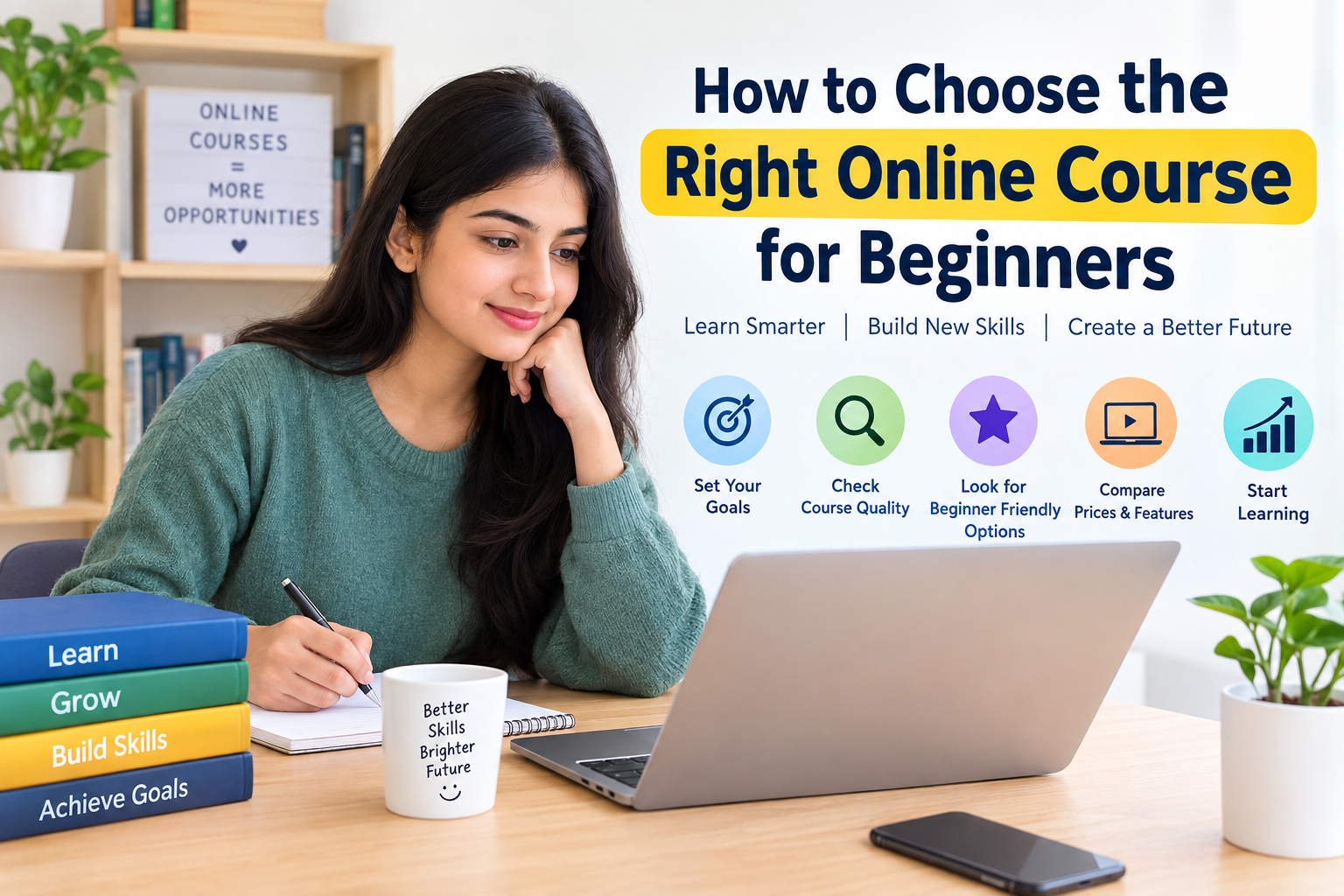
Learning online has become one of the easiest ways to develop new skills. Whether you want to improve your career, learn a useful hobby, start freelancing, or simply understand a subject better, there are thousands of online courses available. The challenge is not finding an online course. The real challenge is choosing the right online course for beginners.
From my point of view, beginners often make the mistake of choosing a course only because it has a high rating, a low price, or a popular name. These things can be helpful, but they do not always mean the course is suitable for your personal learning needs.
A good online course should match your goals, current knowledge, available time, budget, and preferred learning style. In this article, I will explain how I personally think beginners should evaluate an online course before enrolling.
Start With a Clear Learning Goal
Before searching for an online course, I believe the first step should always be deciding what you want to learn and why you want to learn it.
For example, saying “I want to learn digital marketing” is quite broad. You may actually want to learn social media marketing, search engine optimization, email marketing, content marketing, or paid advertising.
The same applies to other subjects. If you want to learn programming, decide whether you want to start with web development, Python, app development, or another area.
A clear goal makes it much easier to find a suitable course. It also prevents you from spending money on courses that contain information you do not really need.
Choose a Beginner Friendly Course
When you are completely new to a subject, you should look for an online course specifically designed for beginners.
Check the course description carefully. Look for words such as beginner, introduction, fundamentals, basic, or starting from scratch.
A beginner friendly course should explain important concepts before moving into advanced topics. It should not assume that you already understand complicated terms.
I personally prefer courses that gradually increase in difficulty. Starting with simple lessons can make learning more comfortable and can help build confidence.
Check the Course Curriculum
The curriculum is one of the most important things to check before choosing an online course.
Do not enroll simply because the course title sounds interesting. Open the course curriculum and see exactly what you will learn.
Ask yourself whether the lessons cover the skills you actually want to develop.
For example, if you are choosing an online writing course, the curriculum might include research, writing structure, editing, grammar, headlines, and practical exercises. If it only contains general information, it may not provide enough practical value.
A well organized curriculum gives you a better idea of what you can expect from the course.
Look at the Instructor
The instructor can have a major impact on your learning experience.
Before enrolling, spend some time learning about the person who created the course. Look at their professional background, experience, teaching history, and other courses if available.
However, I would not choose a course based only on the instructor’s popularity. Someone can be highly experienced but still not be a good teacher.
A good instructor should be able to explain difficult ideas in simple language. For beginners, this is especially important.
Read Student Reviews Carefully
Student reviews can provide useful information before you buy an online course.
Instead of looking only at the overall rating, read several positive and negative reviews. Try to understand what students liked and disliked.
Pay attention to comments about teaching quality, course organization, practical exercises, outdated information, audio quality, and instructor support.
I think recent reviews are particularly useful because courses can change over time. A course that was excellent several years ago may not be equally useful today.
Check the Course Length
A longer course is not automatically a better course.
Some courses are several hours long because they provide detailed explanations and practical projects. Others are long because the instructor repeats the same information.
Instead of focusing only on the number of hours, look at what those hours contain.
For beginners, a course with clear and focused lessons can be more useful than a very long course filled with unnecessary information.
The ideal course should give you enough material to understand the subject without making the learning process unnecessarily complicated.
Consider the Learning Format
Everyone learns differently.
Some people prefer watching video lessons. Others learn better through reading, practice, quizzes, or projects.
Before choosing an online course, think about the format that helps you learn most effectively.
If you enjoy watching demonstrations, a video based course may be a good choice. If you prefer learning by doing, look for courses that include exercises and practical projects.
I believe practical learning is especially important when your goal is to develop a skill that you can use in real life.
Look for Practical Assignments
One of the best ways to understand whether an online course is valuable is to check whether it provides practical work.
Watching dozens of lessons without practicing can make you feel like you are learning, but you may struggle to use the knowledge later.
Practical assignments give you an opportunity to apply what you have learned.
For example, a graphic design course might ask you to create a simple poster. A programming course might ask you to build a small project. A writing course might require you to write an article.
These activities can turn theoretical knowledge into useful skills.
Check Whether the Course Is Updated
Some subjects change quickly, especially technology, software, digital marketing, artificial intelligence, and online business.
For these topics, I recommend checking when the course was last updated.
An older course may still be useful for fundamental concepts, but some tools, platforms, interfaces, and strategies may have changed.
Look for information about recent updates and new lessons. This can help you avoid learning outdated methods.
Compare Prices Before Buying
Price is another important factor, but I do not think the cheapest course is always the best option.
At the same time, an expensive course does not automatically provide better education.
Compare several courses that teach similar subjects. Look at their curriculum, instructor, reviews, practical activities, duration, support, and additional resources.
Then consider whether the price makes sense for what you will receive.
If you are a beginner, you may want to start with a reasonably priced course rather than immediately spending a large amount of money.
Check the Course Requirements
Some courses require previous knowledge, specific software, or particular equipment.
Always read the requirements before enrolling.
For example, an advanced programming course may assume that you already know basic programming. A video editing course may require specific software. A data analysis course may require familiarity with spreadsheets.
Choosing a course without checking these requirements can make learning frustrating.
Think About Your Available Time
Before choosing an online course, consider how much time you can realistically dedicate to learning.
If you are busy with school, work, or family responsibilities, a course with short lessons may be easier to complete.
Do not choose a course simply because you are excited about learning. Think about your normal weekly schedule.
A course that fits your routine is more likely to be completed.
In my opinion, completing a simple course is much better than purchasing a large course and abandoning it halfway through.
Check for Certificates
Many online courses provide certificates after completion.
A certificate can be useful in some situations, especially when you want to show that you completed a particular course. However, I would not choose a course only because it offers a certificate.
The actual knowledge and skills you gain are usually more important.
If your goal is career development, research whether employers in your field value that particular certificate.
Look for Support and Learning Resources
Some online courses provide additional resources such as downloadable notes, quizzes, exercises, project files, discussion forums, or instructor support.
These resources can make learning easier.
For beginners, having additional explanations or a place to ask questions can be particularly helpful.
Before enrolling, check exactly what support is included and whether you can access the materials after completing the course.
Avoid Choosing a Course Because of Hype
Popular courses can be useful, but popularity should not be your only reason for enrolling.
Sometimes people choose a course because everyone is talking about it. After starting, they discover that the teaching style does not match their needs.
I believe it is better to focus on your own goals rather than simply following trends.
Ask yourself one simple question: “Will this course help me achieve what I want to achieve?”
If the answer is yes, then popularity becomes less important.
Make a Simple Comparison
If you find several courses that look good, make a simple comparison.
Write down the course name, price, curriculum, duration, reviews, instructor experience, practical projects, update date, and certificate information.
This makes your decision more objective.
You may discover that a moderately priced course provides exactly what you need while a more expensive course contains many features you will never use.
Start Small and Build Your Skills
As a beginner, you do not need to learn everything at once.
Choose one useful skill and focus on building a strong foundation.
Once you understand the basics, you can move toward intermediate and advanced courses.
This approach can make online learning less overwhelming and more enjoyable.
For example, if you want to become a web developer, you do not need to study every programming language immediately. Start with the fundamentals, practice regularly, and gradually expand your knowledge.
Final Thoughts
Choosing the right online course for beginners does not have to be difficult. The key is to slow down and evaluate a course before enrolling.
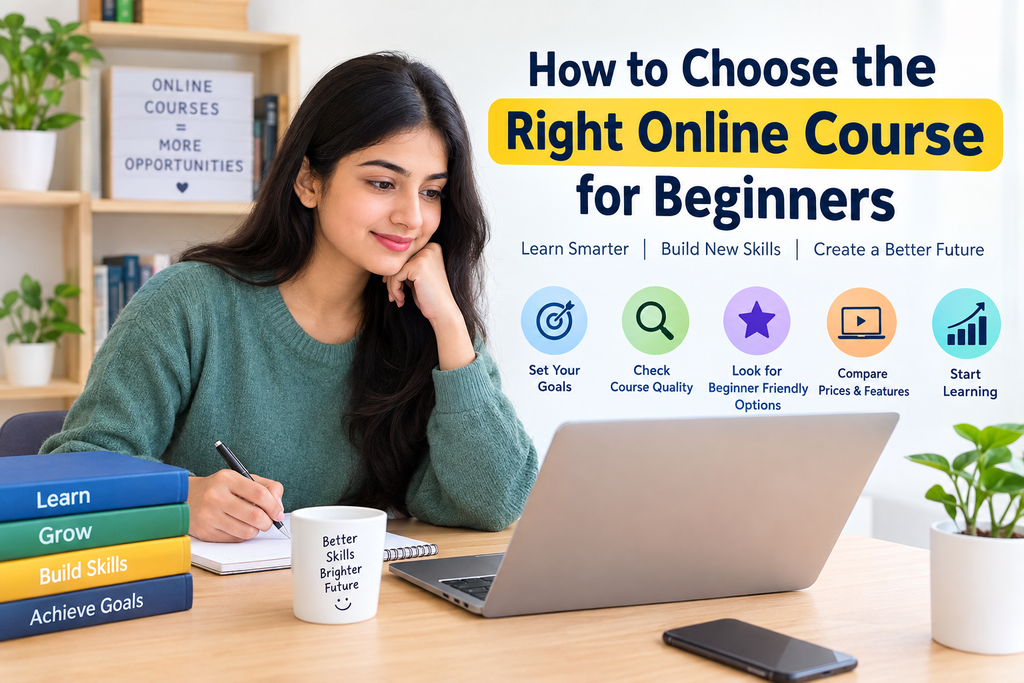
Start by identifying your learning goal. Then check whether the course is beginner friendly, review its curriculum, research the instructor, read student reviews, compare prices, and make sure the course fits your available time.
I also recommend looking for practical assignments and checking whether the content is updated. These small steps can help you make a much better decision.
From my point of view, the best online course is not necessarily the most expensive, longest, or most popular one. It is the course that matches your needs and helps you make real progress.
Online learning gives beginners an excellent opportunity to develop valuable skills from home. With the right course and a consistent learning routine, you can turn your free time into meaningful knowledge and gradually build skills that can support your education, career, or personal goals.