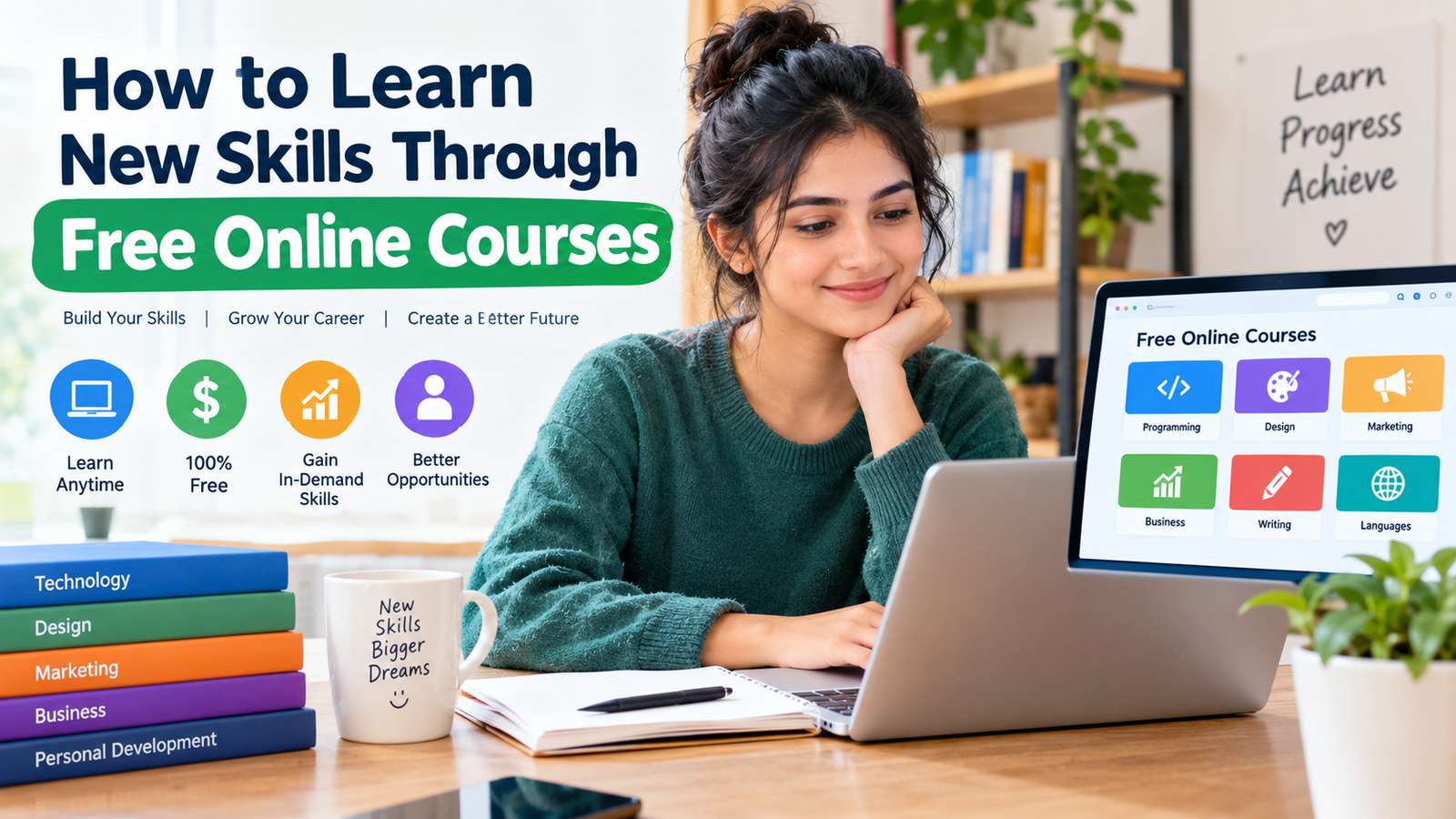
Learning a new skill has become easier than ever. In the past, people often needed to attend a physical class, buy expensive books, or pay for professional training. Today, the internet has changed the way we learn. Anyone with a computer or smartphone and an internet connection can access thousands of free online courses and start learning from home.
In my opinion, free online courses are one of the best ways for beginners to explore a new subject before spending money on professional training. Whether you want to learn digital marketing, graphic design, programming, writing, business, photography, communication, or another useful skill, you can find learning resources online.
However, simply enrolling in a course does not mean you will learn the skill. You need a simple plan, regular practice, and patience. In this article, I will explain how to learn new skills through free online courses and how to turn online lessons into practical knowledge.
Choose a Skill You Actually Want to Learn
The first step is choosing the right skill. Many beginners make the mistake of signing up for several courses because they look interesting. After a few days, they become overwhelmed and stop studying.
I believe it is better to choose one skill at a time. Think about what you want to achieve. Maybe you want to improve your career opportunities, start freelancing, support your studies, build a small business, or simply learn something interesting.
For example, if you want to work online, you could start with skills such as content writing, graphic design, web development, social media marketing, or video editing.
Having a clear reason for learning makes it easier to stay motivated.
Find Quality Free Online Courses
Once you know what skill you want to learn, search for a good free online course. There are many websites offering free educational content, but not every course has the same quality.
Before starting a course, check its description, lessons, learning objectives, instructor information, and student feedback when available.
A good beginner course should explain concepts clearly and gradually move from basic ideas to more advanced topics. Avoid courses that make unrealistic promises such as becoming an expert in only a few days.
You should also check whether the course includes practical exercises. A course with projects and activities can be more useful than one that only contains lectures.
Start With the Basics
When learning a new skill, I recommend starting with the fundamentals. Beginners sometimes want to jump directly into advanced topics because they seem more exciting. This can create confusion later.
For example, if you want to learn programming, understand basic concepts before trying complicated projects. If you want to learn graphic design, first understand basic design principles, typography, layout, and color usage.
Strong basics give you a foundation for future learning.
Do not worry if the first few lessons seem simple. Basic knowledge becomes important when you start working on more difficult tasks.
Create a Simple Learning Schedule
One of the biggest advantages of free online courses is flexibility. You can learn whenever you have time. However, this flexibility can also become a problem.
If you do not create a routine, you may keep postponing your lessons.
I recommend creating a realistic learning schedule. You do not necessarily need to study for several hours every day. Even 30 to 60 minutes of focused learning can make a difference when you stay consistent.
Choose a time that works with your daily routine. For example, you might study in the morning, during a break, or in the evening.
The important thing is consistency rather than studying for a long time once in a while.
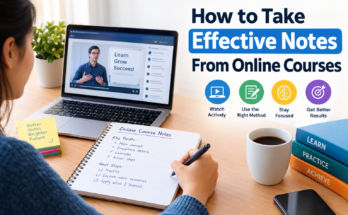
Take Useful Notes
Taking notes can make online learning much more effective. When watching a video or reading a lesson, do not try to write down every sentence.
Instead, focus on important ideas, definitions, examples, shortcuts, and steps that you may need later.
I prefer simple notes that are easy to review. You can use a notebook, text document, or note taking application.
After completing a lesson, look at your notes and explain the main idea in your own words. If you cannot explain something simply, it may be a sign that you need to review it again.
Practice What You Learn
This is probably the most important part of learning a new skill online.
Watching lessons can give you knowledge, but practice turns knowledge into ability.
For example, if you are learning writing, write something after each lesson. If you are learning graphic design, create a simple design. If you are learning coding, write code instead of only watching someone else write it.
Do not wait until you finish the entire course before practicing.
Use each lesson as an opportunity to do something yourself. Mistakes are a normal part of learning, and they can teach you things that lectures cannot.
Build Small Projects
Once you understand the basics, start creating small projects.
Projects give your learning a real purpose. They also help you identify the areas where you need more practice.
If you are learning web design, create a simple personal webpage. If you are learning photography, practice taking pictures with different compositions. If you are learning digital marketing, create a small sample marketing plan.
Your first project does not need to be perfect. The goal is to apply what you have learned.
As your confidence improves, make your projects more challenging.
Do Not Take Too Many Courses at Once
There are so many free online courses for beginners that it can be tempting to enroll in everything.
I think this is one of the biggest traps in online learning.
Completing five courses without practicing may be less useful than completing one course and applying everything you learned.
Choose one main course and focus on it. After completing important lessons, practice the skill. Once you feel comfortable with the basics, you can choose another course to expand your knowledge.
Learning deeply is usually more valuable than collecting course certificates.
Use Additional Free Learning Resources
Sometimes one course will not explain everything you need. That does not mean you should give up.
You can use other free resources to understand difficult topics. Educational videos, articles, tutorials, documentation, discussion communities, and practice websites can support your main course.
If a particular lesson is confusing, search for another explanation of the same topic. Different teachers explain concepts in different ways, and sometimes a second explanation makes everything much clearer.
The key is to avoid jumping randomly between resources. Keep your main course as your learning path and use other resources when necessary.
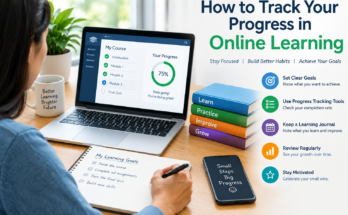
Track Your Learning Progress
Tracking your progress can keep you motivated.
Create a simple list of lessons, exercises, and projects. Mark each item when you complete it.
You can also write down what you learned each week. For example, you might record three things you learned and one thing you still need to practice.
Seeing your progress over time can give you confidence. In the beginning, your improvement may seem slow. After several weeks or months, however, you may realize how much you have learned.
Review What You Learn
Learning something once does not guarantee that you will remember it.
Regular review is important, especially for technical or detailed subjects.
At the end of each week, spend some time reviewing your notes and previous exercises. Try to remember important concepts without immediately looking at your notes.
You can also explain the topic to another person. Teaching someone else is a powerful way to discover whether you really understand something.
Be Patient With Yourself
Learning a new skill takes time.
One of the problems with online learning is that social media often shows people becoming successful very quickly. This can create unrealistic expectations.
Do not compare your first month of learning with someone else’s years of experience.
You will make mistakes. Some lessons will feel difficult. You may even lose motivation sometimes. That is completely normal.
Instead of trying to become perfect quickly, focus on making small improvements every day.
Turn Your Skill Into Practical Experience
After learning the basics, look for opportunities to use your skill.
You could create personal projects, help a friend, contribute to a community project, or build examples for a portfolio.
Practical experience can make your learning much stronger.
For example, someone learning content writing could write sample blog posts. Someone learning graphic design could create sample posters or social media graphics. Someone learning programming could build small applications.
The more you practice solving real problems, the more confident you become.
Stay Consistent
Consistency is what makes learning new skills online successful.
You do not need to study all day. What matters is continuing your learning journey.
Even if you have only 20 or 30 minutes available, use that time wisely. A small amount of focused learning repeated regularly can produce impressive results.
I believe the biggest advantage of free online courses is that they remove many barriers to learning. You can start with little or no financial investment and discover whether a skill is right for you.
Final Thoughts
Learning new skills through free online courses is an excellent opportunity for students, beginners, professionals, and anyone who wants to improve themselves. You can learn from home, choose your own schedule, and explore subjects that may help with your education or career.
The most important thing is not how many courses you complete. What matters is how much you understand and how well you can apply your knowledge.
Choose one useful skill, find a quality free online course, create a learning schedule, take notes, practice regularly, and build small projects. Stay patient and track your progress.
In my view, free online learning becomes truly valuable when you stop being only a viewer and start becoming an active learner. Your laptop or smartphone can become a powerful learning tool when you use it with a clear goal and consistent effort.
You do not need to know everything today. Start with one skill, learn one lesson at a time, practice what you learn, and keep moving forward.