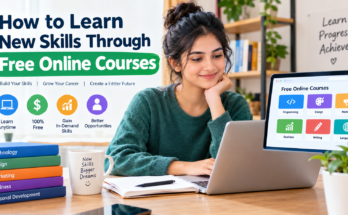

Online learning has become one of the easiest ways to gain knowledge, learn new skills, and improve your education from almost anywhere. I personally believe that online learning can be very useful for beginners because it gives us the freedom to learn at our own pace. However, having access to online courses and educational videos does not automatically mean that we will learn effectively. We need a simple plan, regular practice, and the right learning habits.
If you are new to online learning, you may sometimes feel confused about where to start. There are thousands of courses, videos, websites, and learning platforms available. In my experience, the best approach is to keep things simple and focus on one clear goal at a time. In this article, I will share practical tips on how to learn online effectively for beginners.
Set a Clear Learning Goal
The first step in effective online learning is deciding what you actually want to learn. Without a clear goal, it is easy to jump from one course to another without completing anything.
For example, instead of saying, “I want to learn computers,” make your goal more specific. You could say, “I want to learn basic computer skills in thirty days.” A specific goal gives you a clear direction.
I find that small goals are easier to manage than large goals. If your goal feels too difficult, divide it into smaller parts. This can make online learning feel more comfortable and achievable.
Choose the Right Online Course
Once you know your goal, the next step is finding a suitable course. Beginners should avoid choosing a course simply because it has a large number of lessons or a popular title.
Before starting a course, check what topics it covers and whether the lessons are suitable for your current skill level. If you are a complete beginner, look for courses that clearly explain basic concepts.
I also recommend reading course descriptions and reviews before spending your time on a course. A good course should have a logical structure and explain concepts in a way that is easy to understand.
Create a Simple Study Schedule
One of the biggest advantages of online learning is flexibility. At the same time, this flexibility can become a problem if we do not have a routine.
Creating a simple study schedule can help you stay consistent. You do not need to study for many hours every day. Even thirty to sixty minutes of focused learning can be useful when you do it regularly.
For example, you could study from 7 PM to 8 PM every weekday. Choose a time that fits your daily routine. The important thing is to make learning a regular part of your day.
In my opinion, consistency is more important than studying for long hours occasionally.
Create a Comfortable Learning Space
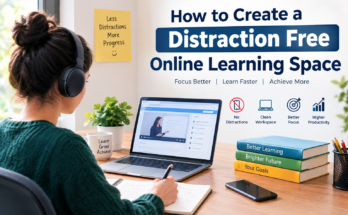
Your environment can have a major effect on your concentration. Try to create a quiet and comfortable place where you can focus on your lessons.
Keep your laptop or computer, notebook, pen, and other necessary materials nearby. Remove unnecessary items from your study area if they distract you.
You should also make sure that your chair and desk are comfortable. A clean learning space can make it easier to develop a positive study habit.
Take Notes While Learning
Watching an online lesson without taking notes can make it harder to remember important information. I personally find that writing down important ideas helps me understand the subject better.
You do not need to write everything the instructor says. Instead, focus on important definitions, examples, formulas, steps, and ideas.
You can use a notebook or a digital note taking application. Try to write information in your own words because this can help you understand the topic instead of simply copying it.
Avoid Watching Lessons Passively
One common mistake beginners make is watching online lessons like entertainment videos. You may watch an entire course but remember very little afterward.
Effective online learning requires active participation.
Pause the lesson when necessary. Ask yourself questions about the topic. Try to explain the concept in your own words. Complete exercises and practice tasks whenever they are available.
For example, if you are learning a programming language, watching programming tutorials is not enough. You need to write code yourself and solve small problems.
Practice What You Learn
Practice is one of the most important parts of online learning. Knowledge becomes more useful when you can apply it.
If you are learning graphic design, create simple designs. If you are learning writing, write regularly. If you are learning a new language, practice speaking and writing.
I believe that practical learning gives us a better understanding of difficult subjects. Do not worry if your first attempts are not perfect. Making mistakes is a natural part of learning.
Take Short Breaks
Studying continuously for several hours can make you tired and reduce your concentration. Taking short breaks can help you return to your lessons with a fresh mind.
You could study for around twenty five to fifty minutes and then take a short break. During the break, stand up, drink some water, stretch, or walk around for a few minutes.
Try not to spend the entire break scrolling through social media because it can make it harder to return to your studies.
Remove Online Distractions
The internet provides excellent learning resources, but it also contains many distractions. Social media, entertainment websites, games, and notifications can easily interrupt your study session.
When you start learning, consider turning off unnecessary notifications. Keep only the websites and applications that you need for your lesson open.
If you find yourself checking your phone frequently, place it away from your study area during your learning session.
Review Your Lessons Regularly
Learning something once does not always mean that you will remember it permanently. Regular review can help strengthen your understanding.
At the end of each week, spend some time reviewing what you learned. Look at your notes and try to remember important concepts without immediately checking the answers.
You can also create simple questions for yourself. Self testing can show you which areas you understand and which topics need more attention.
Do Not Take Too Many Courses at Once
When you discover online learning platforms, you may feel excited and want to start several courses at the same time. I have found that this can create unnecessary confusion.
Instead of starting five courses together, choose one main course and focus on completing it. Once you have developed a strong understanding of the subject, you can move to another course.
Finishing a course can also give you confidence and motivation to continue learning.
Learn From Different Resources
An online course may not explain everything perfectly for you. Sometimes another teacher or website may explain the same topic in a simpler way.
This is why I believe beginners should use different learning resources when necessary. You can combine online courses, educational videos, articles, digital books, practice exercises, and discussion communities.
However, avoid using too many resources at the same time. Too much information can become overwhelming. Choose a few reliable resources and use them purposefully.
Ask Questions When You Are Confused
Being confused about a topic does not mean that you are bad at learning. Difficult subjects often require additional explanation and practice.
When you do not understand something, try to find another explanation. You can search for beginner friendly articles, watch another lesson, or ask a teacher or experienced learner for help.
I think asking questions is one of the most useful learning habits because it helps you identify exactly what you do not understand.
Track Your Progress
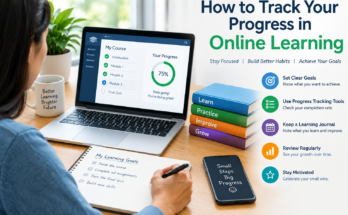
Tracking your progress can keep you motivated. You can maintain a simple learning journal where you record what you studied each day.
For example, you could write down the lesson you completed, what you learned, and what you need to practice next.
Seeing your progress over time can make your efforts feel more meaningful. Even small improvements become easier to notice when you keep a record.
Stay Patient With Yourself
Online learning can sometimes feel difficult, especially when you are learning something completely new. Do not expect yourself to understand everything immediately.
Everyone learns at a different speed. Some topics may take several days or weeks to understand properly.
In my opinion, patience is just as important as motivation. There may be days when you do not feel like studying, but developing a regular habit can help you continue even when motivation is low.

Use Online Learning to Build Real Skills
The main purpose of online learning should not simply be completing courses. The real value comes from using what you learn.
Try to create small projects based on your knowledge. Projects give you an opportunity to solve problems and apply concepts in practical situations.
For beginners, simple projects are enough. As your confidence improves, you can gradually work on more challenging tasks.
Final Thoughts
Learning online effectively for beginners does not have to be complicated. In my view, the most important things are having a clear goal, choosing the right learning resources, creating a study routine, taking useful notes, practicing regularly, and staying patient.
The internet gives us access to an incredible amount of educational information. However, the results depend on how we use that information. Instead of trying to learn everything at once, choose one subject and give it your full attention.
Start with small steps, practice what you learn, review your progress, and continue improving. With consistent effort and a good learning routine, online education can become a powerful way to develop knowledge and useful skills from the comfort of your own home.
Frequently Asked Questions
Is online learning good for beginners?
Yes, online learning can be very useful for beginners. It allows learners to study at their own pace and choose resources according to their needs.
How many hours should a beginner study online?
There is no fixed number of hours that works for everyone. Starting with thirty to sixty minutes of focused study each day can be a practical approach.
How can I stay focused while learning online?
Create a quiet study space, turn off unnecessary notifications, keep your phone away when possible, and study according to a regular schedule.
What is the best way to remember online lessons?
Taking notes, reviewing lessons, asking questions, practicing, and testing yourself can help improve understanding and memory.
Can I learn useful skills online for free?
Yes. Many websites and educational platforms offer free lessons and learning materials. The key is to choose reliable resources and practice what you learn.