Introduction
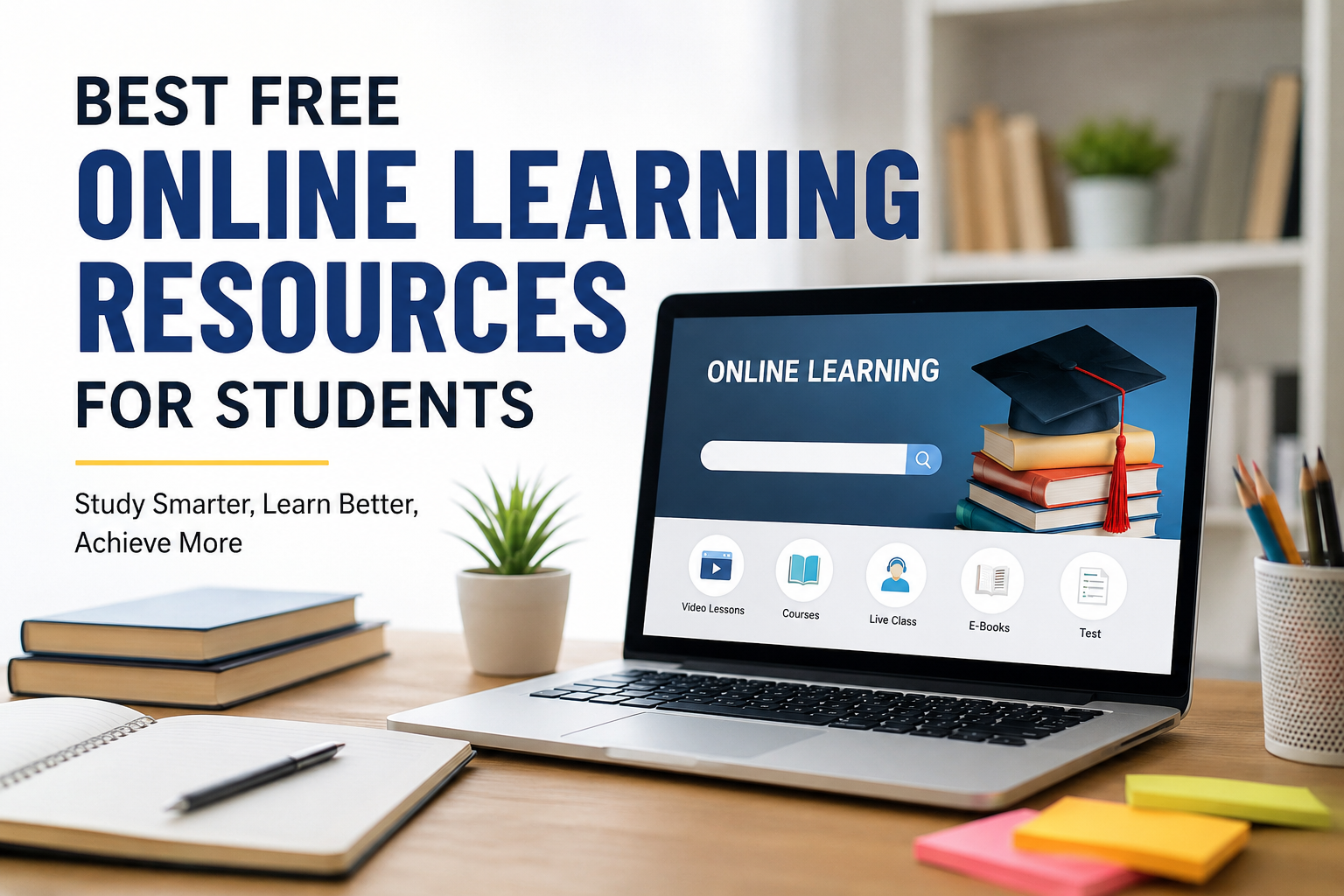
In my opinion, learning has become much easier than it was a few years ago. Students no longer have to depend only on textbooks, classroom lectures, or expensive coaching centers. With an internet connection and a suitable device, students can now access thousands of free online learning resources from almost anywhere.
I believe the biggest advantage of online learning is flexibility. A student can watch a lesson again, read additional material, practice questions, and learn at a comfortable speed. Whether you are studying mathematics, science, computer programming, languages, business, history, or another subject, there are many free educational websites that can help you improve your knowledge.
However, having too many choices can also become confusing. That is why I have put together some of the best free online learning resources for students. These platforms can help students study better, develop useful skills, and make learning more interesting without spending a lot of money.
Why Free Online Learning Resources Are Useful
I think free online learning resources are especially helpful for students who want extra support outside the classroom. Sometimes a teacher explains a topic once, but a student may need more time to understand it. Online resources allow students to learn the same concept through videos, articles, examples, quizzes, and practice exercises.
Another major benefit is convenience. Students can study at home, in a library, or anywhere they have internet access. They can also choose subjects according to their interests.
Free learning platforms are also useful for students who want to learn something that is not available in their regular school or college curriculum. For example, a student interested in coding can start learning programming online without joining an expensive course.
1. Khan Academy
Khan Academy is one of the first resources I would recommend to students who want free educational content. It offers lessons and practice materials covering subjects such as mathematics, science, economics, history, grammar, and computer science.
The platform is particularly useful for students who need help with academic subjects. Lessons are generally organized in a simple way, making it easier to move from basic concepts to more advanced topics.
I like Khan Academy because students can learn at their own pace. If a particular lesson is difficult, they can review it again instead of feeling pressured to move forward.
2. Coursera
Coursera is another useful platform for students who want to explore online courses. Although many courses have paid options, the platform also provides free learning opportunities through selected courses and course materials.
Students can find courses related to technology, business, communication, data science, personal development, and many other areas.
In my view, Coursera is especially useful for students who want to learn skills beyond their regular academic studies. Learning an additional skill can help students understand what careers or subjects they may want to explore in the future.
3. edX
edX provides online educational content from universities and educational institutions around the world. Students can explore subjects such as computer science, mathematics, business, engineering, languages, and social sciences.
Many courses can be accessed for free in an audit format, although certificates and certain features may require payment.
I think edX is a good option for students who want university style learning without immediately committing to a paid program. It can also help students discover subjects they may want to study more seriously.
4. MIT OpenCourseWare
MIT OpenCourseWare is an excellent resource for students who want access to university level educational materials. It includes course content from the Massachusetts Institute of Technology.
Students can find lectures, assignments, reading materials, and other resources covering subjects such as mathematics, engineering, computer science, physics, economics, and more.
The material can be challenging, but I think it is extremely valuable for motivated students. If you already understand the basics of a subject and want to go deeper, MIT OpenCourseWare can provide a useful learning experience.
5. YouTube Educational Channels
YouTube is not only a platform for entertainment. It has become one of the largest sources of free educational content available online.
Students can find videos about almost every subject. There are tutorials for mathematics, science experiments, programming, languages, study techniques, history, writing, and many practical skills.
The important thing is to choose reliable educational channels instead of watching random videos. I recommend checking the creator’s background, comparing information with trusted sources, and using videos as a supplement to proper study.
One advantage of YouTube is that visual explanations can make difficult topics easier to understand. Sometimes a five minute animation can explain an idea more clearly than several pages of text.
6. Google Scholar
For older students, university students, and anyone working on research, Google Scholar can be very helpful. It allows users to search for academic papers, research studies, books, and other scholarly material.
I think it is particularly useful when writing assignments or trying to understand a topic from a more academic perspective.
Students should remember that not every research paper is easy to understand. Some papers contain technical language and require background knowledge. Still, learning how to find and read academic sources is an important skill.
7. Duolingo
Students who want to learn a new language can consider Duolingo. It provides interactive lessons that cover vocabulary, grammar, pronunciation, and everyday language skills.
What I like about language learning apps is that they make practice feel manageable. Instead of studying for several hours once a week, students can spend a small amount of time practicing regularly.
Consistency is very important when learning a language. Even a short daily session can be useful when combined with reading, listening, speaking, and writing practice.
8. Quizlet
Quizlet can be useful for memorization and revision. Students can create digital flashcards or use existing study sets to review vocabulary, definitions, formulas, and other information.
I find flashcards particularly useful before exams because they encourage active recall. Instead of simply reading a textbook repeatedly, students have to remember the answer.
Quizlet can be especially helpful for subjects that require students to memorize terms and concepts.
9. OpenStax
OpenStax provides free educational textbooks that can be useful for high school and college students. Its resources cover subjects including mathematics, science, business, social sciences, and other academic areas.
One of the biggest advantages is that students can access textbooks online without having to purchase expensive physical books.
For students working with a limited study budget, free textbooks can make a meaningful difference.
10. BBC Learning English
For students who want to improve their English skills, BBC Learning English offers lessons covering vocabulary, grammar, pronunciation, and everyday communication.
I think it is useful for learners who want to improve both their understanding and practical use of English.
Students can combine these lessons with reading English articles, watching educational videos, and practicing conversations. Using several methods together can make language learning more effective.
How to Choose the Right Online Learning Resource
With so many free learning websites available, students should not try to use every platform at once. I believe choosing the right resource depends on your learning goal.
First, identify exactly what you want to learn. If you need help with mathematics, look for a platform focused on academic learning. If you want to learn programming, choose a resource with coding exercises and practical projects.
You should also consider your current skill level. A beginner may struggle with an advanced university course, while an experienced student may find an introductory lesson too easy.
Another important factor is learning style. Some students understand concepts better through videos, while others prefer books, practice questions, or interactive exercises.
Tips for Getting Better Results From Free Online Learning
Having access to free resources does not automatically guarantee good results. Students also need a consistent study routine.
I recommend setting a specific learning goal before starting a course. Instead of saying that you will study programming, decide that you will complete one beginner lesson and practice the examples.
Taking notes can also improve learning. Write down important ideas in your own words instead of copying everything from the lesson.
Practice is equally important. If you are learning mathematics, solve problems. If you are learning programming, write code. If you are learning a language, practice speaking and writing.
Most importantly, avoid trying to learn too many things at the same time. Choose one or two important goals and give them your attention.
Final Thoughts
Free online learning resources have changed the way students can access education. In my opinion, students today have an incredible opportunity to learn subjects and skills from educational platforms around the world without spending a large amount of money.
Resources such as Khan Academy, Coursera, edX, MIT OpenCourseWare, YouTube, Google Scholar, Duolingo, Quizlet, OpenStax, and BBC Learning English can support different learning needs.
The key is not simply collecting learning resources. The real value comes from using them consistently. Choose a subject, create a realistic study routine, practice what you learn, and track your progress.
If students use free online learning resources wisely, the internet can become much more than a place for entertainment. It can become a powerful personal classroom where they can continue learning, improving their skills, and preparing for future opportunities.