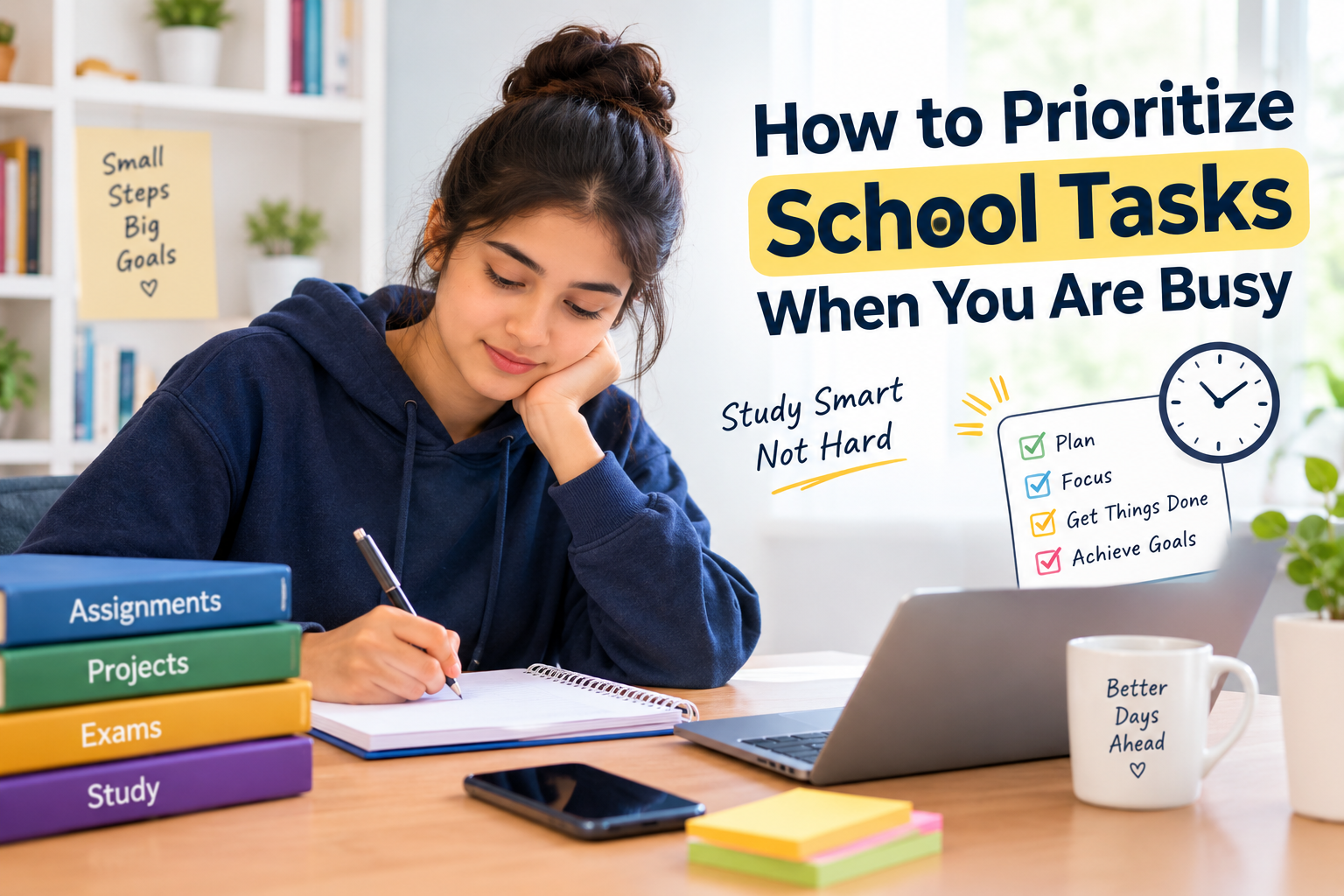
Being a student can sometimes feel like having too many things to do and not enough time to do them. You may have homework, assignments, tests, projects, presentations, reading, household responsibilities, and personal activities all competing for your attention. When everything feels important, it becomes difficult to decide what you should do first.
In my opinion, learning how to prioritize school tasks is one of the most useful skills a student can develop. You do not always need more hours in the day. You need to understand how to use the time you already have in a smarter way.
When you learn how to organize schoolwork, identify important tasks, and avoid wasting time, even a busy schedule can become easier to manage. In this article, I will share some simple methods that can help you prioritize school tasks when you are busy.
Start by Writing Everything Down
The first step I recommend is making a complete list of everything you need to do. When students are busy, they often try to remember every assignment in their heads. This can create unnecessary stress.
Take a few minutes and write down all your school tasks. Include homework, upcoming tests, projects, reading assignments, presentations, and anything else that needs your attention.
Writing everything down gives you a clear picture of your workload. Instead of thinking about ten different tasks at the same time, you can look at them one by one.
You can use a notebook, planner, calendar, or digital task list. The tool does not matter as much as actually using it consistently.
Check the Deadlines
After making your task list, look carefully at the deadlines. This is one of the easiest ways to prioritize schoolwork.
A task that is due tomorrow usually deserves more attention than something due next week. However, this does not mean you should always ignore future assignments. Large projects may require several days or weeks, so starting early can prevent stress later.
I like to divide tasks into three groups:
- Tasks due very soon
- Tasks that need preparation
- Tasks that can wait
This simple system makes it easier to decide what deserves your attention first.
Identify What Is Most Important
Not every school task has the same level of importance. Some assignments may take only fifteen minutes, while others may affect a large part of your grade.
When you are busy, ask yourself a few questions.
Does this task have an important deadline?
Will it affect my grade significantly?
Does it require a lot of preparation?
Will another assignment depend on completing this task?
The answers can help you determine which tasks should come first.
For example, if you have a short worksheet due tomorrow and a major presentation due in five days, you may complete the worksheet first because of the deadline, but you should also spend some time preparing the presentation.
Use the Urgent and Important Method
A simple way to organize school tasks is to separate them into urgent and important categories.
Urgent and important tasks should be completed first. These could include an assignment due tomorrow or studying for a test happening the next morning.
Important but not urgent tasks should come next. These might include preparing a project that is due next week.
Urgent but less important tasks can be completed after your highest priority work.
Tasks that are neither urgent nor important can usually wait.
This method helps you avoid spending your best study time on small tasks while important work remains unfinished.
Break Large Assignments Into Smaller Tasks
Large assignments can feel overwhelming when you look at them as one huge job. Instead of thinking, “I have to finish this entire project,” break it into smaller steps.
For example, a research project might include choosing a topic, finding information, creating an outline, writing the first draft, editing the work, and preparing the final version.
Now you have several smaller tasks instead of one stressful project.
I find that smaller tasks are easier to start because they do not feel as difficult. Completing each step also gives you a sense of progress, which can motivate you to continue.
Give Yourself a Daily Priority List
A long weekly task list can be useful, but it can also become overwhelming. That is why I recommend creating a smaller daily priority list.
At the beginning of the day or the evening before, choose three to five important school tasks.
For example:
Complete mathematics homework
Review science notes
Read two chapters
Work on English presentation
Prepare for tomorrow’s quiz
This gives your day a clear direction. You do not have to think about every assignment you have for the entire month. You only need to focus on the most important tasks for today.
Estimate How Much Time Each Task Needs
Another useful strategy for prioritizing school tasks is estimating how long each task will take.
A task may look important, but if it takes only ten minutes, you may be able to complete it quickly and move on to something more demanding.
At the same time, a major assignment that takes two hours should not be left until the last minute.
Try writing an estimated time next to each task. For example:
Math homework: 30 minutes
History reading: 40 minutes
Science revision: 45 minutes
Project research: 60 minutes
These estimates can help you build a realistic schedule.
Do Not Multitask While Studying
When you are busy, multitasking may seem like a good idea. You might think you can study while checking social media, replying to messages, and watching videos.
In my experience, this usually makes studying slower.
Instead, choose one important task and give it your full attention for a specific period. Put your phone away or silence unnecessary notifications. Once you finish that study session, take a short break.
Focused work can help you complete assignments faster and with fewer mistakes.
Complete Quick Tasks at the Right Time
Some small tasks can be completed quickly. If you have a five minute or ten minute task, you can sometimes finish it during a short break or when you have a small amount of free time.
For example, you might organize your notes, check tomorrow’s schedule, prepare your school bag, or review a few flashcards.
However, do not allow small tasks to distract you from major priorities. Quick tasks should support your schedule rather than control it.
Learn to Say No to Distractions
One of the biggest challenges when prioritizing schoolwork is distraction.
Social media, games, television, messages, and unnecessary browsing can consume a surprising amount of time. When you already have a busy schedule, losing even thirty minutes can make the rest of your evening more stressful.
This does not mean you should never relax. Breaks are important. The key is to decide when you will relax instead of letting distractions decide for you.
You can tell yourself that you will spend thirty minutes studying before taking a break. This creates a simple reward system and keeps your priorities clear.
Use Your Energy Wisely
Time is important, but your energy matters too.
Some students concentrate better in the morning, while others prefer studying in the evening. Try to identify the time when your mind feels most active.
Use your high energy periods for difficult subjects and important assignments. Save easier activities, such as organizing notes or reviewing simple material, for times when your energy is lower.
This can make your study time more productive without requiring you to study for longer hours.
Leave Some Extra Time
One mistake students often make is planning every minute of their day. This can look organized, but unexpected things can happen.
You may receive a new assignment, spend longer than expected on homework, have a family responsibility, or simply need more rest.
For this reason, I recommend leaving some free time in your schedule. Extra time gives you flexibility when something does not go according to plan.
A flexible schedule is often more realistic than a perfect schedule.
Review Your Priorities Every Day
Your priorities can change quickly. An assignment that was not urgent yesterday may suddenly become important because the deadline is approaching.
Spend a few minutes each day checking your task list. Mark completed tasks and move unfinished tasks to another suitable time.
You do not need to create a completely new schedule every day. Just make small adjustments based on deadlines and your current workload.
This habit can help you stay organized throughout the school year.
Do Not Forget About Rest
Being productive does not mean studying every minute you are awake. Rest is an important part of doing well in school.
If you are exhausted, studying for another three hours may not be as useful as taking a proper break and returning with better concentration.
Make time for sleep, meals, relaxation, physical activity, and activities you enjoy. A healthy balance can make it easier to focus when you return to your schoolwork.
What to Do When Everything Feels Urgent
Sometimes several deadlines arrive at the same time. When this happens, do not panic.
Start by writing down every task and its deadline. Then identify which tasks have the biggest consequences and which ones require the most time.
Choose one task to start with and work on it without thinking about everything else. Once it is finished or you reach a reasonable stopping point, move to the next priority.
The goal is not to solve your entire workload at once. The goal is to make steady progress.
Final Thoughts
Learning how to prioritize school tasks when you are busy can make student life much less stressful. The most important thing is to stop treating every task as equally urgent.
Write down your responsibilities, check deadlines, identify important work, break large assignments into smaller steps, create daily priorities, and protect your study time from distractions.
I believe good time management is not about creating a perfect schedule. It is about knowing what deserves your attention right now and making consistent progress.
You will still have busy days. You may sometimes fall behind or need to change your plan. That is completely normal. What matters is having a simple system that helps you get back on track.
When you practice these habits regularly, prioritizing schoolwork becomes easier. Instead of feeling overwhelmed by everything you need to do, you can focus on one important task at a time and move forward with confidence.