
Studying at home can be a great way to learn because you have more control over your time, environment, and study routine. However, I believe studying at home can also be challenging when there are distractions everywhere. Your phone, television, social media, family activities, and even small household tasks can easily take your attention away from your books.
When I first think about effective studying, I do not think it means sitting at a desk for many hours. I think effective studying means using your time wisely and understanding what you are learning. With a simple study routine, a comfortable study space, and the right techniques, beginners can make studying at home much easier.
In this guide, I will share practical tips on how to study effectively at home for beginners. These ideas can help students improve concentration, manage study time, remember information, and build better study habits.
Create a Dedicated Study Space
One of the first things I recommend is creating a dedicated study space at home. You do not need an expensive desk or a large room. Even a small, clean corner can work well.
Your study area should have enough space for your books, notebook, laptop, and other study materials. Try to keep unnecessary items away from your desk because a messy environment can make it harder to concentrate.
Good lighting is also important. If possible, study in a place with natural light during the day. At night, use a comfortable desk lamp so you do not have to strain your eyes.
I personally believe that having one regular place for studying helps your brain recognize that it is time to focus.
Make a Simple Study Schedule
A study schedule can help you avoid wasting time. You do not need to create a complicated timetable. Start with a simple plan that tells you what subject you need to study and when you will study it.
For example, you could study mathematics in the morning, science in the afternoon, and English in the evening. The exact schedule depends on your school, college, work, and personal routine.
Try to choose study times when you normally feel active and focused. Some people concentrate better in the morning, while others prefer studying in the evening.
The most important thing is consistency. Studying for a reasonable amount of time every day is usually better than trying to study everything at the last minute.
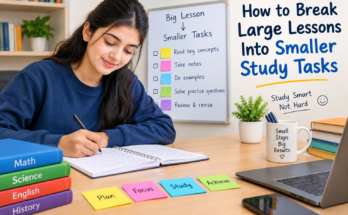
Set Small Study Goals
One mistake beginners often make is setting goals that are too large. Saying “I will study science today” does not give you a clear target.
Instead, create a smaller goal such as “I will understand two chapters of science” or “I will complete twenty mathematics questions.”
Small goals make your study session feel more manageable. Once you complete one goal, you can move to the next.
I find that breaking a large subject into smaller tasks also makes studying feel less stressful.
Remove Distractions
Distractions are one of the biggest challenges when studying at home. Your smartphone can be especially difficult because notifications, social media, videos, and messages can quickly interrupt your concentration.
Before starting your study session, put your phone on silent or keep it away from your desk. If you need your phone for studying, turn off unnecessary notifications.
You should also avoid studying with the television playing in the background. If other people in your home are making noise, consider using a quieter room or studying during a calmer part of the day.
The goal is not to remove every possible distraction. The goal is to create an environment where staying focused becomes easier.
Use Active Learning Techniques
Simply reading a textbook again and again may not always be the best way to learn. Active learning can help you understand and remember information more effectively.
After reading a topic, close your book and try to explain what you learned in your own words. You can also write questions about the topic and answer them without looking at your notes.
Another useful technique is creating short summaries. Instead of copying everything from the textbook, write the main ideas using simple language.
Flashcards can also be useful for subjects that require memorization. You can use them for vocabulary, definitions, formulas, dates, and important facts.
Take Regular Breaks
Studying continuously for several hours may sound productive, but your concentration can decrease when you become tired.
I prefer using shorter study sessions with regular breaks. For example, you might study for around 25 to 50 minutes and then take a short break.
During your break, stand up, walk around, drink some water, or simply rest your eyes. Try not to spend the entire break scrolling through social media because it can make it difficult to return to your studies.
Short breaks can help you return to your work with a fresher mind.
Practice What You Learn
Practice is especially important when studying subjects such as mathematics, science, languages, and computer studies.
After learning a concept, try solving questions related to it. If you make a mistake, do not simply ignore it. Look at the question again and understand where you went wrong.
For exam preparation, practice tests can also be helpful. They allow you to become familiar with different types of questions and can help you identify topics that need more attention.
In my opinion, making mistakes during practice is actually useful because those mistakes show you where your knowledge needs improvement.
Use Your Own Notes
Taking your own notes can make studying more personal and easier to understand. You do not need to write every sentence from your textbook.
Instead, focus on important definitions, formulas, examples, key points, and questions that you find difficult.
Try to write notes in language that makes sense to you. When you review your notes later, you should be able to understand the topic without reading the entire textbook again.
Keep your notes organized by subject and topic. This will save time when you prepare for tests.
Study One Subject at a Time
Trying to study several subjects at the same time can make it difficult to concentrate. Instead, give your full attention to one subject before moving to another.
For example, you might spend one study session on mathematics and then take a break before starting English.
If you have many subjects, create a weekly schedule so each subject receives enough attention.
Switching subjects occasionally can also prevent boredom, but avoid constantly changing tasks every few minutes.
Get Enough Sleep
Sleep is an important part of effective studying. When you are tired, it can become harder to concentrate, understand information, and remember what you have learned.
Instead of staying awake all night before an exam, try to develop a regular study routine that allows you to prepare earlier.
A good night’s sleep can help you feel more alert and prepared for the next day’s study session.
I believe studying smarter also means knowing when to stop and give your mind time to rest.
Stay Hydrated and Eat Properly
Your study routine should not focus only on books. Your basic physical needs matter too.
Keep water nearby while studying and take regular breaks to drink. Try to eat balanced meals and choose simple snacks when you need something between meals.
Avoid relying heavily on sugary drinks or unhealthy snacks for energy. A healthy routine can support your ability to stay focused during the day.

Avoid Multitasking
Multitasking may feel productive, but it can make studying less effective. For example, watching videos while reading a textbook can divide your attention.
When you study, try to focus on the task in front of you. If you need to check messages or social media, do it during your planned break.
Giving one task your full attention can help you complete it more efficiently.
Review Your Lessons Regularly
Reviewing information regularly is one of the best study habits for beginners. Do not wait until the night before an exam to review everything.
After learning a new topic, review it later that day or the next day. Then review it again after several days.
This type of repeated review can help you remember important information for longer.
You can review by reading your notes, answering questions, using flashcards, or explaining the topic aloud.
Reward Your Progress
Studying can become boring if every session feels like hard work with no reward. Give yourself small rewards after completing important tasks.
For example, after finishing a study session, you could take a walk, listen to music, have a snack, or spend some time doing something you enjoy.
The reward does not need to be expensive or complicated. It simply gives you something positive to look forward to after completing your work.
Do Not Compare Your Progress With Others
Every student learns differently. Some people understand a topic quickly, while others need more practice.
Comparing yourself with classmates or friends can make you feel discouraged. Instead, compare your current progress with where you were before.
If you understand something today that was difficult for you last week, that is progress.
Effective studying is not about being perfect. It is about improving your understanding and developing better habits over time.
Final Thoughts
Learning how to study effectively at home for beginners does not require complicated methods. In my experience, the most important things are consistency, concentration, planning, and patience.
Start by creating a comfortable study space and making a simple study schedule. Set small goals, remove distractions, use active learning techniques, take regular breaks, and practice what you learn.
Remember that studying effectively is a skill. You may not have the perfect routine on your first day, and that is completely normal. Try different methods and discover what works best for you.
The most important step is simply to start. When you build a consistent study routine and keep improving it, studying at home can become easier, more organized, and much more productive.