Creating a weekly study planner is one of the simplest ways to make studying more organized and less stressful. In my experience, studying without a plan can easily lead to wasted time, missed assignments, and last minute preparation. A good weekly study planner gives you a clear idea of what you need to study, when you should study it, and how much time you can realistically give to each subject.
The best part is that you do not need an expensive planner or complicated system. You can create a weekly study planner using a notebook, a printed calendar, a computer, or a simple planning app. What matters most is creating a system that you can actually follow.
Why a Weekly Study Planner Is Important
A weekly study planner helps you organize your school or college responsibilities before they become overwhelming. Instead of thinking about every assignment and exam at the same time, you can divide your work across several days.
I believe this makes studying much easier because you can focus on one task at a time. A weekly study schedule can also help you identify busy days and lighter days. This allows you to plan your study sessions according to your available time.
Another important benefit is consistency. When you decide in advance when you will study, it becomes easier to develop a regular study habit. You are less likely to depend on motivation because your study time is already part of your routine.
Start by Listing Everything You Need to Do
Before creating your weekly study planner, make a complete list of your responsibilities. Write down your classes, homework, assignments, projects, tests, quizzes, reading tasks, and revision sessions.
Do not try to organize everything immediately. First, simply collect the information in one place.
For example, your list might include:
Math homework
Science reading
English assignment
History revision
Computer project
Exam preparation
Group study session
Once you have everything written down, you can start organizing these tasks throughout the week.
Check Your Available Time
The next step is to look at your normal weekly routine. Think about when you attend school or college, when you come home, when you eat, and when you normally relax.
You should also consider activities such as sports, family responsibilities, hobbies, and sleep.
One mistake I often see students make is filling every free minute with studying. This may look productive on paper, but it is usually difficult to maintain. A good study planner should include enough time for rest.
If you have two free hours after school, you do not necessarily need to study for the entire two hours. You might use one hour for focused studying and the remaining time for dinner, relaxation, or another activity.
Choose Your Most Important Tasks
Not every task has the same level of importance. Some assignments may be due tomorrow, while an exam may be two weeks away.
This is why prioritizing your study tasks is important.
Start by identifying tasks that are urgent and important. After that, schedule important tasks that have longer deadlines. Smaller tasks can be placed into shorter study sessions.
For example, if you have a test on Friday, you should begin preparing earlier in the week rather than waiting until Thursday night.
Your weekly study planner should show your priorities clearly so that you know what needs your attention first.
Divide Large Tasks Into Smaller Tasks
Large assignments can sometimes feel difficult simply because they look too big. Instead of writing something like “Study Science” in your planner, make the task more specific.
You could write:
Read Chapter 3
Review key definitions
Make study notes
Answer practice questions
Review mistakes
This approach makes your study plan easier to follow. Every time you complete a small task, you can see your progress.
In my opinion, this is one of the most useful features of a weekly study planner because it turns a large goal into several manageable steps.
Give Each Subject a Specific Time
Try to avoid making a planner that only says “Study in the evening.” A better approach is to give each subject a specific time.
For example:
Monday 5:00 PM: Math
Monday 6:00 PM: English
Tuesday 5:00 PM: Science
Tuesday 6:00 PM: History
This makes your study schedule more specific and reduces the need to decide what to do when study time begins.
However, your schedule should still have some flexibility. If something unexpected happens, you should be able to move a study session without feeling like your entire plan has failed.
Use Short Study Sessions
Studying for several hours without a break is not always effective. Long sessions can lead to tiredness and reduced concentration.
Instead, consider using shorter focused sessions. You might study for 30 to 50 minutes and then take a short break.
During the study session, try to focus on one subject or task. Keep distractions away and avoid constantly checking your phone.
Short study sessions can make your weekly study schedule feel more manageable, especially when you have many subjects.
Include Review Time
A common mistake is planning only new material. Review should also be included in your study planner.
For example, after learning a new topic on Monday, you could spend a few minutes reviewing it on Wednesday. At the end of the week, you could review the most important points again.
Regular review can help you remember information for longer. It also allows you to discover topics that you still find difficult.
Your planner can include simple tasks such as “Review Math formulas” or “Revise Science notes.”
Plan Around Your Energy Level
Everyone has times when they feel more focused and times when concentration is difficult. If you know that you study better in the morning, try to use that time for difficult subjects.
If you usually feel tired after school, you might start with a short break before studying.
I think a good study planner should fit your natural routine rather than forcing you to follow an unrealistic schedule.
For example, difficult subjects can be placed during your most productive hours, while easier tasks such as reading or organizing notes can be saved for times when your energy is lower.
Leave Space for Unexpected Work
Your weekly study planner should not be completely full. Leave some open time for unexpected assignments, changes in your schedule, or unfinished work.
This is especially important for students who have busy school weeks.
If you finish everything early, you can use the extra time for revision or relaxation. If something unexpected happens, you can use the available space without completely changing your schedule.
Flexibility can make your study plan much easier to maintain.
Add Breaks and Personal Time
A successful study schedule is not only about studying. Your planner should also include breaks, meals, exercise, hobbies, family time, and enough sleep.
Taking breaks does not mean you are wasting time. Rest can help you return to your work with better concentration.
When creating your weekly planner, make sure your study goals are realistic. A plan that gives you no time to rest can quickly become stressful.
Review Your Planner at the End of the Week
At the end of each week, take a few minutes to review your planner.
Ask yourself:
Which tasks did I complete?
Which tasks did I miss?
Which subjects need more time?
Which study sessions worked well?
What should I change next week?
This simple review can help you improve your weekly study planner over time.
You may discover that you need more time for mathematics, less time for easier subjects, or a different study time on certain days.
Your planner does not need to be perfect from the beginning. It should improve as you learn what works best for you.
Keep Your Planner Simple
One of the biggest mistakes is making a study planner too complicated. If your planner takes more time to manage than your actual study routine, you may stop using it.
Keep the design simple. You only need the day, time, subject, task, and perhaps a small checkbox for completed work.
You can use different colors for different subjects if that helps you understand your schedule quickly. However, avoid adding too many unnecessary details.
The goal of a weekly study planner is to make your life easier, not more complicated.
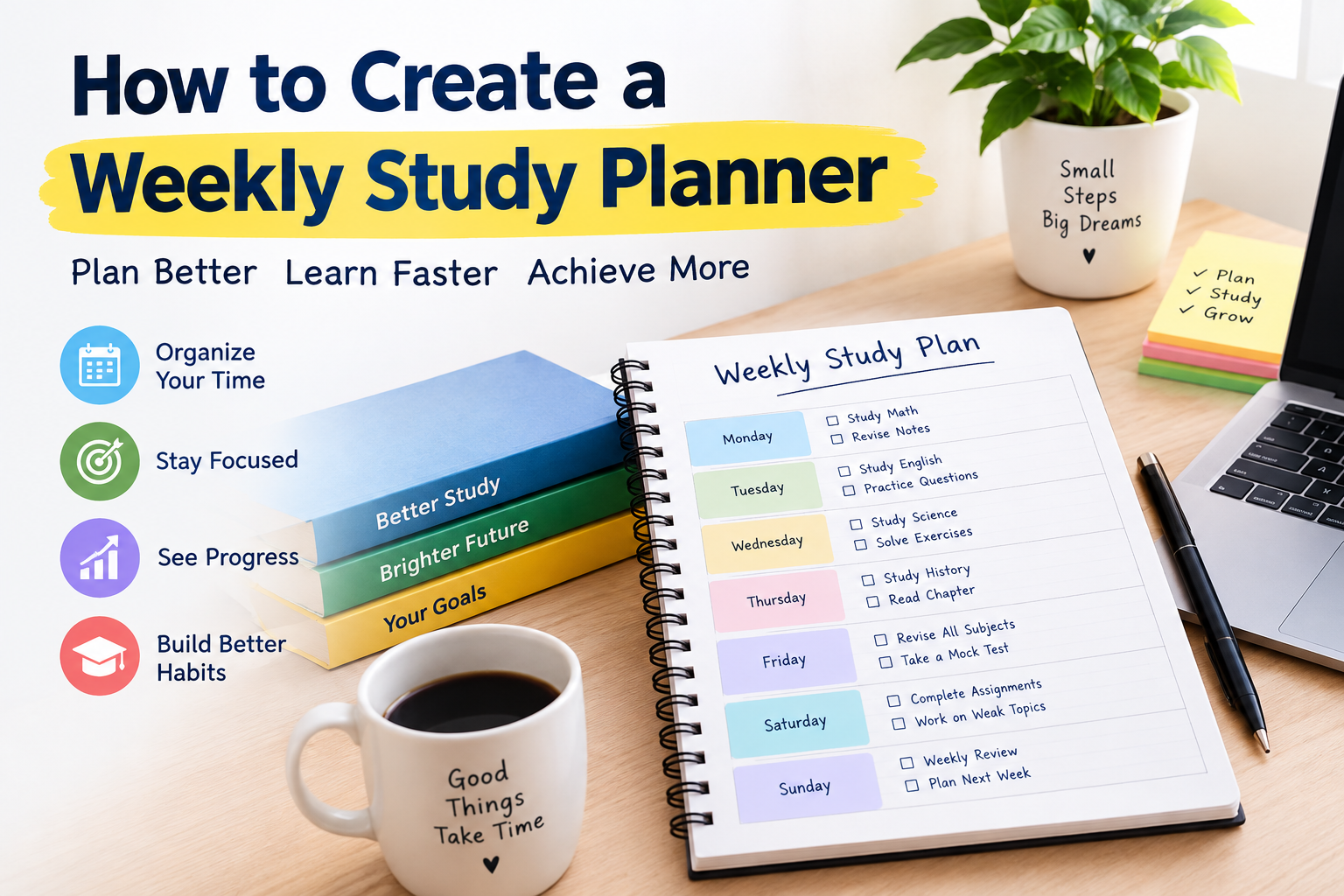
Example of a Simple Weekly Study Planner
Here is an example of how you could organize a basic weekly study schedule:
Monday: Math homework, English reading, short revision
Tuesday: Science chapter, Math practice questions
Wednesday: History notes, English assignment
Thursday: Science revision, Math review
Friday: Weekly revision, unfinished assignments
Saturday: Exam preparation, difficult topics, project work
Sunday: Light review, organize notes, prepare next week’s planner
You can change this structure according to your classes and responsibilities.
Final Thoughts
Creating a weekly study planner is a simple habit that can make a big difference in your academic life. It helps you understand your responsibilities, manage your time, prioritize important work, and create a consistent study routine.
From my point of view, the best planner is not the one with the most details. It is the one you can actually use every week. Start with a simple schedule, give important tasks enough time, divide large assignments into smaller steps, include regular review, and leave room for rest.
Remember that your weekly study planner is a tool, not a strict rule. Some weeks will be easier than others, and unexpected things will happen. If you miss a study session, simply adjust your plan and continue.
With regular use, planning your week can become a natural part of your study routine. Instead of wondering what to study next, you can begin each day with a clear idea of what needs to be done. That clarity can help you stay focused, reduce stress, and make better use of your study time.