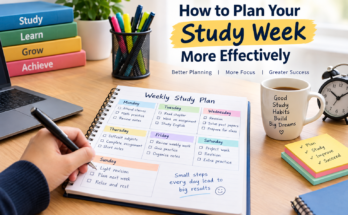

School projects can sometimes feel much harder than regular homework. A project may include research, writing, designing, presentations, teamwork, and a deadline that seems to arrive very quickly. When several school projects come together with tests and daily assignments, it is easy to feel stressed and confused.
In my experience, the biggest problem is usually not the project itself. The real problem is trying to think about everything at the same time. Once a large project is divided into smaller and clearer tasks, it becomes much easier to handle.
The good news is that you do not need complicated systems to manage school projects. A simple plan, a realistic schedule, and a little organization can make a big difference. In this article, I will share practical ways to manage school projects without feeling overwhelmed.
Understand the Project Before You Start
One of the first things I recommend is understanding exactly what your teacher expects. Many students start working immediately without reading the instructions carefully. This can create problems later because they may spend time on things that are not required.
Before starting, read the project instructions slowly. Identify the topic, required format, deadline, number of pages or slides, research requirements, and grading criteria.
If something is unclear, ask your teacher. Spending a few minutes getting clarification can save hours of unnecessary work.
I also like to write down the main requirements in my notebook. This gives me something simple to check while working.
Break the School Project Into Smaller Tasks
Looking at a complete project can make it seem huge. Instead of thinking, “I have to finish this entire project,” break it into smaller tasks.
For example, a research project could be divided into:
- Understand the topic
- Find reliable information
- Take study notes
- Create an outline
- Write the first draft
- Add images or supporting information
- Edit the project
- Prepare the final version
- Review the requirements
- Submit the project
Each task feels much easier than the complete project.
This is one of my favorite methods for reducing school stress. When I can see exactly what needs to be done next, I do not waste energy worrying about everything else.
Start With the Deadline
Once you understand the project, look at the deadline. Do not wait until the final few days to begin.
Suppose you have ten days to complete a project. You can use the first few days for research, several days for writing and preparation, and the final days for editing and checking your work.
Starting early gives you something very valuable: extra time.
If something goes wrong, you still have an opportunity to fix it. You may discover that a source is not useful, your presentation needs changes, or you need more time for research.
Create a Simple School Project Schedule
A school project schedule does not need to be complicated. You can use a notebook, calendar, or digital planner.
Write down the project deadline and then work backward.
For example:
Monday: Understand instructions and choose the topic
Tuesday: Research important information
Wednesday: Complete research notes
Thursday: Create the project outline
Friday: Write the first section
Saturday: Complete the main content
Sunday: Edit and improve the project
Monday: Final review and submission
This approach makes the project feel manageable because you are focusing on one step at a time.
Avoid Trying to Do Everything in One Day
One of the most common mistakes students make is trying to finish a large school project in one long study session.
At first, this may seem productive. However, working for many hours without proper breaks can make you tired and reduce your concentration.
Instead, work in shorter focused sessions.
You might study for 30 to 45 minutes and then take a short break. During your break, stand up, drink some water, stretch, or simply rest your eyes.
When you return to the project, you can often work with better concentration.

Prioritize Your Most Important Tasks
Not every part of a school project has the same level of importance.
If your deadline is close, focus first on the tasks that must be completed for the project to be submitted successfully.
For example, completing the required research and main content should usually come before spending a long time choosing decorative elements.
I find it helpful to ask myself one simple question:
What is the most important thing I can complete right now?
Then I focus only on that task.
This prevents me from spending too much time on small details while important work remains unfinished.
Keep Your Research Organized
Research can quickly become confusing if you collect information from many sources without organizing it.
Create separate notes for important facts, ideas, sources, and questions.
If you are researching online, record where each important piece of information came from. This can make it easier to create references later and helps you avoid accidentally using information without giving proper credit.
Do not copy large sections of information and call them your own work. Instead, understand the information and explain it using your own words while properly acknowledging your sources when required.
Good research is not about collecting the largest amount of information. It is about finding useful and trustworthy information.
Use a Project Checklist
A checklist is one of the simplest ways to manage school projects.
Create a list of everything that needs to be completed. Then mark each task when it is finished.
For example:
☐ Read project instructions
☐ Choose a topic
☐ Complete research
☐ Organize notes
☐ Create outline
☐ Write project
☐ Add required visuals
☐ Edit grammar
☐ Check formatting
☐ Review teacher requirements
☐ Submit project
A checklist gives you a clear picture of your progress. Seeing several completed tasks can also make you feel more confident.
Do Not Aim for Perfect From the Beginning
Many students feel overwhelmed because they expect their first attempt to be perfect.
I believe it is better to create a rough version first and improve it afterward.
When writing, focus on getting your ideas onto the page. You can fix grammar, wording, organization, and other details during the editing stage.
Trying to make every sentence perfect while writing the first draft can slow you down considerably.
Progress is more important than perfection when you are starting a project.
Manage Group Projects Carefully
Group projects can create additional stress because you are responsible for working with other students.
At the beginning, make sure everyone understands their responsibilities.
For example, one student might handle research, another might prepare slides, another might work on design, and another might prepare the presentation.
However, everyone should understand the complete project rather than only knowing their individual part.
Communication is also important. Check in with your group regularly so problems do not appear at the last minute.
If someone is struggling with their task, discuss the problem early instead of waiting until the deadline.
Remove Distractions While Working
Your environment can have a major effect on your concentration.
When working on a school project, keep unnecessary distractions away. Put your phone aside if you do not need it. Close unrelated browser tabs and avoid constantly checking social media.
You do not need a perfect study room. A clean desk, comfortable chair, notebook, and the materials required for your project can be enough.
The goal is to make it easier for your brain to focus on the task in front of you.
Take Care of Yourself
Managing school projects is not only about schedules and checklists. Your energy matters too.
Try to get enough sleep, eat regular meals, drink water, and take reasonable breaks.
When you are extremely tired, even a simple task can feel difficult. Rest can actually help you work more effectively because you return with better concentration.
If you feel overwhelmed, take a few minutes to step away from your work. Take a breath and look at what needs to be done next rather than worrying about the entire project.
Review Your Work Before Submission
Never assume a project is finished immediately after completing the main content.
Give yourself some time to review it.
Check whether you followed the instructions, completed every required section, corrected obvious grammar mistakes, used appropriate sources, and included everything your teacher requested.
If possible, read the project after taking a short break. You may notice mistakes that you missed while working on it.
For presentations, practice speaking before the actual presentation day. Even one or two practice sessions can make you feel more comfortable.
Learn From Every Project
Every school project is an opportunity to improve your organization skills.
After finishing a project, think about what worked well and what caused unnecessary stress.
Maybe you started too late. Maybe your research took longer than expected. Maybe you did not divide the work properly in a group.
Write down a few lessons and use them for your next project.
Over time, you will become faster and more confident at managing school projects.
Final Thoughts
Learning how to manage school projects without feeling overwhelmed is mostly about changing how you approach large tasks. Instead of looking at the entire project as one huge responsibility, divide it into smaller steps and focus on one step at a time.
Start early, create a simple schedule, use a checklist, organize your research, take regular breaks, and give yourself enough time to review your work. If you are working with classmates, communicate clearly and make sure everyone knows what they need to do.
Most importantly, remember that you do not have to complete everything perfectly on the first attempt. A project becomes much easier when you focus on steady progress.
From my point of view, good project management is not about working all day. It is about knowing what needs to be done, deciding when to do it, and avoiding unnecessary stress. Once you develop this habit, school projects can become much more manageable and even enjoyable.