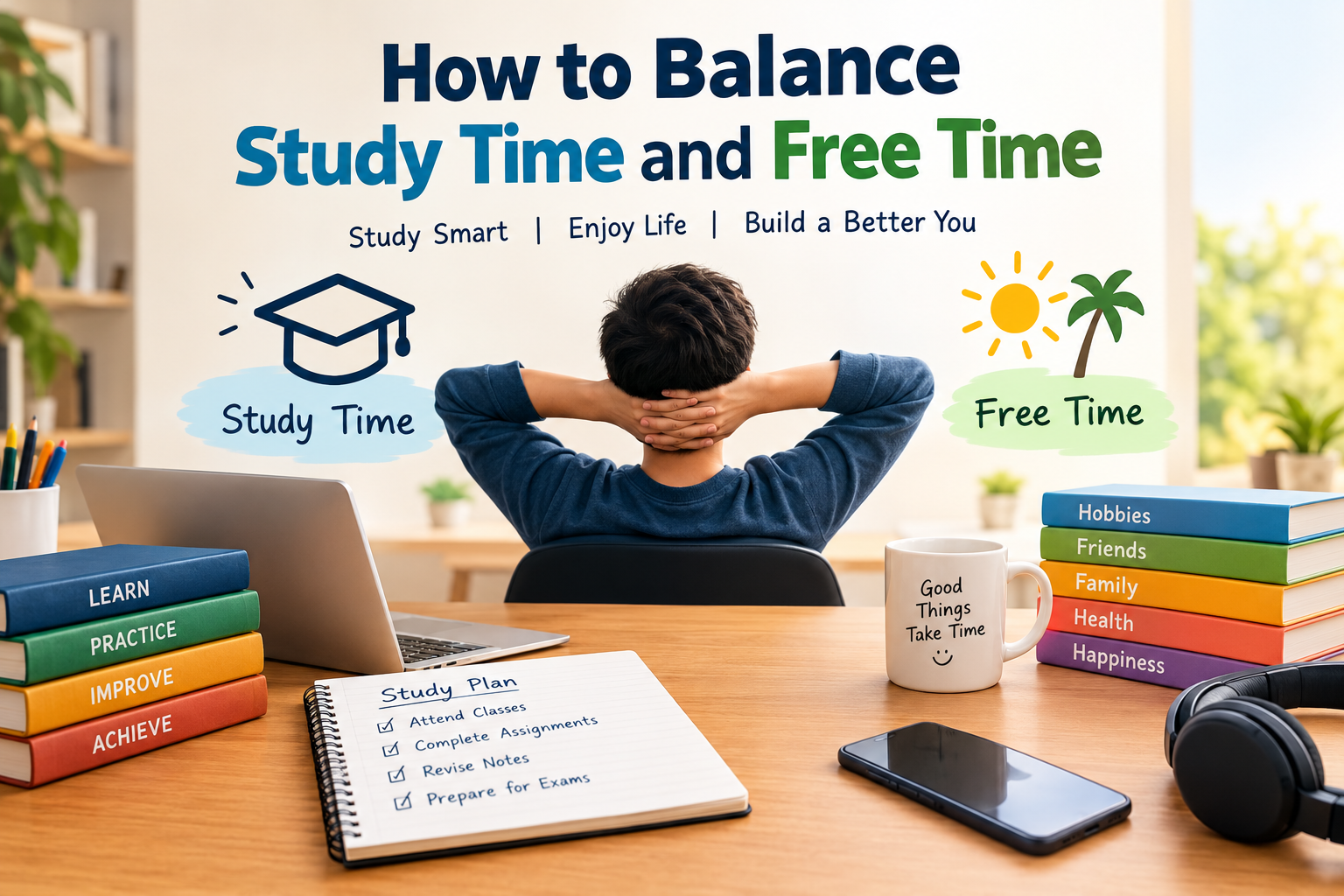
Balancing study time and free time can be difficult, especially when you have classes, assignments, exams, and personal responsibilities to manage. Many students feel that they have to study all day to achieve good results. In my opinion, this is not always the best approach. Studying for long hours without proper breaks can make you tired, stressed, and less productive.
I believe that a good balance between study time and free time can actually help students learn better. When you give yourself enough time to relax, enjoy your hobbies, spend time with family, or meet friends, you return to your studies with a fresher mind.
The goal is not to study every minute or spend the whole day relaxing. The goal is to create a routine where both learning and personal time have their own place.
Why Balance Between Study and Free Time Matters
Students need both productive study sessions and proper relaxation. If you spend too much time studying without taking breaks, your concentration may decrease. You may read the same page several times without remembering what you learned.
On the other hand, spending too much free time can make it difficult to complete assignments and prepare for exams.
A healthy balance allows you to make progress in your education while still enjoying your daily life. From my point of view, free time should not be considered a waste of time. It can help your mind recover after studying.
Create a Realistic Study Schedule
One of the easiest ways to balance study time and free time is to create a realistic study schedule. You do not need to plan every minute of your day. Instead, decide when you will study and when you will relax.
For example, you might study for two hours after school and then take some time for dinner, exercise, hobbies, or entertainment. Later, you can complete another shorter study session.
A realistic schedule should match your daily routine. If you know that you feel more focused in the morning, use that time for difficult subjects. If you concentrate better in the evening, schedule important study tasks then.
The most important thing is to create a plan that you can actually follow.
Set Clear Study Goals
Having a clear goal can make your study time more productive. Instead of saying, “I will study mathematics all evening,” choose a specific target.
You could decide to complete two chapters, solve twenty practice questions, or review a particular topic.
When you have a clear goal, you are less likely to waste time. You can focus on completing the task and then enjoy your free time without constantly thinking about unfinished work.
In my experience, studying with a purpose is much better than sitting at a desk for several hours without knowing what you want to accomplish.
Use Short Study Sessions
You do not always need to study for several hours at once. Short and focused study sessions can be easier to manage.
Try studying for around 30 to 50 minutes and then taking a short break. During the break, stand up, drink water, stretch, or walk around.
Short breaks can help you return to your work with better concentration. They also make studying feel less exhausting.
If you have a large amount of work, divide it into smaller tasks. Completing one task at a time can make your workload feel more manageable.
Protect Your Free Time
Free time is important, so I believe students should protect it instead of feeling guilty about using it.
After completing your planned study goals, allow yourself to enjoy activities that make you feel relaxed. You might watch a movie, play a game, read a book, listen to music, exercise, or spend time with friends and family.
The activity does not matter as much as the feeling of relaxation it provides.
When free time is planned properly, you can enjoy it without worrying that you should be studying every second.
Avoid Unplanned Screen Time
Phones, social media, and online videos can easily take more time than expected. You may plan to check your phone for five minutes and suddenly realize that an hour has passed.
This can create a problem because your study work remains unfinished while your free time is also reduced.
Try setting specific periods for entertainment and social media. During study sessions, keep your phone away from your desk if possible.
This simple habit can improve your concentration and help you finish your work sooner.
Learn to Prioritize Your Tasks
Not every school task has the same level of importance. Learning how to prioritize can help you save time.
Start by identifying assignments, tests, and projects that have the closest deadlines. Then consider which tasks require the most effort.
For example, if you have a small reading assignment due tomorrow and a major project due next week, you can complete the urgent task first and then make progress on the larger project.
Good prioritization helps prevent last minute stress. It also creates more space for free time.
Do Not Forget About Sleep
Sleep is one of the most important parts of balancing study time and free time. Some students stay awake late at night because they believe extra study hours will improve their grades.
However, being tired can make it harder to concentrate and remember information.
Try to create a regular sleep routine and avoid making late night studying a daily habit. If you have planned your work properly, you should not need to sacrifice sleep every night.
A rested mind is generally better prepared for learning.
Make Time for Exercise
Exercise can be an excellent way to take a break from studying. You do not need to spend hours at the gym.
A short walk, stretching session, cycling, sports activity, or simple home workout can help you step away from your books and refresh your mind.
I think exercise is especially useful when you have been sitting at a desk for a long time. Even a short physical activity can make your free time feel more refreshing.

Enjoy Your Hobbies
Hobbies are another important part of a balanced student lifestyle. Whether you enjoy drawing, photography, cooking, writing, gaming, music, sports, or reading, try to make some time for activities you genuinely enjoy.
Hobbies can give your mind a break from academic pressure. They can also help you develop creativity and other useful skills.
You do not have to spend several hours on a hobby every day. Even 20 or 30 minutes can be enough to make your day more enjoyable.
Do Not Compare Your Routine With Others
Every student has a different schedule, learning style, and amount of responsibility. Someone else may study for six hours a day while you may achieve your goals in three focused hours.
Comparing your routine with another student’s routine can create unnecessary pressure.
Instead, focus on your own results. Ask yourself whether you are completing important tasks, understanding your subjects, and still having enough time to rest.
The best study schedule is not necessarily the longest one. It is the one that works effectively for you.
Adjust Your Routine During Exams
Balance does not mean that your schedule must remain exactly the same throughout the year. During exams, you may need to increase your study time.
However, even during busy exam periods, you should still take short breaks, eat properly, sleep enough, and give yourself some time to relax.
After the exams are finished, you can return to a more relaxed routine.
Being flexible is an important part of managing study time and free time successfully.
Learn When to Say No
Sometimes students become overwhelmed because they accept too many activities and responsibilities.
It is okay to say no when your schedule is already full. If you have important assignments to complete, you may need to reduce unnecessary activities temporarily.
This does not mean you should avoid friends or hobbies. It simply means you need to understand your limits.
Knowing when to say no can help you protect both your academic goals and your personal time.
Make Every Study Session Count
Quality is often more important than quantity. Instead of trying to study for many hours, focus on making each study session productive.
Choose a quiet environment, remove unnecessary distractions, keep your study materials ready, and decide what you want to accomplish before you begin.
When you study with concentration, you may finish your work faster. This gives you more time for relaxation and other activities.
Final Thoughts
Learning how to balance study time and free time is an important skill for every student. You do not need to choose between academic success and enjoying your life. With proper planning, you can make space for both.
Create a realistic study schedule, set clear goals, prioritize important tasks, take regular breaks, protect your free time, and make sure you get enough sleep. Also remember to enjoy your hobbies, exercise, and spend time with people who matter to you.
In my opinion, the best student routine is one that supports both learning and personal well being. Studying hard is important, but constantly feeling exhausted is not the goal.
A balanced routine can help you become more organized, focused, and confident. When you learn to manage your time wisely, you can complete your responsibilities while still having time to enjoy the things you love.
The key is simple: study with purpose, rest without guilt, and create a routine that you can maintain.