Preparing for an exam can feel stressful, especially when there are many chapters, notes, and topics to review. In my experience, effective revision is not about studying for extremely long hours. It is about using your time wisely and focusing on the information that actually helps you understand the subject. A good revision routine can make studying easier, improve your confidence, and help you remember important information during the exam.
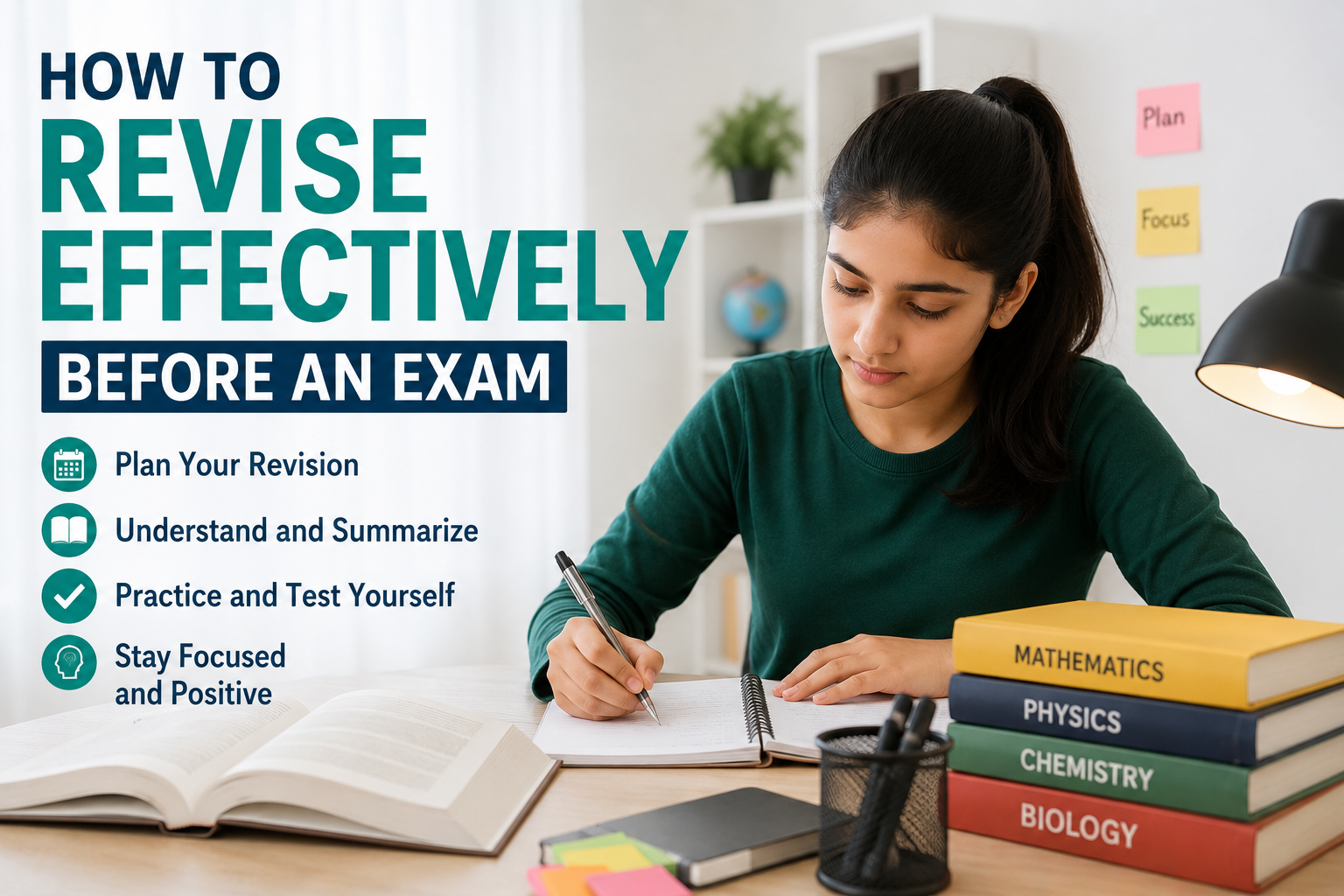
If you want to know how to revise effectively before an exam, the first step is to create a simple plan. You should know what you need to study, how much time you have, and which subjects need the most attention. When revision is organized, it becomes much easier to stay focused and avoid last minute stress.
Start Your Revision Early
One of the best exam revision tips I can give is to start early. Many students wait until only a few days are left before an exam and then try to study everything at once. This usually creates pressure and makes it harder to remember information.
Starting early gives you enough time to understand difficult topics, review important concepts, and practice questions. Even if you can only study for a short time each day, regular revision can be more effective than studying for many hours on one day.
I personally believe that consistency matters more than studying all night. A small amount of focused revision every day can gradually build strong knowledge.
Make a Simple Revision Plan
Before opening your books, make a revision plan. Write down all the subjects and topics that you need to cover. Then divide them across the days you have available.
Start with the subjects or chapters that you find difficult. Easier topics can be reviewed later. This approach helps you use your best study time for the areas where you need the most improvement.
Your revision plan does not have to be complicated. You can simply decide what you will study in the morning, afternoon, or evening. Leave some time for breaks and revision of older topics.
A realistic study plan is better than an ambitious plan that you cannot follow.
Understand Instead of Memorizing Everything
Effective exam revision is not just about reading the same page again and again. You should try to understand what you are studying.
When I revise a topic, I first ask myself what the main idea is and why it is important. I try to explain the concept in simple words. If I cannot explain it without looking at my notes, I know that I need to study it again.
Understanding information makes it easier to remember. It also helps when exam questions are written differently from the examples in your textbook.
Instead of memorizing every sentence, focus on key ideas, definitions, formulas, examples, and important facts.
Use Active Recall
Active recall is one of the most useful study techniques for students. Instead of continuously looking at your notes, close the book and try to remember what you have just studied.
For example, after studying a chapter, put your notes away and ask yourself questions about the topic. Try to write down the main points from memory.
You can also create flashcards with questions on one side and answers on the other. Test yourself regularly instead of simply reading the answers.
This method shows you what you actually know and which areas still need revision.
Practice With Past Questions
If past papers or practice questions are available, use them during your exam preparation. They can help you understand the type of questions that may appear and show you how well you can apply your knowledge.
Do not only check whether your final answer is correct. Look at your mistakes and understand why you made them.
For subjects such as mathematics, physics, accounting, or chemistry, practice is especially important. Reading formulas may help you remember them, but solving problems teaches you how to use them.
I find that practice questions also make revision more interesting because they turn studying into an active task.
Break Large Topics Into Smaller Parts
A large chapter can look difficult when you see it as one huge task. Instead of trying to finish the entire chapter at once, divide it into smaller sections.
For example, you could study one concept, take a short break, and then move to the next concept. After completing several sections, review everything together.
Breaking your revision into smaller parts makes your workload feel more manageable. It also gives you a sense of progress, which can improve motivation.
Take Regular Study Breaks
Studying continuously for several hours does not always mean you are learning effectively. Your concentration can decrease when you study for too long without a break.
I prefer using focused study sessions followed by short breaks. During a break, you can walk around, drink water, stretch, or simply relax for a few minutes.
Try not to spend the entire break scrolling through social media because it can become difficult to return to your studies.
The goal of a break is to refresh your mind so you can return to your work with better concentration.
Remove Distractions
Your study environment can have a major effect on your revision. Before starting, remove anything that may interrupt your concentration.
Keep your phone away if you do not need it for studying. Turn off unnecessary notifications and choose a quiet place where you can work comfortably.
You should also keep your books, notebooks, pens, and other study materials nearby. This prevents unnecessary trips away from your study area.
A clean and organized study space can make it easier to focus.
Create Short Revision Notes
Short revision notes can be extremely useful before an exam. Instead of copying entire pages from your textbook, write only the most important information.
You can include key definitions, formulas, dates, concepts, examples, and common mistakes. Use headings so you can quickly find what you need.
These notes are particularly helpful during the final days before an exam because you can review important information without reading entire chapters again.
However, do not spend so much time making notes that you forget to actually study the material.
Teach the Topic to Someone Else
One simple way to check your understanding is to teach the topic to another person. You can explain it to a friend, family member, or even yourself.
Try to explain the concept without reading from your notes. If you get stuck, identify the part that you do not understand and review it again.
Teaching forces you to organize your thoughts and explain information clearly. It can also reveal gaps in your knowledge that you may not notice while reading.
If nobody is available, imagine that you are teaching a class and explain the topic aloud.
Review Difficult Topics More Than Once
Some topics will naturally be harder than others. Do not expect yourself to understand everything perfectly on the first attempt.
When you find a difficult topic, mark it and return to it later. Study it again after a few hours or the next day. Repeated exposure can make difficult information easier to understand and remember.
This is why starting your revision early is so helpful. You have enough time to revisit challenging topics without panicking.
Look After Your Sleep and Health
Good revision is not only about books and notes. Your physical condition also matters. Getting enough sleep can help you feel more alert and focused while studying.
Try to maintain a regular sleep schedule during exam preparation. Avoid staying awake all night whenever possible. An exhausted mind can make studying much harder.
Drink enough water, eat regular meals, and take short movement breaks. These simple habits can help you maintain your energy throughout the revision period.
Revise Before the Exam Day
The final day should not be about learning an entire syllabus from the beginning. Ideally, most of your major revision should already be finished.
Use the final revision session to review key points, formulas, definitions, summaries, and areas where you still feel uncertain.
Avoid trying to memorize huge amounts of new information at the last minute. Instead, focus on reinforcing what you already know.
Prepare your exam materials in advance so you do not have to worry about them on the morning of the exam.
Stay Positive During Revision
Exam preparation can sometimes make students feel anxious. If you have a difficult day, do not assume that you have failed. Everyone has days when concentration is lower or certain topics seem difficult.
Focus on what you can do next. Complete one small topic, answer a few practice questions, or review one section of your notes.
Progress does not always feel dramatic, but small improvements add up over time.
I believe confidence comes from preparation. When you know that you have followed a revision plan, practiced questions, and reviewed your weak areas, you can enter the exam with a much calmer mindset.
Common Revision Mistakes to Avoid
There are several mistakes that students often make while preparing for exams. One common mistake is reading notes repeatedly without testing yourself. Another is trying to study everything in one night.
Some students also spend too much time highlighting books or creating beautiful notes without checking whether they actually understand the material.
Another mistake is ignoring difficult subjects because they feel uncomfortable. Difficult topics should receive more attention, not less.
Finally, avoid comparing your revision routine with someone else’s. Every student learns differently. Find a method that helps you understand and remember information effectively.
Final Thoughts
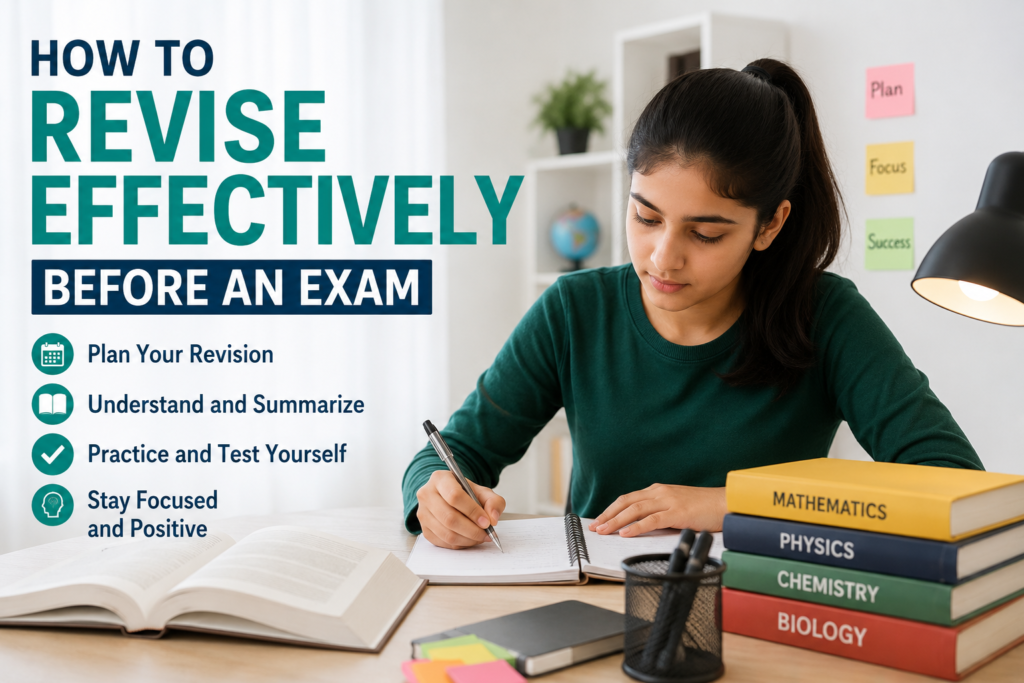
Learning how to revise effectively before an exam does not require a complicated system. The most important things are planning your time, understanding the material, testing yourself, practicing questions, taking breaks, and reviewing difficult topics regularly.
From my point of view, the best revision method is the one you can follow consistently. You do not need to study every waking hour to prepare well. You need focused study sessions and a clear understanding of what you want to achieve.
Start early, divide your subjects into manageable sections, use active recall, practice with questions, and give yourself enough time to rest. With the right approach, exam revision can become more organized and much less stressful.
Most importantly, remember that effective revision is about quality, not simply quantity. When you study with a clear plan and stay consistent, you give yourself a much better chance of entering the exam prepared, confident, and ready to do your best.