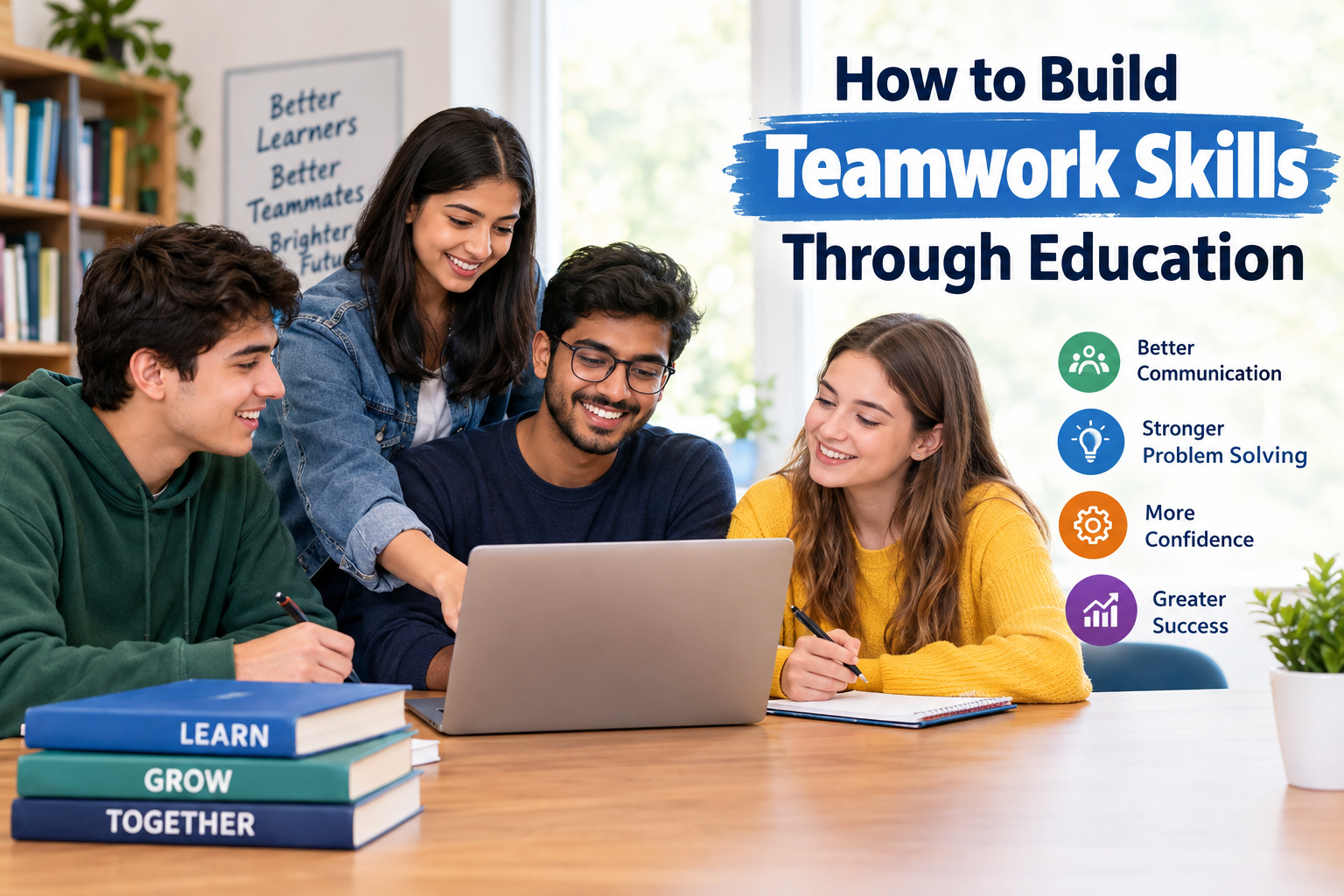
Teamwork is one of the most useful skills a student can develop during education. In my opinion, learning is not only about getting good grades, completing assignments, or preparing for exams. Education also gives students opportunities to communicate with others, share ideas, solve problems together, and understand different points of view. These experiences can help students become better team members in school, college, and their future careers.
Many students think teamwork simply means working in a group. I believe it is much more than that. Good teamwork requires communication, patience, responsibility, respect, listening, leadership, and the ability to support other people. The good thing is that these skills can be developed naturally through different educational activities.
In this article, I will explain how students can build teamwork skills through education and how these skills can help them in different areas of life.
Why Teamwork Skills Are Important for Students
Teamwork skills are important because students rarely work completely alone throughout their education. Group projects, classroom discussions, presentations, laboratory activities, sports, clubs, and school events often require students to cooperate with others.
When students learn to work as a team, they become more comfortable sharing their thoughts and listening to other people. They also learn that everyone may have different strengths. One student may be good at research, another may be confident in speaking, while someone else may be better at organizing information.
Working together allows students to use these different abilities for one common goal. In my view, this is one of the most valuable lessons education can provide.
Participate in Group Projects
Group projects are one of the easiest ways to develop teamwork skills through education. Students can learn how to divide responsibilities, communicate regularly, manage time, and complete a shared task.
For example, if four students are preparing a presentation, they can divide the work according to their strengths. One student can research the topic, another can prepare the presentation slides, another can organize examples, and another can practice the speech.
However, students should not simply divide the work and disappear until the deadline. Effective teamwork requires regular communication. Team members should discuss their progress and help each other when someone faces a problem.
I believe group projects become much more useful when every student understands that the final result belongs to the entire team.
Improve Communication Skills
Good communication is at the center of successful teamwork. Students need to explain their ideas clearly and understand what other people are trying to say.
Education provides many opportunities to practice communication. Classroom discussions, presentations, debates, group assignments, and student clubs can all help students become better communicators.
Students should practice speaking clearly without trying to dominate the conversation. At the same time, they should learn to listen carefully.
One simple habit I recommend is thinking before responding. Instead of immediately rejecting another student’s idea, try to understand why they suggested it. This creates a more respectful learning environment and makes teamwork easier.
Learn to Listen to Others
Listening is sometimes overlooked when people talk about teamwork. Many students focus on speaking and sharing their own ideas, but effective team members also know how to listen.
During classroom activities, students may hear opinions that are different from their own. Instead of treating these opinions as wrong, students can use them as opportunities to learn.
Active listening means paying attention, asking useful questions, and showing that you understand what another person is saying. This skill can prevent misunderstandings and improve group performance.
From my point of view, a student who knows how to listen can often become a stronger team member than someone who only knows how to speak confidently.
Take Responsibility for Your Role
Every successful team needs responsible members. If one person does not complete their part of the work, the entire group may struggle.
Students can build responsibility by taking their assignments seriously and completing tasks on time. If they promise to research a topic, prepare notes, or create part of a presentation, they should make a genuine effort to finish it.
Sometimes students face unexpected problems and cannot complete their work. In that situation, communication is important. They should tell their teammates early instead of waiting until the last moment.
Taking responsibility teaches students that their actions can affect other people. This lesson becomes extremely valuable in professional life.
Practice Teamwork Through Classroom Activities
Teachers can create many opportunities for students to practice teamwork during normal classroom lessons. Students can work in small groups to solve questions, discuss a reading, create projects, or explain concepts to one another.
These activities can make learning more active and enjoyable. Instead of receiving information only from the teacher, students can learn from their classmates as well.
For example, a teacher may give a group a problem and ask students to find several possible solutions. Each student can contribute an idea, and the group can compare the options before choosing the strongest solution.
Activities like this develop communication, creativity, cooperation, and problem solving at the same time.
Learn From Different Perspectives
One of the biggest benefits of teamwork is exposure to different perspectives. Students come from different backgrounds and have different experiences. Because of this, they may approach the same problem in completely different ways.
Instead of seeing differences as obstacles, students can learn to use them as strengths.
When working on an assignment, I think students should encourage every team member to contribute. A quiet student may have an excellent idea but may need encouragement to share it.
Respecting different perspectives helps students become more open minded. It also prepares them for future environments where they will work with people who think differently from them.
Develop Leadership Skills
Teamwork and leadership are closely connected. A good leader does not simply give instructions to everyone else. A good leader helps the team stay organized, encourages participation, listens to concerns, and keeps everyone focused on the goal.
Students can develop leadership skills by taking small responsibilities at school or college. They can lead a group project, organize a classroom activity, coordinate a club event, or help classmates complete a task.
Leadership does not always mean being the loudest person in the group. Sometimes the best leader is the person who quietly helps everyone work together.
Education gives students a safe environment to practice these skills before they enter professional life.
Learn How to Handle Disagreements
Disagreements are normal when people work together. Students may disagree about how to complete an assignment, which idea to choose, or how responsibilities should be divided.
Instead of avoiding every disagreement, students should learn how to handle differences respectfully.
The first step is to understand the problem. Team members should explain their opinions without insulting or blaming each other. They can then look for a solution that benefits the group.
Learning how to manage disagreements is an important teamwork skill because real life also includes different opinions. Students who learn this skill through education may feel more confident when facing difficult group situations later.
Take Part in Sports and Student Activities
Teamwork is not limited to academic work. Sports and student activities can also help students develop strong teamwork skills.
Playing football, basketball, volleyball, or other team sports teaches students how to cooperate, communicate, follow strategies, and support teammates.
Student clubs and school events provide similar opportunities. Organizing a competition, preparing a cultural event, or participating in a community activity requires people to work together.
These experiences can teach lessons that are difficult to learn from textbooks alone.
Use Technology for Team Collaboration
Modern education also provides digital opportunities for teamwork. Students can use online documents, communication platforms, presentation tools, and educational applications to collaborate on projects.
Digital teamwork teaches students how to communicate when they are not physically together. They can share files, provide feedback, organize tasks, and track progress.
However, students should remember that technology is only a tool. Successful teamwork still depends on communication, responsibility, respect, and cooperation.
Give and Receive Constructive Feedback
Feedback can help students improve their teamwork skills. After completing a group project, students can discuss what worked well and what could have been better.
For example, they may realize that communication was weak at the beginning or that responsibilities were not divided clearly. Instead of treating these mistakes as failures, they can use them as lessons for their next project.
Students should also learn how to receive feedback without becoming defensive. Constructive feedback is meant to support improvement, not to attack someone personally.
Build Teamwork Through Everyday Education
Students do not need to wait for a major project to practice teamwork. Small daily activities can also make a difference.
Helping a classmate understand a difficult lesson, participating in discussions, sharing useful resources, or supporting a group member who is struggling are simple examples of teamwork.
In my opinion, consistent small actions can have a bigger effect than one large project because they turn teamwork into a normal part of student life.
Final Thoughts
Building teamwork skills through education is one of the best ways to prepare students for the future. Academic knowledge is important, but students also need the ability to communicate, listen, cooperate, solve problems, accept feedback, and respect different opinions.
Group projects, classroom activities, sports, student clubs, presentations, and digital collaboration all provide valuable opportunities to develop these skills.
I believe students should not see teamwork as simply another school requirement. It is a practical life skill that can help them become more confident students and more capable professionals.
When students learn how to work with others, they also learn something important about themselves. They discover their strengths, recognize areas where they need improvement, and understand how their contribution can support a larger goal.
Education becomes much more meaningful when students learn not only how to succeed individually but also how to succeed together. Strong teamwork skills can help students build better relationships, handle challenges more effectively, and prepare for a future where cooperation is an essential part of success.