
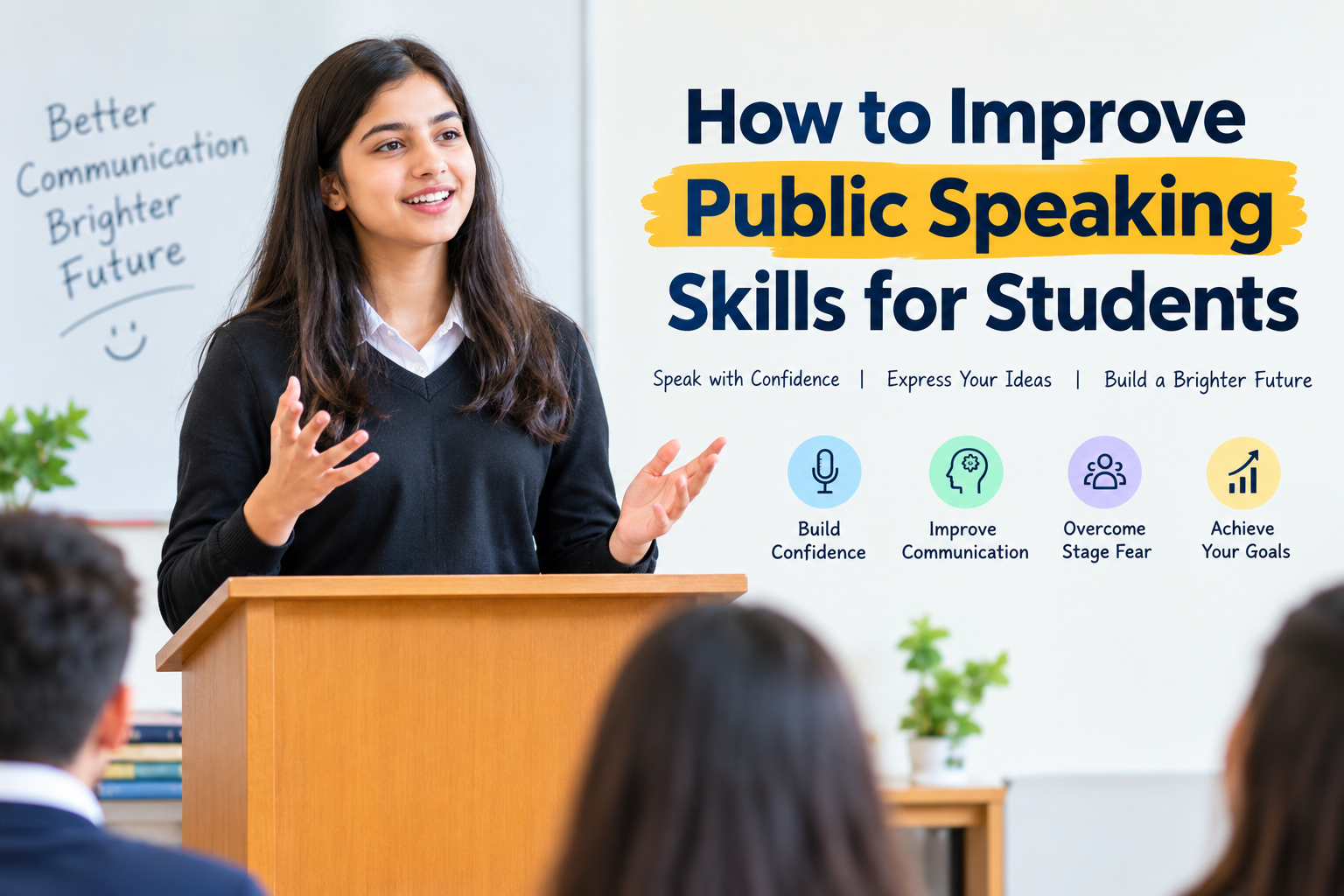
Public speaking is an important skill that every student can benefit from. Whether you are giving a classroom presentation, answering questions in front of your teacher, participating in a group discussion, or speaking at a school event, the ability to communicate clearly can make a big difference. In my opinion, public speaking is not a talent that only a few people are born with. It is a skill that can be learned and improved with regular practice.
Many students feel nervous when they have to speak in front of others. They may worry about forgetting their words, making mistakes, or being judged by their classmates. These feelings are completely normal. The good news is that with the right habits and enough practice, students can become more confident speakers.
Why Public Speaking Skills Are Important for Students
Public speaking skills help students express their thoughts and ideas more clearly. A student may have excellent knowledge about a subject, but if they cannot explain their ideas properly, others may not understand their message.
Good communication skills can also help students during presentations, interviews, classroom discussions, and future job opportunities. Confidence in speaking can make it easier to communicate with teachers, classmates, colleagues, and other people.
I believe that learning public speaking at a young age gives students an advantage because they have more opportunities to practice and develop their communication abilities over time.
Start With Small Speaking Opportunities
One of the best ways to improve public speaking skills for students is to start small. You do not have to stand in front of a large audience on your first attempt.
Start by speaking more often in classroom discussions. Try answering a question even when you are not completely sure that your answer is perfect. You can also practice explaining a topic to a friend or family member.
Small speaking opportunities gradually make public speaking feel more normal. As your comfort level increases, you can move toward larger presentations and events.
Practice Speaking Every Day
Practice is one of the most powerful ways to become a better public speaker. You can spend just a few minutes each day practicing.
Choose a simple topic and speak about it for two or three minutes. You could talk about your favorite book, a school subject, a recent experience, or a skill you want to learn.
Try speaking without reading directly from your notes. This helps you organize your thoughts and become more comfortable expressing yourself naturally.
With regular practice, you may notice that your words come more easily and your confidence gradually improves.
Prepare Your Topic Properly
Good preparation can reduce nervousness. Before giving a presentation, make sure you understand your topic instead of simply memorizing every sentence.
Start by identifying the main message you want your audience to remember. Then organize your ideas into a simple structure.
A useful structure is an introduction, a few main points, and a conclusion. This makes your presentation easier to follow.
When you understand your subject well, you are less likely to panic if you forget one sentence. You can simply explain the idea using your own words.
Avoid Memorizing Everything
Many students think they need to memorize an entire speech before speaking. In my experience, this can sometimes create more pressure.
Instead of memorizing every word, remember the important points. You can write a few keywords on a card or prepare a simple outline.
For example, if you are speaking about healthy study habits, your keywords could be sleep, planning, breaks, exercise, and concentration. These words can remind you what to discuss without forcing you to remember a complete script.
This approach allows you to sound more natural and conversational.
Improve Your Body Language
Public speaking is not only about words. Body language also affects how confident you appear.
Try to stand or sit upright while speaking. Keep your shoulders relaxed and avoid constantly looking at the floor. Make natural eye contact with different people in the audience.
Your hands can also support your message. Simple gestures can make your presentation more interesting, but avoid moving your hands excessively.
A relaxed posture can also help you feel more confident. Even if you are nervous inside, calm body language can make speaking easier.
Work on Your Voice
Your voice is another important part of effective public speaking. Try not to speak too quickly because nervous students often rush through their presentations.
Speak at a comfortable speed and pause when you finish an important point. Pauses give your audience time to understand what you are saying.
You should also try to speak loudly enough for everyone to hear. Changing your tone slightly can prevent your speech from sounding flat or boring.
One useful exercise is to read a page from a book aloud every day. Focus on pronunciation, volume, and speaking speed.
Record Yourself While Practicing
Recording yourself can be a very useful way to improve public speaking skills for students. Use your phone or another recording device and record a short practice speech.
Then listen to the recording carefully. Notice whether you speak too quickly, repeat certain words, or use unnecessary pauses.
You may also notice positive things about your speaking style that you had not recognized before.
Do not use recordings to criticize yourself. Use them as a learning tool. Choose one or two areas to improve each time you practice.
Learn to Control Nervousness
Feeling nervous before public speaking is normal. The goal is not necessarily to remove nervousness completely. Instead, learn how to manage it.
Before speaking, take a few slow and comfortable breaths. Avoid thinking too much about what could go wrong. Focus on the message you want to share.
It can also help to arrive early and become familiar with the room. Knowing where you will stand and where your audience will sit can make the situation feel less unfamiliar.
Remember that most audiences are not looking for mistakes. They are usually interested in understanding what you have to say.
Practice Eye Contact
Eye contact can make communication feel more personal and confident. However, students do not need to stare at one person continuously.
Instead, look at different parts of the audience while speaking. If direct eye contact feels uncomfortable at first, look near people’s eyes or at different areas of the room.
With practice, natural eye contact becomes much easier.
Use Simple and Clear Language
A good speaker does not need complicated words. In fact, simple language often makes a presentation stronger.
Try to explain your ideas in a way that your audience can easily understand. Use examples when a topic is difficult.
For example, instead of giving a complicated explanation of time management, you could describe how making a daily study schedule helps a student decide when to study, rest, and complete assignments.
Clear communication is more valuable than using impressive vocabulary.
Ask for Feedback
Feedback can help you discover areas that need improvement. After giving a presentation, ask a teacher, friend, or family member what they thought about your speaking.
You can ask simple questions such as whether your voice was clear, whether your presentation was easy to follow, and whether you appeared confident.
Do not take constructive feedback personally. Consider it useful information that can help you become a better speaker.
Read More to Improve Communication
Reading can indirectly improve public speaking skills because it exposes students to new vocabulary, ideas, and ways of expressing thoughts.
Read books, educational articles, essays, and other useful material regularly. After reading something interesting, try explaining it aloud in your own words.
This simple habit improves both understanding and speaking ability.
Join Speaking Activities
Students can improve faster when they participate in activities that require communication. Depending on what is available at school or college, you might join debates, presentations, speech competitions, drama activities, discussion groups, or student clubs.
These activities provide real opportunities to practice speaking in front of others.
Do not worry if your first attempts are not perfect. Every speaking experience can teach you something.
Learn From Mistakes
One of the biggest barriers to public speaking is the fear of making mistakes. Students sometimes believe that one mistake will ruin their entire presentation.
I think it is important to remember that mistakes are part of learning. You may forget a word, pronounce something incorrectly, or lose your place for a moment. Simply pause, take a breath, and continue.
The more you practice speaking, the less frightening mistakes become.
Build Confidence Slowly
Confidence does not usually appear overnight. It develops through preparation, practice, and experience.
Set small goals for yourself. You might begin by answering one question in class each day. Later, you can volunteer for a short presentation. After that, you can challenge yourself to speak in front of a larger group.
Each successful experience builds confidence for the next one.
Final Thoughts
Improving public speaking skills for students is a gradual process, but it is absolutely possible. Students do not need to be naturally confident speakers to communicate effectively.
Start with small speaking opportunities, practice regularly, prepare your topics, improve your body language, work on your voice, and learn to manage nervousness. Recording yourself and asking for feedback can also make your progress easier to understand.
In my view, the most important thing is to keep practicing instead of waiting until you feel completely confident. Confidence often comes after taking action, not before it.
Public speaking is a skill that can support students throughout their education and future careers. The earlier students begin practicing, the more comfortable they can become with expressing their ideas clearly and confidently.