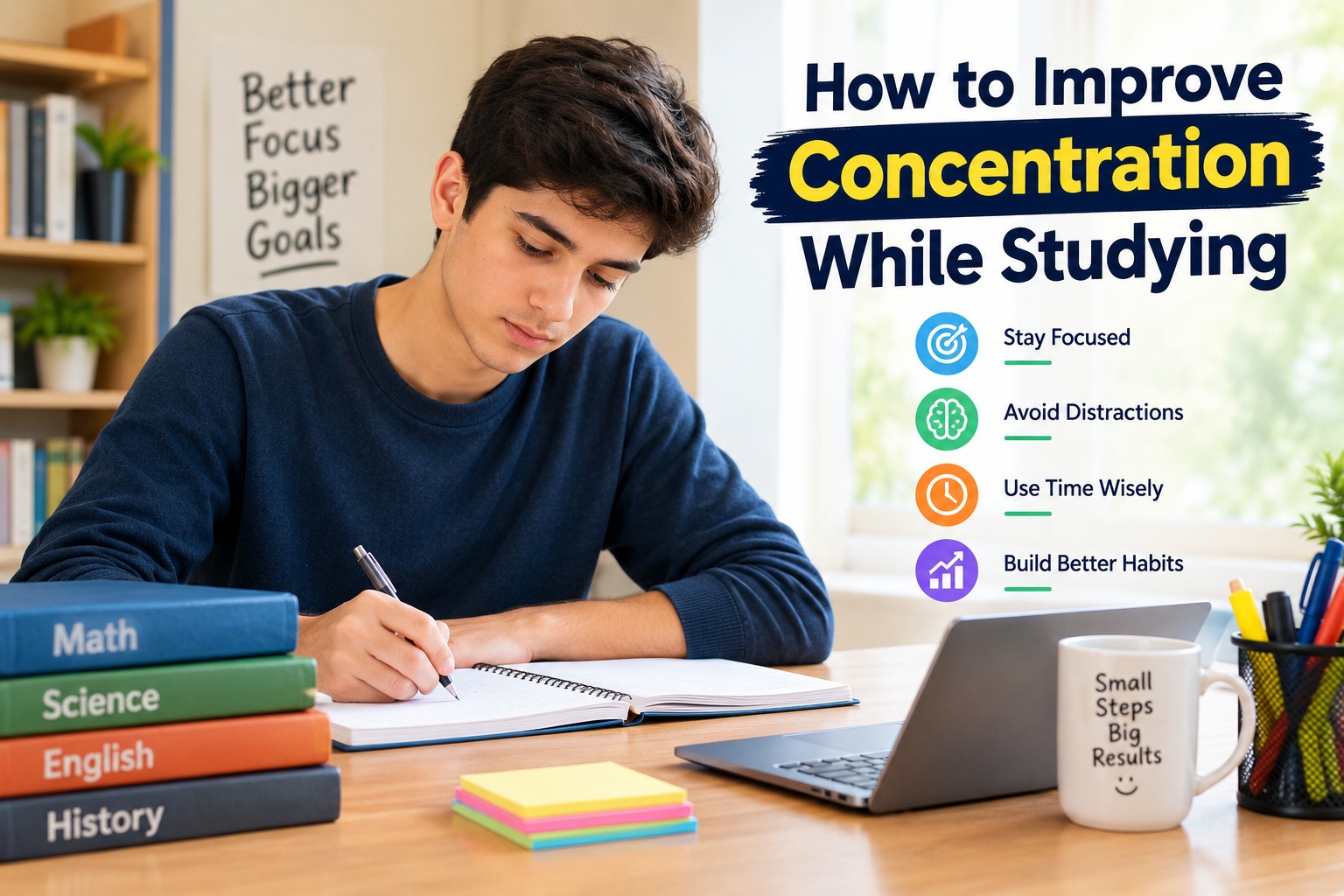
Studying requires more than simply sitting with a book for several hours. In my experience, the real challenge is keeping the mind focused long enough to understand and remember what I am studying. Many students spend a lot of time at their desks but achieve very little because their attention keeps moving from one thing to another.
If you often ask yourself how to improve concentration while studying, the good news is that concentration is a skill that can be developed. You do not need to study for ten hours a day or completely change your lifestyle. Small changes in your study environment, daily routine, and approach to learning can make a noticeable difference.
In this article, I will share practical study concentration tips that I believe can help students stay focused, avoid distractions, and make their study time more productive.
Understand Why You Lose Concentration
Before trying to improve concentration, I think it is important to understand why your attention disappears in the first place. Sometimes the problem is not laziness. You may be tired, hungry, worried about something, using your phone too much, or simply studying a subject that feels difficult.
I have found that concentration becomes much easier when I identify the reason behind my lack of focus. If I am tired, taking a short rest may help more than forcing myself to study. If my phone is distracting me, putting it away can solve the problem quickly.
Understanding the reason behind poor concentration helps you choose the right solution.
Create a Quiet Study Environment
Your study environment can have a major effect on your concentration. A noisy room, television, constant conversations, or unnecessary movement can make it difficult to focus.
I prefer keeping my study area simple and organized. I keep the books and materials I need nearby and remove things that are not connected to my current task.
You do not necessarily need a perfect study room. Even a small corner of your home can work if you keep it clean and use it mainly for studying.
A comfortable chair, suitable lighting, and a clean desk can also make studying more enjoyable.
Keep Your Phone Away
One of the biggest distractions for students today is the smartphone. Even when we are not actively using it, notifications can make us curious about what is happening.
When I need serious concentration, I believe the best option is to keep the phone away from the study table. You can put it in another room, turn off notifications, or use a focus setting.
Checking social media for only a few minutes can easily turn into twenty or thirty minutes. This breaks your concentration and makes it harder to return to your studies.
If you want to improve concentration while studying, controlling phone use is one of the simplest steps you can take.
Set Clear Study Goals
Another useful method is setting a clear goal before starting a study session. Instead of saying, “I will study mathematics,” make the goal more specific.
For example, you could decide to complete two chapters, solve twenty questions, or understand a particular topic.
Specific goals give your mind a clear direction. They also make it easier to measure your progress.
I personally think that small goals are better than unrealistic targets. Completing a small task can give you confidence and motivation to continue.
Study in Short Focused Sessions
Many students believe they need to sit for several hours without stopping. I do not think this is always effective.
Long study sessions can cause mental tiredness, especially when the subject requires a lot of thinking. Instead, try studying for a focused period and then taking a short break.
For example, you can study for 30 to 45 minutes and then take a five or ten minute break. During the break, stand up, drink some water, stretch, or walk around.
The purpose of the break is to refresh your mind, not to spend twenty minutes scrolling through social media.
Short focused sessions can help you maintain better attention and make studying feel less overwhelming.
Avoid Multitasking
Multitasking may seem productive, but it can reduce the quality of your studying. Reading a textbook while checking messages, watching videos, and listening to unrelated content divides your attention.
When I study, I prefer focusing on one main task at a time. If I am reading a chapter, I try to understand that chapter instead of switching between different subjects every few minutes.
Single tasking allows your brain to spend more attention on the information in front of you.
If you have several subjects to study, make a simple schedule and give each subject its own time.
Take Proper Breaks
Breaks are not a waste of time. A good break can actually help you study better.
After concentrating for a reasonable amount of time, your brain needs an opportunity to relax. During a break, I recommend doing something simple instead of starting another demanding activity.
You can drink water, have a light snack, walk around the room, or simply close your eyes for a few minutes.
The important thing is to return to studying when your break is finished. Keeping breaks controlled helps prevent them from becoming long interruptions.
Get Enough Sleep
Sleep plays an important role in learning and concentration. When you do not get enough rest, it becomes much harder to pay attention and remember information.
I believe staying awake all night before an examination is usually not a good study strategy. You may spend more hours with your books, but your tired mind may not absorb the information effectively.
Try to maintain a regular sleep routine whenever possible. A rested mind is generally better prepared for focused studying.
Stay Hydrated and Eat Properly
Your body also affects your ability to concentrate. Studying while extremely hungry or dehydrated can make you uncomfortable and distracted.
Keep water nearby while studying and drink regularly. Try to eat balanced meals and choose snacks that help you stay energized without making you feel too heavy.
You do not need a complicated diet to study effectively. Basic healthy habits can support your energy and concentration throughout the day.
Use Active Learning Techniques
Simply reading the same paragraph again and again is not always the best way to learn. I find active learning much more useful.
After reading a topic, close the book and try to explain what you remember. You can write short notes, answer practice questions, create flashcards, or explain the topic in your own words.
Active learning forces your brain to work with the information instead of simply looking at it.
This can improve both concentration and memory because you are actively participating in the learning process.
Remove Unnecessary Distractions
Before starting your study session, take a few minutes to remove distractions.
Close unnecessary browser tabs, silence notifications, move away from the television, and tell family members that you need some quiet time if possible.
I have noticed that preventing distractions is often easier than trying to ignore them after they appear.
Your goal should be to make focused studying the easiest option available.
Keep Your Study Desk Organized
A messy desk can make studying feel more stressful. When books, papers, chargers, food, and other objects are scattered everywhere, finding what you need becomes another distraction.
You do not need an expensive desk setup. Keep only the essential materials in front of you.
At the end of each study session, spend a few minutes putting things back in their proper place. This can make it easier to begin your next session.
Practice Concentration Every Day
Concentration improves with practice. You should not expect yourself to focus perfectly for several hours if you are not used to it.
Start with manageable periods of focused study. As your ability improves, gradually increase the amount of time you can concentrate.
For example, if you can currently focus for 20 minutes, aim for 25 minutes after practicing for a while. Later, you may be able to study for 40 minutes or longer without feeling distracted.
The goal is steady improvement rather than perfection.
Make Studying More Interesting
Sometimes poor concentration happens because the study method is boring. If you always read silently from a textbook, try changing your approach.
Use diagrams, examples, practice questions, educational videos, notes, or discussions with classmates. Different learning methods can make difficult topics easier to understand.
I think it is especially helpful to connect a difficult topic with something you already understand. When information becomes meaningful, it often becomes easier to remember.
Do Not Study Only When Exams Are Near
Last minute studying creates pressure and makes concentration more difficult. When you try to learn a large amount of information in a short period, your mind can quickly become tired.
Regular study is a better approach. Even a small amount of studying each day can reduce pressure before examinations.
Create a realistic routine and try to follow it consistently. Consistency is often more valuable than studying for extremely long hours once in a while.
Final Thoughts
Learning how to improve concentration while studying is not about forcing yourself to sit with a book all day. It is about creating conditions that allow your mind to focus.
In my view, the most effective habits are simple. Keep your phone away, choose a quiet study area, set clear goals, study in focused sessions, take proper breaks, sleep well, drink enough water, and use active learning techniques.
Do not become frustrated if your concentration is not perfect immediately. Improving focus takes time and practice. Start with one or two changes and build from there.
The most important thing is consistency. When you develop better study habits and repeat them regularly, concentrating can gradually become easier. With patience and the right routine, you can make your study sessions more productive and get more value from the time you already spend learning