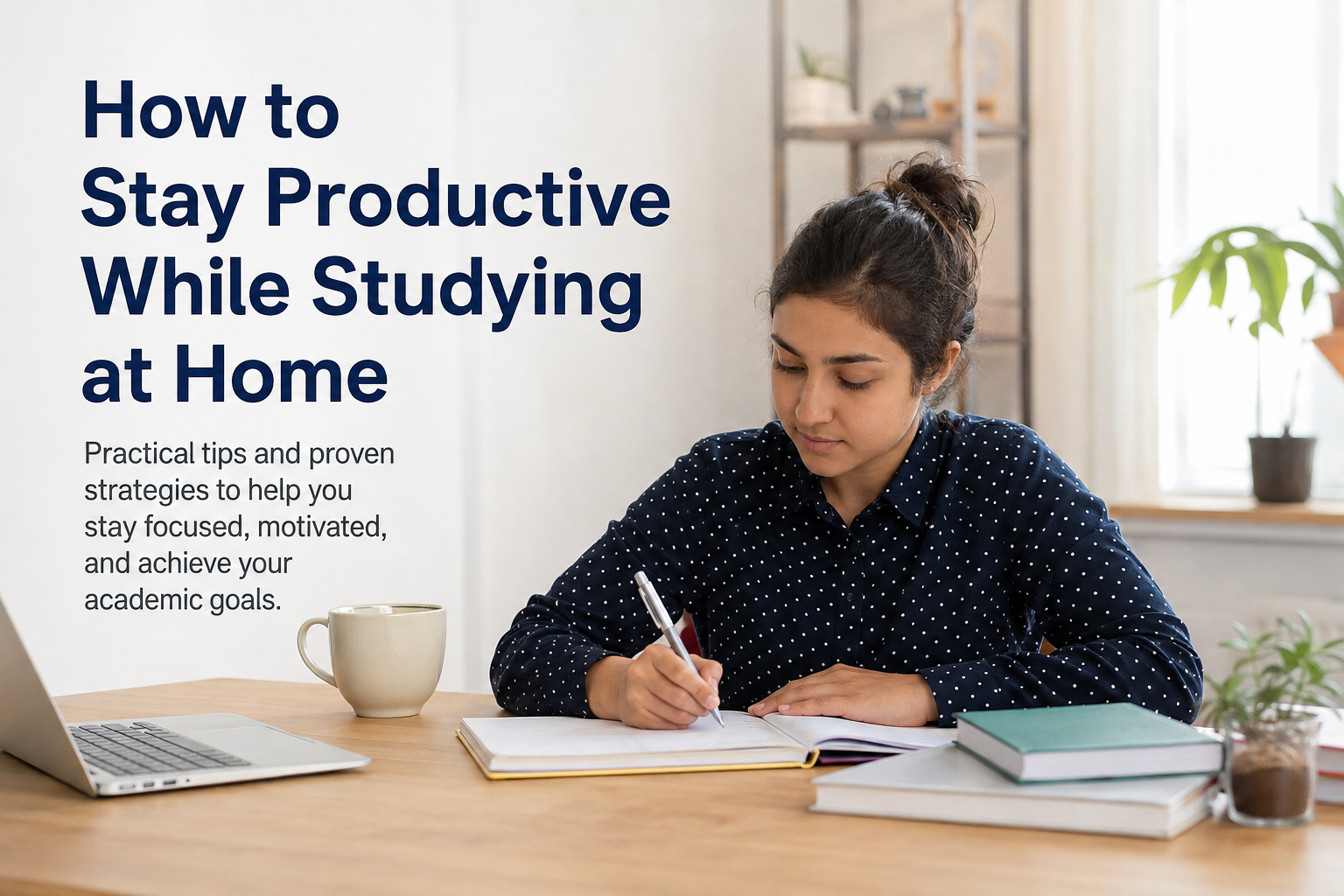
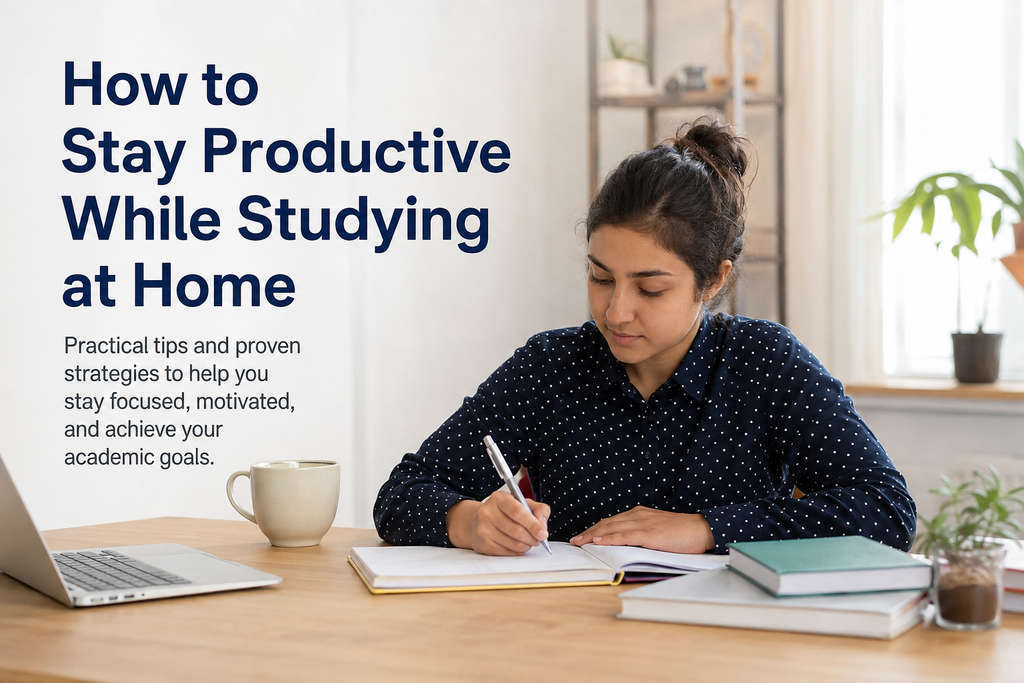
Studying at home can be comfortable, flexible, and convenient, but staying productive is not always easy. At home, there are many things that can take your attention away from your studies. Your phone may be nearby, family members may need your attention, and sometimes you simply do not feel motivated to open your books.
In my experience, being productive while studying at home is less about studying for extremely long hours and more about using your time wisely. When you create a simple routine, organize your study space, and understand how to manage distractions, studying at home can become much easier.
In this article, I will share practical study tips that can help students stay focused, manage their time, and make better progress while studying at home.
Create a Simple Study Schedule
One of the best ways to stay productive while studying at home is to create a study schedule. Without a schedule, it is easy to spend too much time deciding what to study or putting your work off until later.
I recommend making your study schedule realistic. You do not need to study every subject for several hours in one day. Instead, divide your available time into manageable study sessions.
For example, you might study mathematics in the morning, English in the afternoon, and science in the evening. The exact schedule depends on your classes, responsibilities, and personal routine.
A good study schedule should also include short breaks. Studying continuously for many hours can make you tired and reduce your concentration.
Set Clear Study Goals
Before starting a study session, decide exactly what you want to accomplish. A goal such as “I will study science” is too general.
A better goal would be “I will read one chapter of science and complete the practice questions.”
Clear goals make your study session more organized. They also give you a sense of progress when you finish a task.
I find it helpful to write down two or three important tasks before beginning. Once those tasks are completed, I know that my study time was useful.
Choose a Dedicated Study Space
Your study environment can have a major effect on your productivity. If you study in a place where you normally watch television, play games, or relax, your mind may find it difficult to switch into study mode.
Try to choose a clean and quiet area for studying. It does not have to be a separate room. A small desk in your bedroom or another peaceful area of your home can work well.
Keep only the things you need for your current study session on the desk. Books, notebooks, pens, and your computer may be enough.
A clean study space can reduce unnecessary distractions and make it easier to concentrate.
Keep Your Phone Away
For many students, the phone is one of the biggest distractions while studying at home. Notifications, social media, messages, and videos can quickly turn a short break into an hour of wasted time.
When I need to focus, I prefer keeping my phone away from my study area. You can also put it on silent mode or activate a focus mode if you need your phone for studying.
If you are using your phone for an educational purpose, decide beforehand what you need to use it for. This can help prevent you from opening unrelated apps.
Use Short Study Sessions
You do not always need to study for several hours without stopping. Short, focused study sessions can be more effective for many students.
One simple approach is to study for around 25 to 45 minutes and then take a short break. During the study period, focus only on your work. During the break, stand up, drink some water, stretch, or walk around for a few minutes.
After the break, return to your studies with a fresh mind.
The best study session length is different for everyone, so experiment with different timings and find what works best for you.
Avoid Multitasking
Many students believe they can study while watching videos, chatting with friends, or browsing social media. In reality, switching between different activities can make it harder to concentrate.
When I study, I try to focus on one important task at a time. If I am reading a chapter, I concentrate on understanding that chapter instead of thinking about several other subjects.
Single tasking can help you complete your work more efficiently and understand the material better.
Take Proper Breaks
Breaks are an important part of productive studying. Taking a break does not mean you are wasting time. A well planned break can help your mind recover.
During a break, try to move away from your desk. You can stretch, drink water, have a healthy snack, or simply relax for a few minutes.
However, be careful with activities that are difficult to stop, such as scrolling through social media or watching long videos. These activities can make it harder to return to your studies.
Study During Your Most Productive Hours
Everyone has different energy levels throughout the day. Some students concentrate better in the morning, while others prefer studying in the afternoon or evening.
Pay attention to the times when you naturally feel more alert. If possible, schedule difficult subjects during those periods.
For example, if mathematics requires your highest level of concentration and you feel most energetic in the morning, consider studying mathematics early in the day.
Using your most productive hours wisely can make studying feel easier.
Remove Unnecessary Distractions
Before starting your study session, look around your study area and identify anything that might distract you.
You may need to turn off the television, close unnecessary browser tabs, silence notifications, or tell family members that you need some quiet time.
You cannot always remove every distraction at home, but you can reduce many of them.
Even small changes can make a noticeable difference in your ability to concentrate.
Use Active Learning Techniques
Simply reading the same page repeatedly is not always the best way to learn. Active learning can help you remember information and understand difficult topics.
After reading a section, close your book and try to explain what you learned in your own words. You can also write short notes, answer practice questions, create flashcards, or teach the topic to someone else.
When I want to remember something important, I find that explaining it without looking at my notes helps me discover which parts I understand and which parts I need to review.
Stay Organized
Organization can save a lot of study time. Keep your notes, assignments, textbooks, and digital files organized so you can find them quickly.
You can use separate folders for different subjects. If you study online, create clearly named folders on your computer.
At the end of each study session, spend a few minutes putting everything back in its place. Starting your next session with an organized workspace can make the process much easier.
Get Enough Sleep
Productivity is not only about managing your study schedule. Your physical and mental energy also matter.
If you regularly sleep too little, you may find it harder to concentrate, remember information, and stay motivated.
Try to maintain a consistent sleep routine and give your body enough time to rest. A productive student needs both focused study time and proper recovery.
Eat Well and Stay Hydrated
Food and water can also affect how you feel while studying. Keep water near your study space and remember to drink regularly.
Try to choose balanced meals and snacks that help you maintain steady energy. Heavy meals may make some people feel sleepy, so consider how different foods affect your concentration.
You do not need a complicated diet to study effectively. Simple, balanced eating habits can support your daily routine.
Reward Yourself After Completing Tasks
Small rewards can make studying more motivating. After completing an important task, give yourself a short break or do something you enjoy.
For example, after finishing a chapter and its practice questions, you might listen to music, have a snack, or spend a little time doing a favorite activity.
The important thing is to make sure the reward does not completely interrupt your schedule.
Do Not Wait for Motivation
One mistake I see students make is waiting until they feel motivated before studying. Motivation can be helpful, but it does not always appear when we need it.
Sometimes the best approach is simply to start with a small task.
Tell yourself that you will study for ten minutes. Once you begin, continuing may become much easier.
Building a regular study habit is often more reliable than depending on motivation every day.
Track Your Progress
Tracking your progress can help you stay motivated. At the end of each day, look at what you completed.
You might write down the chapters you studied, assignments you finished, or practice questions you completed.
This gives you a clear picture of your progress and can help you identify areas where you need to improve.
If you did not complete everything planned, do not become discouraged. Adjust your schedule and continue the next day.
Final Thoughts
Learning how to stay productive while studying at home does not require a perfect routine. The most important thing is to create habits that you can actually maintain.
Start by choosing a dedicated study space, creating a realistic schedule, setting clear goals, and removing unnecessary distractions. Keep your phone away when possible, take regular breaks, use active learning techniques, and make sure you get enough sleep and rest.
From my point of view, consistency is more important than studying for extremely long hours. Even a few focused study sessions each day can lead to strong results when you follow them regularly.
Studying at home can become much easier when you understand how to manage your environment and your time. Start with one or two changes today, and gradually build a study routine that works for you.