
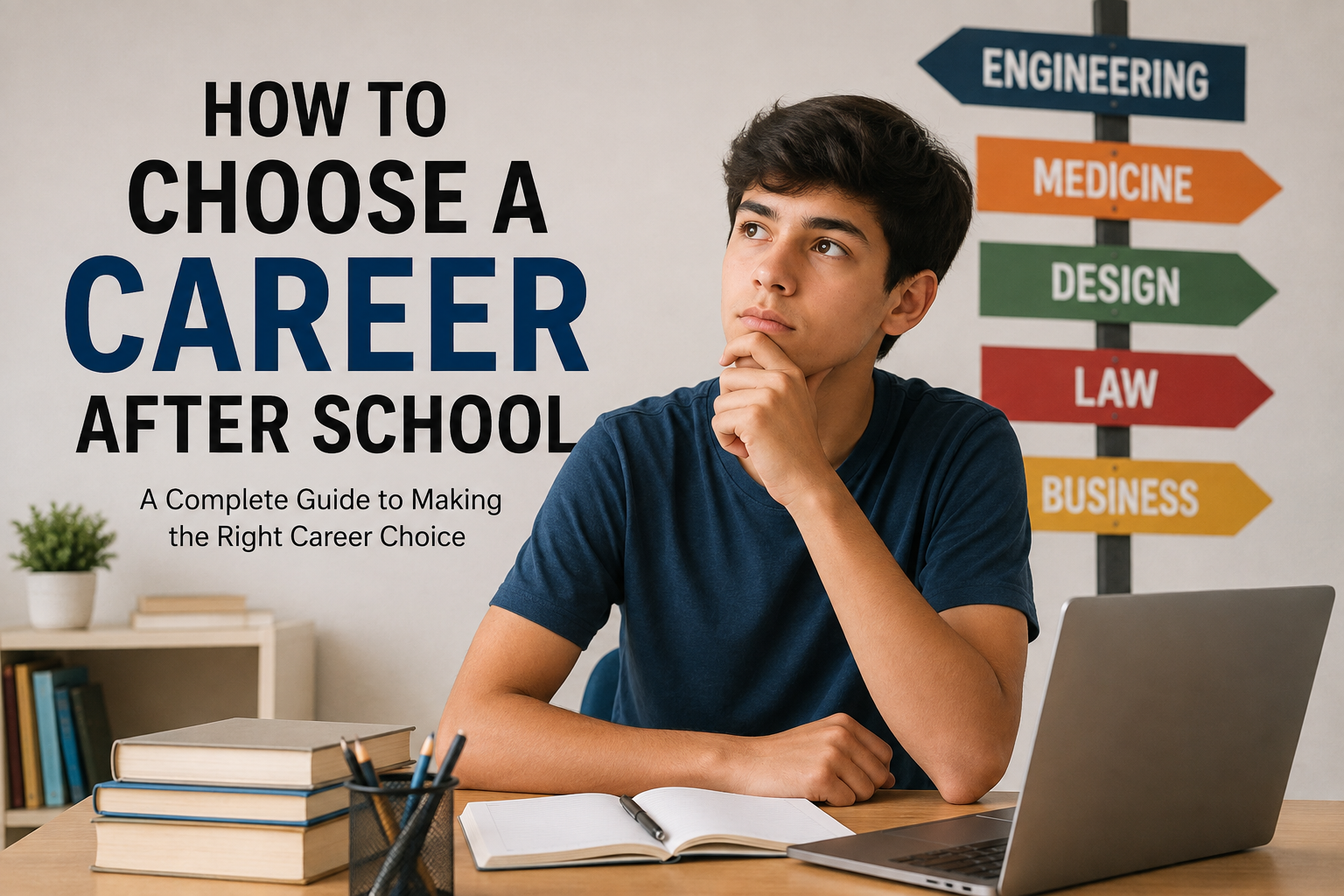
Choosing a career after school is one of the biggest decisions I believe a student can make. After finishing school, there are usually many options available, and sometimes having too many choices can make the decision even harder. Some students know exactly what they want to become, while others are still trying to understand their interests and strengths. In my opinion, there is no single career that is perfect for everyone. The right career is the one that matches your interests, skills, personality, goals, and future plans.
I think students should take enough time to understand themselves before choosing a career. Instead of selecting a field only because it is popular or because someone else recommends it, it is better to explore different possibilities and make an informed decision.
Understand Your Interests
The first step in choosing a career after school is understanding what you genuinely enjoy. Your interests can give you useful clues about the type of work you may enjoy in the future.
For example, if you enjoy mathematics and solving problems, careers related to engineering, technology, finance, accounting, or data may interest you. If you enjoy biology and helping people, healthcare and medical careers could be worth exploring. Students who enjoy writing, speaking, or creativity may find opportunities in media, education, communication, design, or content creation.
I believe it is important to separate temporary interests from genuine interests. Sometimes we like something because it is popular or because our friends enjoy it. Try to think about activities you naturally enjoy even when nobody asks you to do them.
Identify Your Skills
Interests are important, but skills are equally valuable when making a career choice. Think about the subjects and activities where you usually perform well.
Your skills may include communication, mathematics, writing, problem solving, creativity, leadership, organization, computer knowledge, teamwork, or practical abilities.
For example, someone who is good at explaining difficult topics may enjoy teaching. A student who enjoys building things and understanding how machines work may be interested in engineering. Someone with strong communication skills may consider business, marketing, law, sales, or public relations.
You do not need to have every skill before entering a career. Many skills can be developed through education and practice. The important thing is to identify your natural strengths and understand which areas you are willing to improve.
Think About Your Personality
Another factor I recommend considering is personality. Different careers require different working styles.
Some people enjoy working with others and communicating throughout the day. Others prefer independent work and spending time solving problems. Some students enjoy a structured environment, while others prefer creative and flexible work.
Think about whether you enjoy teamwork, leadership, helping people, working with technology, solving problems, creating things, or working independently.
Your personality does not completely determine your career, but understanding it can help you choose an environment where you feel comfortable and productive.
Explore Different Career Options
One mistake students can make is choosing a career without researching it properly. Before making a final decision, I recommend exploring several career options.
Read about different professions and learn what people actually do in those jobs. Look at the education requirements, important skills, typical responsibilities, working environment, and possible career growth.
You can also watch educational videos, read career guides, attend career events, and speak with teachers or professionals. If you know someone working in a field that interests you, asking about their experience can give you a realistic idea of what the career is like.
The more you explore, the easier it becomes to understand which careers genuinely interest you.
Consider Your School Subjects
Your favorite school subjects can also provide useful career clues. This does not mean you must choose a career directly related to your best subject, but your academic strengths can help narrow your options.
Students who enjoy physics and mathematics may explore engineering or technology. Students interested in biology and chemistry may consider healthcare or scientific fields. Those who enjoy languages, history, or social studies may explore education, communication, law, journalism, or related areas.
However, I would not recommend choosing a career simply because you received good grades in one subject. Think about whether you also enjoy learning about that subject and whether you can imagine working in a related field.
Consider Education and Training Requirements
Every career has different education and training requirements. Some professions require several years of university education, while others may be entered through vocational training, certifications, diplomas, apprenticeships, or practical experience.
Before choosing a career, find out what qualifications are normally required. This can help you understand the time, effort, and financial investment involved.
For example, a medical profession may require extensive education and practical training. Technology careers may involve university degrees, professional certifications, online courses, and practical projects. Skilled trades may require specialized training and hands on experience.
Understanding these requirements early can help you create a realistic education plan after school.
Think About Future Career Opportunities
When choosing a career, I believe it is useful to think beyond your first job. Consider whether the field offers opportunities to learn, develop new skills, specialize, and grow professionally.
The job market can change over time, so students should avoid assuming that today’s most popular career will always be the best option. Instead, focus on developing useful skills and choosing a field that has reasonable opportunities for growth.
Technology is also changing many industries, which means adaptability is becoming increasingly important. A good career choice should give you opportunities to continue learning and improving.
Do Not Choose a Career Only for Money
Salary is an important consideration, but I do not think it should be the only reason to choose a career. A high paying job may not make you happy if you strongly dislike the work.
At the same time, passion alone is not enough. It is wise to consider income, job opportunities, education costs, and financial responsibilities.
I believe the best approach is to look for a balance between interest, ability, career opportunities, and financial stability.
Talk to Parents and Teachers
Parents, teachers, and other trusted adults can provide useful advice when choosing a career after school. They may notice strengths or abilities that you have not recognized yourself.
However, their advice should be treated as guidance rather than an automatic decision. Your parents may have their own ideas about what you should become, but you will ultimately be the person studying for the career and working in the profession.
Listen carefully to different opinions, ask questions, and then make your decision based on your own research and understanding.
Try Before You Decide
Whenever possible, try to experience a career before committing to it. This can be through volunteering, short courses, internships, school projects, workshops, freelancing, or personal projects.
For example, if you think you might enjoy programming, try building a small project. If you are interested in teaching, help someone understand a subject. If you are interested in design, experiment with basic design tools.
These small experiences can help you discover whether your expectations match reality.
Make a Simple Career Plan
Once you have researched several options, create a simple career plan. Write down your preferred career choices and the education or training needed for each one.
You can divide your plan into short term and long term goals. Your short term goals might include improving grades, learning a new skill, researching universities, or completing an introductory course. Long term goals can include earning a qualification, gaining experience, or entering your chosen profession.
Having a plan does not mean everything must happen exactly as expected. Your interests can change as you gain experience, and that is completely normal.
Do Not Be Afraid to Change Your Mind
One thing I want students to remember is that choosing a career after school does not mean you are trapped in that decision forever.
People change careers, learn new skills, start businesses, return to education, and discover new interests throughout their lives. Your first choice is important, but it does not have to determine your entire future.
If you discover that a particular field is not right for you, learning from that experience can still help you find a better direction.
Final Thoughts
Choosing a career after school can feel confusing, but I believe the process becomes easier when you take it one step at a time. Start by understanding your interests, skills, personality, and school subjects. Then research different career options, learn about education requirements, consider future opportunities, and speak with people who can provide useful guidance.
Do not choose a career simply because it is popular, because your friends selected it, or because someone says it will make you rich. Your career should be based on thoughtful research and a realistic understanding of what you enjoy and what you can become good at.
Most importantly, give yourself permission to learn and change. Career planning is not about predicting your entire future. It is about making a thoughtful next decision and building the skills that can help you create a successful and satisfying professional life.
In my view, the best career choice is not necessarily the career that looks perfect from the outside. It is the career where your interests, abilities, values, opportunities, and goals can work together. If you take the time to understand yourself and explore your options, you can make a much more confident career decision after school.