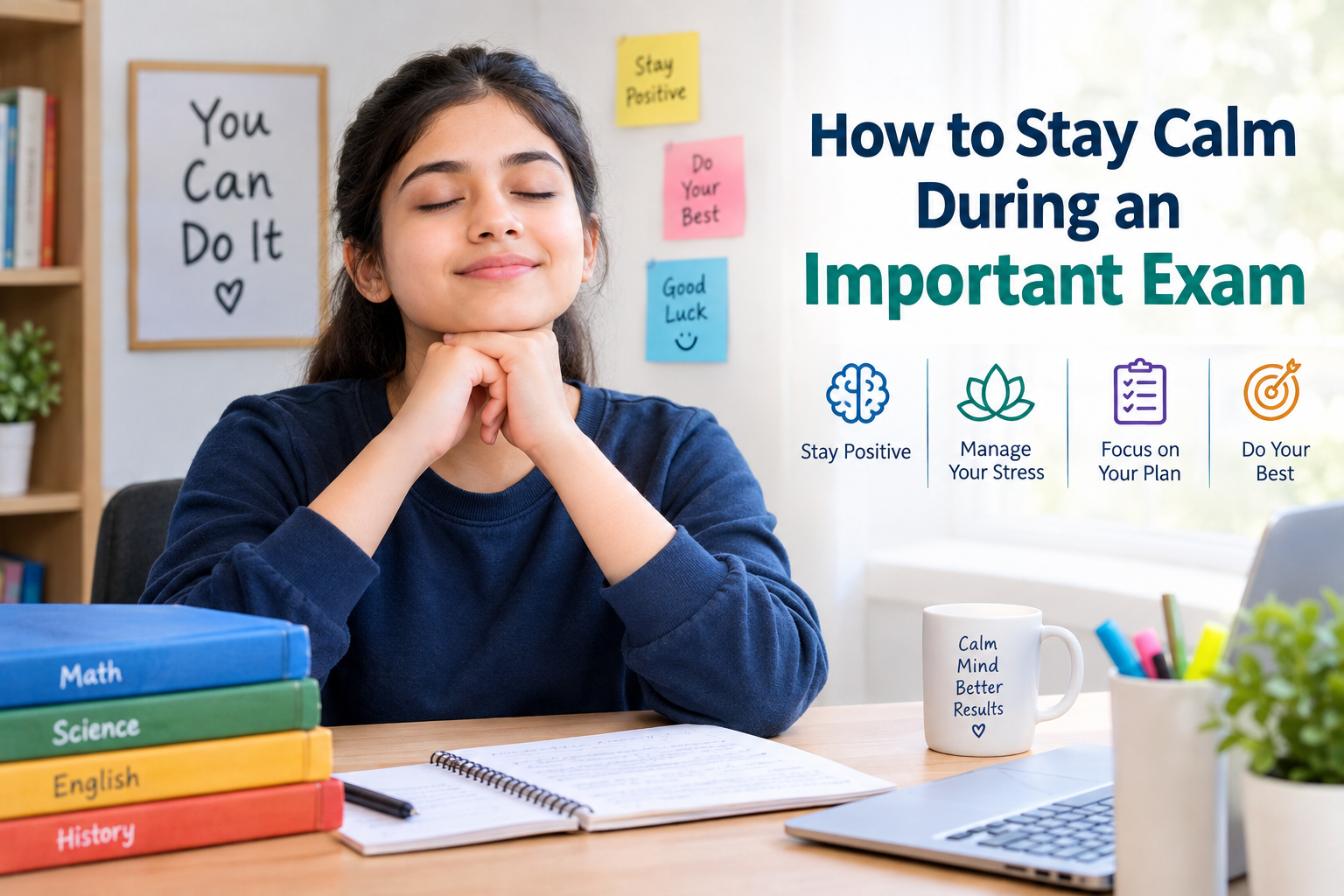
Exams can be stressful, especially when the result feels very important for our future. I have noticed that even when a student has prepared well, nervousness can sometimes make it difficult to remember information or concentrate on questions. This is why learning how to stay calm during an important exam is just as valuable as studying the syllabus.
In my opinion, staying calm does not mean having no fear at all. It means learning how to control nervous thoughts and continue working even when you feel pressure. With the right preparation, breathing techniques, positive thinking, and a simple exam strategy, it becomes much easier to manage exam stress and perform better.
Prepare Properly Before the Exam
One of the best ways to stay calm during an important exam is to prepare properly before exam day. When I know that I have studied the important topics, practiced questions, and reviewed my notes, I naturally feel more confident.
Last minute studying can increase anxiety because you may feel that there is still too much to learn. Instead of trying to study everything at once, I believe it is better to create a realistic study schedule. Divide the syllabus into smaller sections and study them regularly.
Practice tests and past papers can also make a big difference. They help you understand the question pattern and give you an idea of how much time you need for different sections. The more familiar you become with the exam format, the less frightening it usually feels.
Get Enough Sleep Before the Exam
Many students sacrifice sleep before an important exam because they want to study for a few extra hours. I do not think this is a good strategy. Your brain needs proper rest to remember information and stay focused.
A tired mind can make simple questions feel difficult. Lack of sleep can also increase nervousness and make it harder to concentrate. Try to complete most of your revision earlier and give yourself enough time to sleep before the exam.
A good night of sleep can help you feel more refreshed and mentally prepared. Instead of spending the entire night looking at notes, I would rather review the most important points and then get proper rest.
Avoid Negative Thinking
Negative thoughts are one of the biggest reasons students become nervous during exams. Thoughts such as “I will forget everything” or “I am going to fail” can create unnecessary pressure.
I have found that changing the way we talk to ourselves can improve our confidence. Instead of saying that you cannot do something, remind yourself that you have prepared and that you can handle one question at a time.
You do not need to convince yourself that the exam will be perfect. A more realistic thought is, “I will do my best with what I know.” This type of thinking can reduce pressure while keeping you focused.
Use Deep Breathing
Deep breathing is a simple technique that can help calm your mind before and during an important exam. When we become nervous, our breathing can become faster and shallower. Taking slow breaths can help us feel more relaxed.
Before the exam begins, sit comfortably and take a slow breath through your nose. Hold it for a short moment and then breathe out slowly. Repeat this several times.
If you suddenly feel anxious while answering questions, stop for a few seconds and take a couple of slow breaths. This can give your mind a short break and help you return to the question with better concentration.
Reach the Exam Location Early
Being late can make exam stress much worse. Running into the examination room at the last moment can leave you feeling rushed and nervous.
I recommend preparing everything you need the night before. Keep your stationery, identification documents, water, and other necessary items ready. Check the exam location and plan your travel time.
Arriving early gives you a few quiet minutes to settle down. You can sit comfortably, organize your things, and mentally prepare yourself instead of worrying about being late.
Read the Questions Carefully
When the exam starts, do not immediately rush through the paper. Take a moment to understand the instructions and read the questions carefully.
Sometimes students become nervous and misunderstand a question because they are thinking too much about finishing quickly. I believe it is better to spend a little time understanding what the question actually asks.
Start with questions that you understand well if the exam allows you to choose your order. Answering familiar questions first can build confidence and help you settle into the exam.
Manage Your Exam Time
Good time management can reduce a lot of exam anxiety. Before starting, look at the number of questions and the total time available. Try to divide your time sensibly between different sections.
Do not spend most of your time on one difficult question. If you are stuck, move to another question and return to the difficult one later when possible.
I find that having a simple time plan makes the exam feel more manageable. Instead of thinking about the entire paper at once, focus on completing the current section within the planned time.
Do Not Panic If You Forget an Answer
Sometimes your mind can go blank during an important exam. This does not necessarily mean that you have forgotten everything you studied.
If this happens, do not immediately panic. Put your pen down for a few seconds, take a slow breath, and read the question again. Think about related information that you remember.
Sometimes remembering one small point can help you remember the rest. Moving to another question can also help. When you return later, the answer may become easier to recall.
Stay Away From Distracting Students
During an exam, you may notice other students finishing before you. This can create unnecessary pressure.
If someone leaves the room early, it does not mean that they have performed better than you. Everyone has a different strategy and level of preparation.
I believe the best approach is to focus only on your own paper. Your goal is not to finish before everyone else. Your goal is to use the available time wisely and give the best answers you can.
Keep Your Body Comfortable
Physical comfort can also affect concentration during an exam. Before entering the examination room, make sure you have eaten appropriately and have had enough water.
Avoid eating something that may make you feel uncomfortable or sleepy. Wear comfortable clothing and take care of your basic needs before the exam begins.
During the exam, sit in a comfortable position if possible. Small physical adjustments can make it easier to remain focused for a long period.
Focus on One Question at a Time
Thinking about the final result while taking the exam can increase stress. You may start imagining your marks, comparing yourself with others, or worrying about what will happen after the exam.
I think it is much better to focus on the question in front of you. The result will come later. During the exam, your only job is to understand the question and provide the best answer you can.
When you focus on one question at a time, the entire exam becomes less overwhelming.
Use Positive Self Talk
Positive self talk can be surprisingly helpful during an important exam. When you feel nervous, remind yourself of the work you have completed.
You can quietly tell yourself things such as “Stay calm,” “Read carefully,” or “I can handle this question.” These simple reminders can help bring your attention back to the task.
Positive thinking does not guarantee a perfect result, but it can help you avoid making mistakes caused by unnecessary panic.
Take Short Mental Breaks
If the exam is long, your concentration may become weaker after working continuously for a long time. Whenever the exam rules allow it, take a few seconds to relax your eyes and breathe slowly.
You do not need a long break. Even a few calm breaths can help you reset your attention.
The important thing is to return to the paper quickly and continue working.
Trust Your Preparation
One of the most important lessons I have learned is that preparation and confidence work together. If you have studied consistently, practiced questions, reviewed mistakes, and prepared your exam materials, you have already done a lot of important work.
When exam day arrives, try to trust that preparation.
You may still feel nervous, and that is completely normal. Feeling nervous does not mean that you are unprepared. It simply means that the exam matters to you.
Final Thoughts
Learning how to stay calm during an important exam is a skill that can improve with practice. You do not need to completely remove exam anxiety. Instead, you need to learn how to manage it so that it does not control your performance.
In my opinion, the best approach is to prepare early, sleep properly, arrive on time, breathe slowly, think positively, read questions carefully, and manage your time wisely. Most importantly, focus on one question at a time instead of worrying about the final result.
Every exam is an opportunity to learn something about yourself. Even if everything does not go exactly as planned, one exam does not define your ability or your future. Stay focused, trust your preparation, and give your best effort. A calm mind can help you think more clearly, avoid unnecessary mistakes, and perform closer to your true potential.