Creating a student resume with no work experience can feel difficult at first. Many students think a resume must include previous jobs before it can look professional. In my view, this is one of the biggest misunderstandings students have when preparing their first resume. You may not have formal work experience, but you still have education, skills, projects, achievements, activities, and personal qualities that can show an employer what you can offer.
A good student resume is not about making yourself look more experienced than you are. It is about presenting your existing abilities in a clear and professional way. If you are applying for an internship, part time job, volunteer opportunity, scholarship, or your first career position, your resume can still make a strong impression.
In this guide, I will explain how to build a student resume with no work experience and how to highlight the things that can make you stand out.
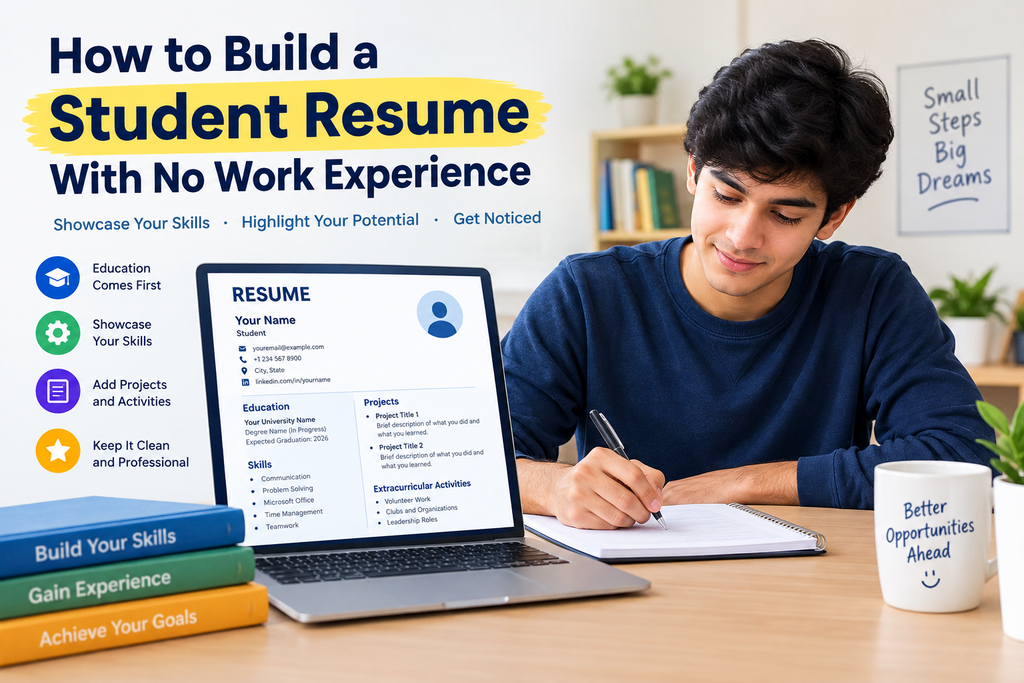
Start With Your Contact Information
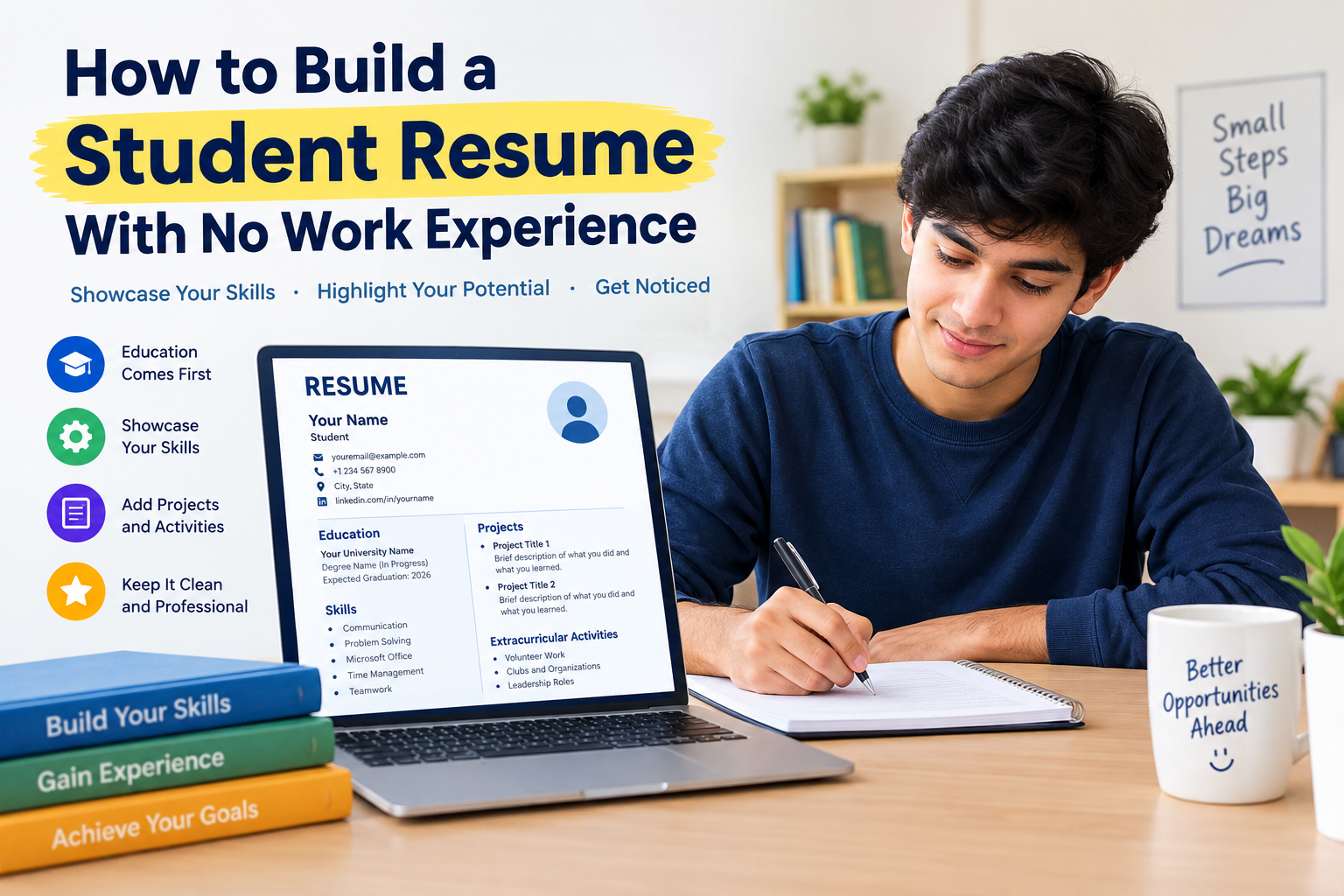
The first section of your resume should contain your basic contact information. Keep it simple and professional.
Include your full name, phone number, professional email address, city and country, and LinkedIn profile if you have one. You can also include a professional portfolio or personal website when it is relevant to the position.
I recommend using an email address that looks professional. An email based on your name is usually a better choice than an address containing nicknames, jokes, or unnecessary numbers.
You do not need to include private information such as your complete home address, national identification number, passport information, or other personal details that an employer does not need.
Write a Strong Resume Objective
When you have no work experience, a resume objective can help explain who you are and what you are looking for.
A good objective should be short and specific. Instead of writing something general such as “I want a good job where I can learn new things,” focus on your current situation, useful skills, and career goal.
For example:
“Motivated university student with strong communication, research, and computer skills seeking an internship opportunity to apply academic knowledge and develop practical experience.”
This type of objective tells the reader what you can bring while being honest about your experience level.
Try to adjust your objective for each position. If you are applying for a marketing internship, mention skills related to communication, research, content creation, or social media. If you are applying for a technology position, focus more on technical abilities and relevant projects.
Make Education a Major Part of Your Resume
When you have no work experience, your education becomes especially important.
List your current school, college, or university, followed by your degree or program. Include your expected graduation date when appropriate.
You can also mention relevant courses, academic achievements, scholarships, or a strong GPA if it helps your application.
For example:
Bachelor of Business Administration
ABC University
Expected Graduation: 2027
Relevant Courses: Marketing, Business Communication, Accounting, and Management
You do not need to list every subject you have studied. Choose courses that connect with the position you want.
If you recently completed high school and do not have much professional experience, you can also mention important academic achievements, competitions, presentations, or school projects.
Highlight Your Skills
Skills are one of the most valuable sections of a student resume.
Think carefully about the skills you have developed through school, personal projects, online learning, clubs, volunteering, and everyday responsibilities.
Some useful student skills may include communication, teamwork, research, problem solving, time management, organization, presentation skills, writing, Microsoft Office, Google Workspace, social media management, graphic design, basic coding, data analysis, or customer communication.
However, do not add skills simply because they sound impressive. Only include skills you genuinely have.
It is also better to show evidence of a skill when possible. Instead of simply writing “Leadership,” you could explain that you led a student project involving several classmates.
This gives the skill more meaning.
Add Academic and Personal Projects
Projects can be extremely useful when building a resume without work experience.
A project shows that you have actually used your knowledge to complete something. It does not have to be a professional company project.
For example, a computer science student could mention a website or small application they created. A marketing student could describe a research project or social media campaign created for a class. A design student could include a portfolio project.
For each project, briefly explain what you did, which tools you used, and what you achieved or learned.
For example:
“Created a simple personal website using HTML and CSS as part of a university project. Designed the layout, organized the content, and tested the website on different screen sizes.”
This is much stronger than simply writing “Website Project.”
Include Volunteer Experience
Volunteer work can be valuable even though it is unpaid.
If you have helped at a school event, community activity, charity organization, educational program, sports event, or local project, consider adding it to your resume.
Volunteer experience can demonstrate responsibility, teamwork, communication, organization, and leadership.
For example, if you helped organize a student event, you might explain that you coordinated registration, communicated with participants, and helped manage the event schedule.
These are practical experiences that employers can understand.
Mention Extracurricular Activities
Students often underestimate the value of extracurricular activities.
Participation in clubs, sports teams, student organizations, debate competitions, technology groups, academic societies, and other activities can help demonstrate useful qualities.
For example, being part of a debate club can show communication and presentation skills. Playing on a sports team can demonstrate teamwork and discipline. Being responsible for a university society can demonstrate leadership and organization.
The key is to connect the activity with a useful skill.
You do not need to list every activity you have ever participated in. Choose the ones that support your application.
Add Certifications and Online Courses
Online courses and certifications can strengthen a student resume, especially when they are related to your desired career.
If you have completed courses in digital marketing, Excel, programming, graphic design, communication, data analysis, or another relevant subject, create a section for them.
Include the course name, provider, and completion year when useful.
Do not fill your resume with dozens of unrelated certificates. A few relevant courses are generally more valuable than a long list that does not connect with the position.
Use Action Words
The language you use on your resume matters.
Instead of repeatedly writing phrases such as “I was responsible for,” use clear action words.
For example, you can use words such as created, organized, researched, designed, developed, presented, managed, coordinated, analyzed, assisted, completed, and improved.
Consider this example:
“I was responsible for making a presentation for our class.”
A stronger version could be:
“Created and presented a research presentation for a university class.”
The second version sounds more direct and professional while still being truthful.
Keep Your Resume Easy to Read
A professional student resume does not need complicated designs.
Use clear headings, readable fonts, consistent spacing, and simple formatting. Make sure your most important information is easy to find.
For most students, a one page resume is enough. If you have many relevant projects, certifications, or activities, you may need more space, but avoid adding unnecessary information just to make the resume longer.
Recruiters often review many resumes, so a clean structure can make your information easier to understand.
Customize Your Resume for Every Application
One of the most useful resume tips I can give students is to avoid sending exactly the same resume everywhere.
Read the job description carefully and identify the skills and qualifications the employer is looking for.
Then adjust your resume to emphasize your relevant education, projects, skills, and activities.
For example, if an internship requires strong writing skills, place relevant writing projects and communication abilities where they are easy to notice.
If a position requires Excel, highlight relevant coursework or projects where you have used Excel.
This does not mean changing your facts. It means presenting the most relevant facts first.
Avoid Common Student Resume Mistakes
Students creating their first resume often make a few common mistakes.
One mistake is adding information that is not true. Never invent employment, qualifications, skills, or achievements. Being honest is much more important than making your resume appear impressive.
Another mistake is including too much information. Your resume should focus on relevant details rather than your entire life history.
Spelling and grammar mistakes can also create a poor impression. Before submitting your resume, read it carefully and consider asking someone you trust to review it.
Avoid unnecessary graphics, excessive colors, complicated layouts, and large blocks of text. Your goal is to make your information clear.
Create a Resume That Shows Potential
When you have no work experience, your goal should not be to hide that fact. Instead, show what you have already learned and what you are capable of doing.
Your education can show knowledge. Your projects can show practical ability. Your activities can show teamwork. Your volunteer work can show responsibility. Your certifications can show initiative. Your skills can show potential.
In my opinion, this is what makes a strong student resume different from an ordinary one.
You do not need years of employment history to create a professional resume. You need to understand your own strengths and present them clearly.
Final Thoughts
Learning how to build a student resume with no work experience is an important first step toward your career. Your first resume may not be perfect, and that is completely normal. As you complete internships, projects, courses, volunteer work, and other activities, your resume will continue to improve.
For now, focus on what you genuinely have to offer. Present your education clearly, highlight useful skills, include relevant projects, mention meaningful activities, and write a strong objective. Keep everything honest, simple, and relevant to the opportunity.
Remember that employers are not only looking for people with experience. They are also looking for students who demonstrate motivation, responsibility, willingness to learn, and potential.
Your first resume is not supposed to prove that you already know everything. It is an opportunity to show that you are ready to learn, contribute, and take your first step into the professional world.