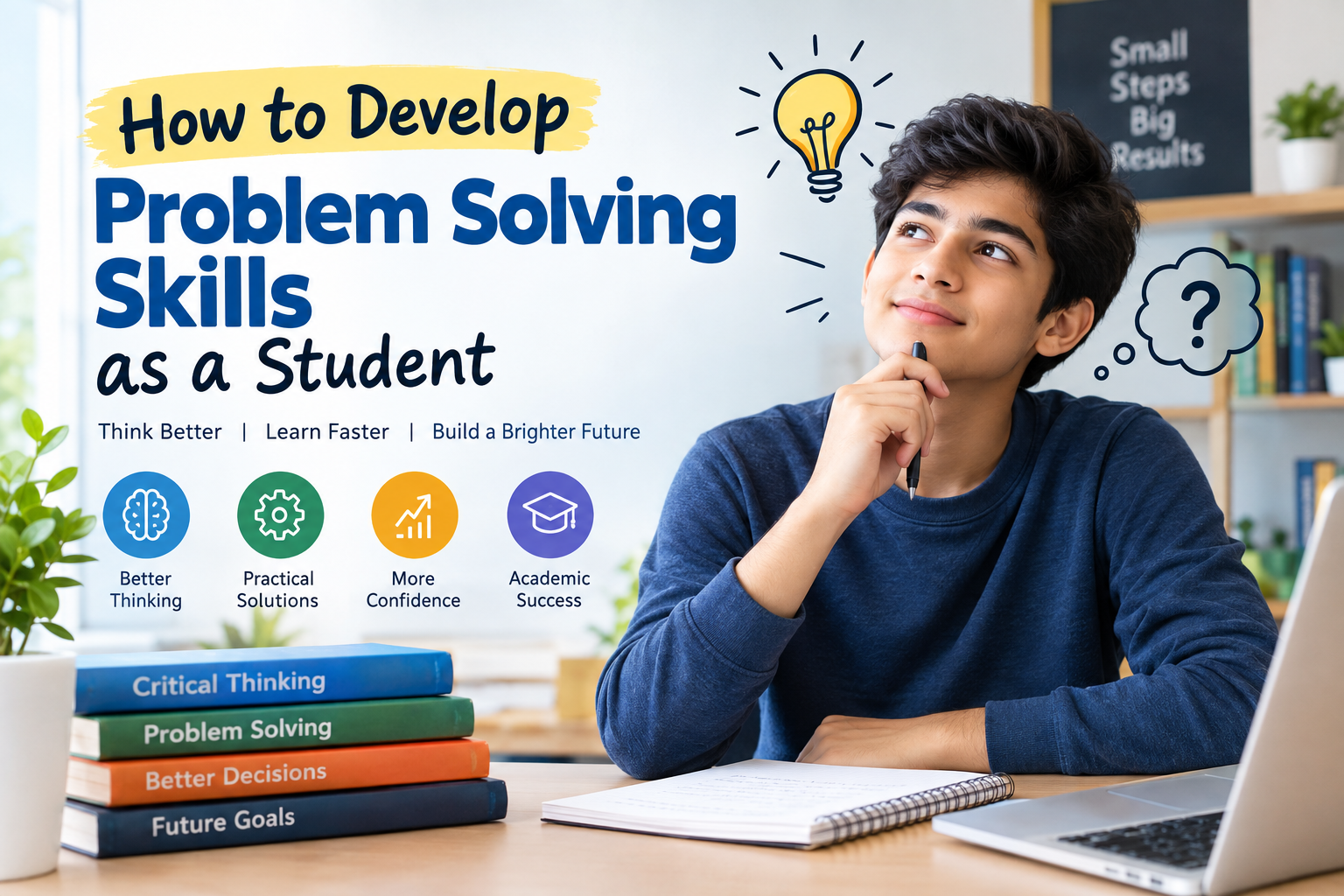
Problem solving is one of the most useful skills a student can develop. In my opinion, studying is not only about remembering information or getting good grades. It is also about learning how to think, make decisions, handle challenges, and find practical solutions when something does not go as planned. Students face different problems every day, from difficult homework and confusing subjects to time management, group projects, and personal responsibilities. Learning how to solve these problems can make student life easier and prepare you for the future.
The good thing is that problem solving skills are not something you either have or do not have. They can be developed through regular practice. With the right habits, students can become better thinkers, more confident learners, and better decision makers.
What Are Problem Solving Skills?
Problem solving skills are the ability to understand a problem, identify its cause, think about possible solutions, and choose the most suitable option. A good problem solver does not immediately panic when something goes wrong. Instead, they try to understand what happened and look for a practical way forward.
For students, problem solving can be useful in almost every area of education. For example, if you are struggling with mathematics, you can identify which part of the topic is confusing, find another explanation, practice similar questions, and ask for help when needed. This simple process is problem solving.
These skills also include critical thinking, creativity, decision making, communication, patience, and logical thinking.
Start by Understanding the Problem
One of the first steps in developing problem solving skills is learning to understand the problem before trying to fix it. Many students make the mistake of rushing toward an answer without knowing exactly what is wrong.
When you face a difficult situation, take a moment and ask yourself what the actual problem is. Try to separate the main issue from smaller distractions.
For example, if you are unable to complete your homework on time, the real problem may not be the homework itself. Perhaps you are spending too much time on your phone, starting your work too late, or trying to complete several tasks at the same time.
Once you understand the real cause, finding a solution becomes much easier.
Break Big Problems Into Smaller Steps
Large problems can feel stressful because they appear difficult to handle all at once. One strategy that I find very useful is breaking a large problem into smaller and more manageable steps.
Suppose you have an important exam coming up and several chapters remain unfinished. Instead of thinking about the entire syllabus at once, divide it into smaller sections. Decide which chapters need more attention and create a realistic study plan.
The same method works for assignments, projects, presentations, and personal goals. Small steps make difficult tasks feel more achievable and help you stay focused.
Ask Questions
Asking questions is an important part of learning how to solve problems. Some students hesitate to ask for help because they think it means they are not intelligent. I believe the opposite is often true. Asking a useful question shows that you want to understand something properly.
If you do not understand a lesson, ask your teacher to explain it in another way. You can also discuss the problem with classmates, parents, or other trusted people.
Before asking for help, try to understand the problem yourself. Then explain exactly where you are stuck. This makes it easier for another person to guide you and also helps you develop better communication skills.
Practice Critical Thinking
Critical thinking means looking at information carefully instead of accepting everything immediately. It helps students understand whether an idea makes sense, whether information is reliable, and whether a solution is actually useful.
You can improve critical thinking by asking questions such as:
What is the main issue?
What information do I already have?
What information am I missing?
What evidence supports this idea?
Are there other possible explanations?
What could happen if I choose this solution?
These questions encourage you to think more deeply before making decisions.
Try More Than One Solution
A problem does not always have only one correct solution. Sometimes your first idea will not work, and that is completely normal.
When facing a challenge, try to think of several possible solutions. Write them down if necessary and compare their advantages and disadvantages.
For example, if you are struggling to concentrate while studying at home, possible solutions might include changing your study location, removing distractions, studying at a different time, using shorter study sessions, or taking planned breaks.
Thinking about several options helps you become more flexible and creative.
Learn From Your Mistakes
Mistakes are an important part of developing problem solving skills. Instead of seeing every mistake as failure, try to use it as feedback.
If you receive a low score on a test, do not simply feel disappointed and move on. Look at the questions you got wrong. Ask yourself why you made those mistakes. Did you misunderstand the topic? Did you read the question incorrectly? Did you run out of time? Did you fail to revise a particular area?
When you understand the reason behind a mistake, you can make a better plan for next time.
In my view, students who learn from their mistakes often become stronger learners because they understand what does and does not work for them.
Develop Better Time Management
Time management and problem solving are closely connected. When students manage their time poorly, small problems can quickly become large ones.
For example, delaying an assignment until the last night can create unnecessary stress. You may have enough knowledge to complete the work, but not enough time to do it properly.
Create a simple schedule for your important tasks. Give yourself enough time for studying, assignments, revision, rest, and other responsibilities.
You do not need a complicated system. Even a basic daily task list can help you stay organized and reduce last minute problems.
Use Brainstorming to Find Ideas
Brainstorming is another useful way to develop problem solving skills. When you have a problem, give yourself a few minutes to write down every possible solution that comes to mind.
At the beginning, do not worry about whether an idea is perfect. The purpose is to generate different possibilities. After that, review the ideas and identify the most realistic options.
Students can use brainstorming for essays, presentations, science projects, group assignments, and everyday challenges. It can also encourage creativity because you are not limiting yourself to the first idea that appears.
Practice With Real Life Problems
Problem solving skills improve through practice. You do not have to wait for a difficult school assignment to practice them.
Try solving everyday problems independently. Plan how you would organize a busy day, decide how to complete several tasks before a deadline, work out how to save money for something you need, or find a better way to organize your study materials.
These simple situations give you opportunities to practice decision making and logical thinking.
Work With Other Students
Group activities can also improve problem solving skills. When you work with other students, you may discover that people can look at the same problem in completely different ways.
Listen to other people’s ideas and explain your own thoughts clearly. If your group disagrees, focus on the problem instead of turning the disagreement into a personal argument.
Learning to communicate, cooperate, and compare different ideas can make you a stronger problem solver.
Stay Patient When Problems Are Difficult
Good problem solving requires patience. Sometimes the answer does not appear immediately. If you become frustrated too quickly, you may stop thinking clearly.
When a problem feels difficult, take a short break if necessary. Then return to it with a fresh mind. You can also approach the problem from another direction.
Remember that struggling with a problem does not mean you are bad at learning. Sometimes difficult problems provide the best opportunities to improve your thinking skills.
Use Technology Wisely
Technology can support students while they develop problem solving skills, but it should not replace thinking. Online educational resources, learning platforms, calculators, digital notes, and educational videos can help explain difficult concepts.
However, avoid simply searching for an answer and copying it. First try to solve the problem yourself. Then use technology to check your understanding or learn another method.
This approach allows technology to become a learning tool rather than a shortcut.
Build a Growth Mindset
A growth mindset can make a big difference in problem solving. Instead of saying, “I cannot do this,” try saying, “I cannot do this yet.”
This small change in thinking encourages you to focus on improvement instead of limitations.
Students with a growth mindset understand that skills develop through practice, effort, feedback, and experience. When they face a difficult problem, they are more likely to keep trying and look for another approach.
Create a Simple Problem Solving Process
One of the best ways to improve is to follow a simple process whenever you face a challenge.
First, identify the problem clearly. Second, find the possible causes. Third, collect the information you need. Fourth, think about different solutions. Fifth, compare the options. Sixth, choose one solution and try it. Finally, review the result and decide what you can learn from the experience.
You do not need to follow these steps perfectly every time. The main purpose is to develop a habit of thinking before reacting.
Final Thoughts
Developing problem solving skills as a student can improve much more than academic performance. These skills can help you become more independent, confident, organized, creative, and prepared for unexpected situations.
In my opinion, the best way to develop problem solving skills is to practice them in everyday life. Understand problems instead of avoiding them, break difficult tasks into smaller steps, ask useful questions, consider different solutions, learn from mistakes, and stay patient when things become challenging.
You do not need to become a perfect problem solver overnight. Start with small challenges and improve gradually. Every time you solve a problem, learn from a mistake, or find a better way to complete a task, you are strengthening an important skill that can benefit you throughout your education, career, and everyday life.