Preparing for your first career interview can feel exciting and stressful at the same time. When I think about a first interview, I believe the biggest challenge is not always the questions themselves. It is often the lack of experience and uncertainty about what the interviewer expects. The good thing is that interview skills can be learned, and proper preparation can make a huge difference.
Your first career interview is an opportunity to introduce yourself, explain your skills, and show an employer why you could be a good fit for the position. You do not need to know everything or have years of experience. You simply need to prepare well, communicate clearly, and show that you are willing to learn.
In this guide, I will share some practical first career interview tips that can help beginners feel more confident and prepared.
Understand the Job Before the Interview
One of the first things I recommend is reading the job description carefully. Many beginners focus only on the company name and interview time, but understanding the actual position is much more important.
Look at the skills, responsibilities, qualifications, and experience mentioned in the job description. Think about how your education, projects, training, volunteer work, or personal experience connects with those requirements.
For example, if the company wants someone with communication skills, prepare an example that shows how you developed those skills. If teamwork is mentioned, think about a school project, university assignment, internship, or other situation where you worked successfully with others.
The more you understand about the role, the easier it becomes to give relevant answers during your first job interview.
Research the Company
Company research is another important part of interview preparation. Before attending the interview, spend some time learning about the organization.
Visit the company’s website and learn about its products, services, customers, values, and general business activities. You can also check its recent updates and social media pages if they are available.
I believe this step is useful because it helps you answer questions such as, “Why do you want to work here?” Instead of giving a general answer, you can explain something specific that attracted you to the company.
You do not need to memorize the entire company history. Just understand what the company does and why the position interests you.
Prepare Your Introduction
One of the most common interview questions is, “Tell me about yourself.”
For a first career interview, this question can be difficult because you may not have much professional experience. However, your answer does not need to be complicated.
Prepare a short introduction that includes your education, relevant skills, interests, and career goals. Try to connect these points to the position you are applying for.
For example, you could explain what you studied, what skills you developed, what type of projects you enjoyed, and why you are interested in starting your career in that field.
Practice your introduction several times, but do not memorize every word. Your goal should be to sound natural rather than like you are reading a prepared speech.
Practice Common Interview Questions
Interview practice is one of the best ways to improve your confidence. You can search for common interview questions related to your industry and prepare your thoughts before the interview.
Some common questions include:
“Why do you want this job?”
“What are your strengths?”
“What is one area you want to improve?”
“Why should we hire you?”
“Where do you see yourself in the future?”
“Why did you choose this career?”
“Tell me about a challenge you faced.”
“Tell me about a time you worked with a team.”
You do not need to prepare perfect answers to every possible question. Instead, understand the main ideas you want to communicate.
I also recommend practicing with a friend, teacher, family member, or career mentor. Speaking your answers aloud is much more useful than simply reading them silently.
Use Real Examples From Your Experience
A common concern among first time job seekers is not having enough professional experience. I believe this should not stop you from applying for opportunities.
You can use examples from education, internships, volunteer activities, student organizations, personal projects, sports, or other experiences.
Suppose an interviewer asks about teamwork. You could describe a university project where different students had different responsibilities. Explain what your role was, how you communicated with others, and what result you achieved.
The important thing is to explain what you actually did. Honest examples are better than trying to create impressive stories.
Prepare Your Resume
Your resume is an important part of your first career interview. Before the interview, read your resume carefully from beginning to end.
Be prepared to discuss anything you have included. This includes your education, skills, projects, internships, certifications, achievements, and other relevant information.
Make sure your resume is accurate and easy to understand. Avoid adding skills that you cannot explain or demonstrate.
If you mention a software program, for example, be prepared for the interviewer to ask how you have used it. If you mention a project, understand your responsibilities and the outcome.
I recommend taking a clean copy of your resume with you if the interview is in person.
Choose Professional Interview Clothing
Your appearance can influence the first impression you make. You do not always need expensive clothing to look professional.
Choose clean, neat, comfortable, and appropriate clothing for the company and position. Make sure your clothes are prepared before the interview day so you do not have to worry about them at the last minute.
Your overall appearance should show that you respect the opportunity and have taken the interview seriously.
Plan Your Interview Location and Time
Being late can create unnecessary stress, especially during your first career interview.
If the interview is in person, check the location in advance and estimate how long it will take to get there. Consider traffic, parking, public transportation, and other possible delays.
I personally believe arriving around ten to fifteen minutes early is a good habit. It gives you enough time to settle down and collect your thoughts.
For an online interview, check your internet connection, microphone, camera, and computer before the scheduled time. Choose a quiet place with suitable lighting and a clean background.
Prepare Questions for the Interviewer
An interview is not only an opportunity for the company to learn about you. It is also an opportunity for you to learn about the company and position.
At the end of an interview, you may be asked if you have any questions. Saying that you have no questions can sometimes make you appear less interested.
Prepare two or three thoughtful questions before the interview.
You could ask about the main responsibilities of the position, the training process, the team you would work with, or what success looks like in the role.
Avoid asking questions whose answers are already clearly available in the job description.
Work on Your Body Language
Good communication is about more than words. Body language can also affect how confident and professional you appear.
During an interview, try to sit comfortably with good posture. Maintain natural eye contact and listen carefully when the interviewer speaks.
Avoid constantly checking your phone, looking around the room, or fidgeting unnecessarily.
You do not need to act like a completely different person. The goal is simply to appear attentive, respectful, and comfortable.
If you feel nervous, take a slow breath before answering a difficult question. It is completely normal to pause briefly to organize your thoughts.
Be Honest About Your Experience
For your first career interview, you may worry that other candidates have more experience. This can make you feel pressured to exaggerate your abilities.
I strongly believe honesty is the better approach.
If you do not know something, you can say that you have not worked with it yet but are willing to learn. Employers understand that entry level candidates are still developing their professional skills.
Showing curiosity, responsibility, and a willingness to learn can be valuable qualities for someone beginning a career.
Prepare the Night Before
Do not leave everything until the morning of your interview.
The night before, prepare your clothes, resume, documents, interview location, transportation plan, and any other items you may need.
Review the job description and company information one more time. Practice your introduction and think about a few examples you can use when answering behavioral questions.
Then get enough sleep.
Trying to study everything late at night can make you more tired and nervous. Good preparation should help you feel calmer, not exhausted.
Stay Calm During the Interview
Even with good preparation, you may still feel nervous. That is normal.
Remember that the interviewer knows you are applying for your first career opportunity. They are not necessarily expecting you to have perfect answers.
Listen carefully to each question. If you do not understand something, it is acceptable to politely ask the interviewer to repeat or clarify it.
If you make a small mistake, do not let it ruin the rest of the interview. Take a breath, continue, and focus on the next question.
Confidence does not mean having no nervousness. In my view, real interview confidence means being able to continue even when you feel nervous.
Follow Up After the Interview
After the interview, take a few minutes to think about how it went.
Consider which questions you answered well and which ones were difficult. Write down anything you want to improve before your next interview.
If appropriate, you can also send a short professional thank you message to the interviewer. Thank them for their time and express your continued interest in the opportunity.
Even if you do not receive the job, the interview can still provide valuable experience.
Final Thoughts
Preparing for your first career interview does not have to be overwhelming. The key is to prepare step by step.
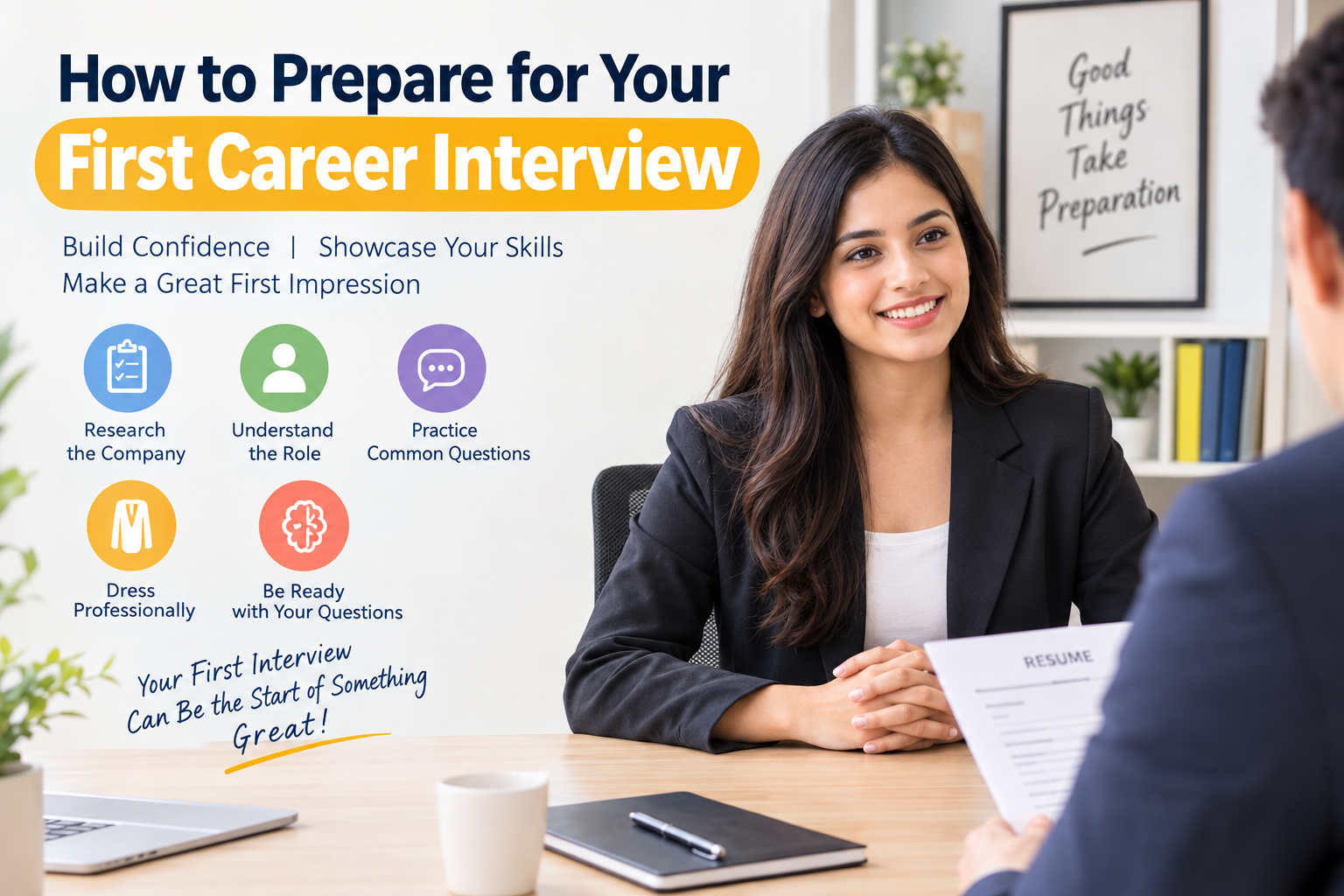
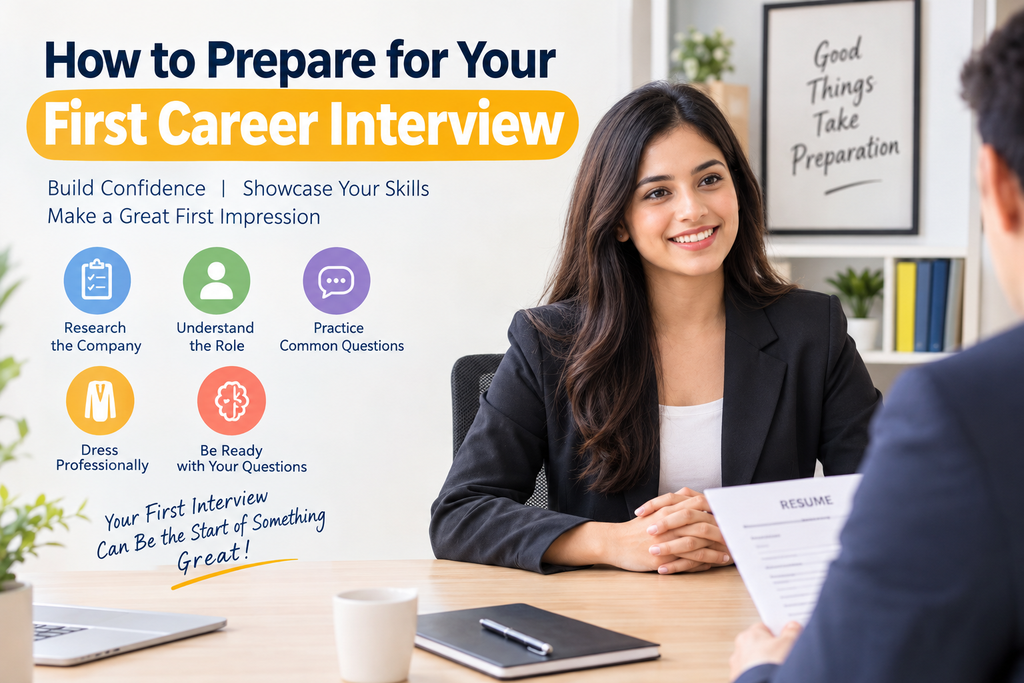
Understand the job, research the company, practice common interview questions, prepare your introduction, review your resume, choose professional clothing, plan your journey, and prepare questions for the interviewer.
Most importantly, be yourself while remaining professional. You do not need to pretend that you have years of experience. Your goal is to show what you know, explain what you have learned, and demonstrate that you are ready to grow.
Your first interview may not be perfect, and that is completely fine. Every interview teaches you something new. With preparation and practice, you can become more comfortable and confident over time.
I believe the best way to approach your first career interview is to see it not only as a test, but as your first real opportunity to introduce yourself to the professional world. Prepare seriously, stay positive, and remember that one interview does not define your entire career.