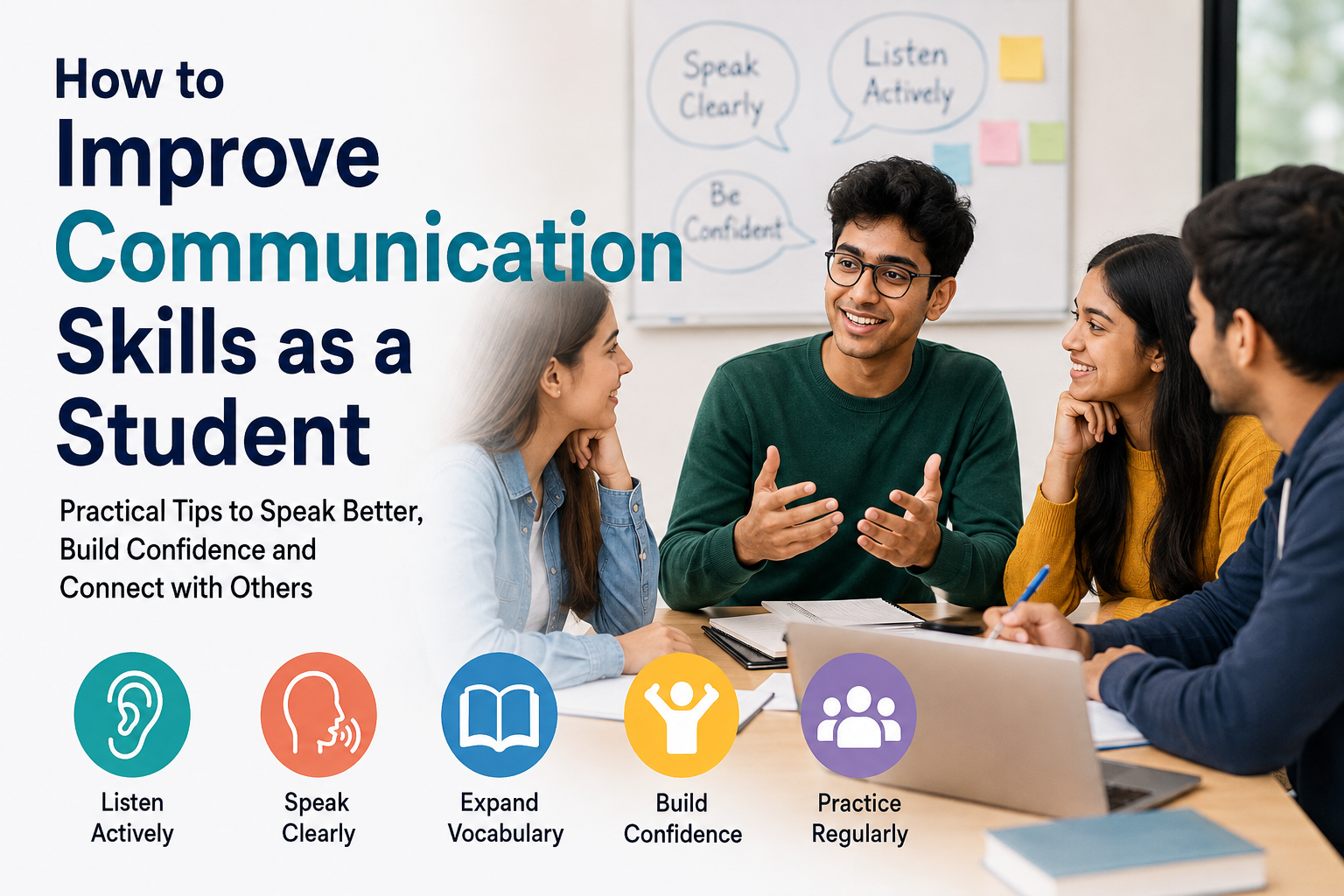
Communication is one of the most important skills a student can develop. In my opinion, good communication is not only about speaking English well or using difficult words. It is about expressing your thoughts clearly, listening to others, asking the right questions, and making people understand what you really mean. Students who develop strong communication skills often feel more confident in classrooms, group discussions, presentations, interviews, and everyday conversations.
The good thing is that communication skills are not something you either have or do not have. They can be learned with regular practice. I believe that even a shy student can become a confident communicator by making small improvements every day. In this article, I will share some practical ways to improve communication skills as a student and explain how these skills can help in both academic and personal life.
Why Communication Skills Matter for Students
Students communicate almost every day. They talk with teachers, classmates, friends, family members, and sometimes people they have never met before. Communication becomes even more important when students have to give presentations, participate in discussions, work on group projects, or attend interviews.
Strong communication skills can help students explain their ideas more effectively. They can also make it easier to build friendships and work with others. In my experience, a student who knows how to communicate clearly can often handle difficult situations better because they can explain their thoughts instead of keeping everything inside.
Communication skills are also valuable for future careers. Employers usually look for people who can speak clearly, listen carefully, work with a team, and explain ideas professionally. This is why improving communication skills as a student is a useful investment in the future.
Start by Becoming a Better Listener
Many students focus only on speaking, but listening is an equally important part of communication. Good communication starts when we pay attention to what another person is saying.
When someone is speaking, try not to think about your response before they finish. Instead, listen carefully and understand their main point. Avoid checking your phone or looking around while someone is talking.
You can also show that you are listening by maintaining natural eye contact, nodding when appropriate, and asking relevant questions. These simple habits can make conversations much more meaningful.
Active listening is especially useful in classrooms. When a teacher explains a difficult topic, paying attention can help you understand the lesson better and ask more useful questions.
Practice Speaking Clearly
One of the easiest ways to improve communication skills is to practice speaking clearly. You do not need to speak very fast or use complicated vocabulary. Your main goal should be to make your message easy to understand.
Try speaking slowly and giving yourself enough time to finish each sentence. If you rush, your words may become unclear and the listener may have difficulty following your ideas.
I recommend practicing by explaining a simple topic for two or three minutes. You could talk about a book you recently read, something you learned in class, or a hobby you enjoy.
Recording yourself can also be helpful. When you listen to your own voice, you may notice repeated words, unclear sentences, or areas where you speak too quickly. This gives you a chance to improve.
Build Your Vocabulary Naturally
Having a good vocabulary can make communication easier, but students should not try to memorize thousands of complicated words just to sound intelligent. In my opinion, it is better to learn useful words and understand how to use them correctly.
Reading is one of the best ways to improve vocabulary. Read books, educational articles, newspapers, and reliable online resources. Whenever you find an unfamiliar word, check its meaning and try to use it in your own sentence.
Writing also helps. Keep a small vocabulary notebook and write down useful words along with their meanings and examples. Over time, you will naturally become more comfortable using new words.
A strong vocabulary can help you express your thoughts more precisely. However, simple and clear language is usually better than complicated language that confuses the listener.
Become More Confident in Class
Classroom participation is a great way to improve communication skills as a student. Many students know the answer but remain silent because they are afraid of making a mistake.
I understand this feeling because speaking in front of others can be uncomfortable. However, confidence usually grows through practice. Start with small steps. Ask one question during class or share a short opinion during a discussion.
Do not worry too much about making mistakes. Mistakes are part of learning. Every time you speak, you get another opportunity to become better.
If you have to give a presentation, practice several times before the actual day. Knowing your topic well can reduce nervousness and help you speak more naturally.
Improve Your Body Language
Communication is not only about words. Body language also affects how people understand us. Facial expressions, posture, eye contact, and hand movements can all communicate feelings and confidence.
When talking to someone, try to maintain comfortable eye contact without staring. Sit or stand with a relaxed posture. Avoid constantly looking at the floor or crossing your arms when you are trying to appear approachable.
Your facial expression should also match the conversation. A natural smile can make you look friendly and confident.
Good body language does not mean pretending to be someone else. It simply means being aware of how your actions may affect the conversation.
Ask Better Questions
Asking questions is an important communication skill that students sometimes overlook. Good questions show that you are interested and paying attention.
Instead of asking a question that can be answered with only yes or no, try asking questions that encourage explanation. For example, instead of asking, “Is this important?” you could ask, “Why is this concept important?”
Questions can also help you learn faster. If you do not understand something in class, asking your teacher for clarification is better than staying confused.
Do not feel embarrassed about asking questions. A thoughtful question can sometimes help other students understand the topic too.
Practice Conversations Every Day
You do not need a special course to practice communication skills. Everyday conversations can become practice opportunities.
Talk with your classmates, teachers, family members, and friends. Try to start conversations instead of always waiting for someone else to speak first.
You can also practice discussing different topics. Talk about education, technology, books, sports, hobbies, or your future goals. The more you communicate, the more comfortable you will become.
If you are naturally shy, start with short conversations. Even saying hello, asking a simple question, or sharing an opinion can be useful practice.
Learn How to Express Your Opinion Respectfully
Students often have different opinions, especially during classroom discussions and group projects. Good communication means expressing your opinion without disrespecting someone else’s point of view.
You can disagree politely by using phrases such as “I understand your point, but I see it differently” or “I have another opinion about this.”
Avoid interrupting people or making personal comments when you disagree. Focus on the idea rather than attacking the person.
Learning to communicate respectfully is a skill that will remain useful long after school or college.
Improve Your Writing Skills
Communication also includes written communication. Students write emails, assignments, messages, reports, applications, and other types of content.
Good writing should be clear, organized, and easy to understand. Before submitting an assignment, read it again and check whether your ideas are presented logically.
Try to avoid unnecessary words and extremely long sentences. Use headings when appropriate and make sure your paragraphs have a clear purpose.
Writing regularly can also improve speaking because it teaches you how to organize your thoughts before expressing them.
Reduce Fear of Making Mistakes
One major barrier to better communication is the fear of making mistakes. Some students avoid speaking because they worry that others will laugh at them.
I believe this mindset needs to change. Nobody becomes an excellent communicator without making mistakes. Even confident speakers sometimes choose the wrong word or lose their train of thought.
Instead of thinking, “What if I make a mistake?” try thinking, “What can I learn from this experience?”
When you stop expecting perfection, communication becomes much easier. Confidence comes from repeated practice, not from never making mistakes.
Use Technology for Practice
Technology can provide many useful opportunities for improving communication skills. Students can use language learning apps, educational videos, audiobooks, online discussion platforms, and speech recording tools.
You can listen to good speakers and observe how they explain ideas. Pay attention to their speaking speed, vocabulary, pauses, and body language.
You can also record yourself answering common interview questions. Listen to the recording and identify areas that need improvement.
The important thing is to use technology as a learning tool rather than simply consuming content without practice.
Set Small Communication Goals
Improvement becomes easier when you have clear goals. Instead of saying, “I want to become a better communicator,” create smaller goals.
For example, you could decide to ask one question in class each week, practice speaking for five minutes every day, read for twenty minutes daily, or start one new conversation each day.
Small goals are easier to follow and can create noticeable results over time. Keep track of your progress and celebrate improvements, even if they seem small.
Final Thoughts
Learning how to improve communication skills as a student is a gradual process. You do not need to become a perfect speaker overnight. What matters most is regular practice and a willingness to learn.
In my opinion, the best approach is to listen carefully, speak clearly, read regularly, build useful vocabulary, participate in discussions, practice writing, and become comfortable with making mistakes. These habits can gradually improve your confidence and make everyday communication easier.
Strong communication skills can help you perform better in school, build healthier relationships, participate confidently in discussions, and prepare for future professional opportunities. Start with one small change today. Speak a little more clearly, listen a little more carefully, or ask one thoughtful question. With consistent practice, those small efforts can become powerful communication skills that stay with you for life.