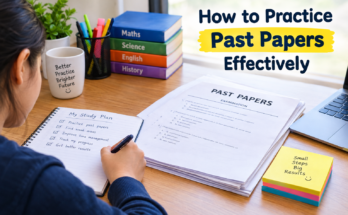

Preparing for exams at home can be one of the best ways to improve your performance if you have the right study routine. I personally believe that studying for long hours is not always the answer. What matters more is how well you use your time, how clearly you understand your subjects, and how consistently you follow your study plan.
When you study at home, you have more control over your environment and schedule. At the same time, there can be many distractions such as your phone, social media, television, family activities, or simply the temptation to relax. That is why good exam preparation requires discipline and a practical approach.
In this article, I will share some simple and useful tips on how to prepare for exams at home, stay focused, remember information, and feel more confident before exam day.
Create a Realistic Study Schedule
The first thing I recommend is creating a realistic study schedule. A study plan gives your day structure and helps you avoid wasting valuable time.
Before making your schedule, write down all the subjects you need to prepare. Then divide them according to their difficulty and importance. Give more study time to subjects that you find challenging.
I prefer making a daily schedule instead of creating an extremely complicated monthly plan. A simple plan is easier to follow and gives you a clear idea of what you need to complete each day.
For example, you could study mathematics in the morning, English in the afternoon, and science in the evening. Include short breaks between study sessions so your mind does not become exhausted.
The important thing is to make a plan that you can actually follow. A schedule that looks perfect on paper but is impossible to maintain will only create stress.
Choose a Quiet Study Space
Your study environment can have a major effect on your concentration. When preparing for exams at home, choose a place where you can study comfortably without unnecessary interruptions.
Your desk should have enough space for your books, notebooks, laptop, and other study materials. Keep unnecessary items away from your study area because a messy desk can make it harder to concentrate.
Good lighting is also important. Try to study in a well lit room, especially when reading or writing for long periods.
I also recommend keeping your phone away while studying. If you need your phone for educational purposes, turn off unnecessary notifications and avoid opening social media during study sessions.
Set Clear Study Goals
Instead of simply saying, “I will study science today,” set a specific goal.
For example, you could decide to complete two chapters, revise a particular topic, or solve twenty practice questions.
Clear goals make studying more productive because you know exactly what you want to accomplish.
I find that smaller goals are easier to manage. Completing several small tasks can also give you a sense of progress and motivation.
At the end of each study session, check what you completed. If something remains unfinished, move it to another realistic study session rather than becoming frustrated.
Understand the Syllabus
One of the most important exam preparation tips is to understand your syllabus before you start studying seriously.
Read the syllabus carefully and identify the chapters and topics that can appear in the exam. This prevents you from spending too much time on information that is not relevant.
You can divide your syllabus into three groups: topics you know well, topics you partly understand, and topics that you find difficult.
Start by reviewing familiar topics quickly. Then spend more time on areas where you need improvement.
This approach helps you use your study time more efficiently.
Use Active Learning Techniques
Simply reading your textbook again and again may not be the most effective way to prepare for exams. I believe active learning is much more useful.
After reading a topic, close your book and try to explain what you learned in your own words. You can also write down the main points without looking at your notes.
Another useful technique is asking yourself questions. For example, after studying a history chapter, ask yourself what happened, why it happened, and what the important results were.
For science and mathematics, solving practice questions can be especially helpful.
The goal is to make your brain work with the information instead of simply looking at it.
Make Short and Useful Notes
Good notes can make exam revision much easier. You do not need to rewrite your entire textbook.
Instead, write down important definitions, formulas, dates, concepts, examples, and key points.
I prefer using simple language in notes because it makes revision faster. If a concept is difficult, explain it in a way that makes sense to you.
You can also use headings and bullet points to organize information. When exam day gets closer, these short notes can save a lot of time because you will not have to read every chapter from the beginning.
Practice With Past Papers
Past papers are one of the most useful tools for exam preparation. They can help you understand the type of questions that may appear and show you where you need more practice.
Try solving past papers without checking your notes. Give yourself a reasonable time limit and attempt the paper like a real exam.
After finishing, check your answers carefully. Do not only look at your marks. Study your mistakes and understand why you made them.
If you repeatedly make the same mistake, spend extra time reviewing that topic.
Practice tests can also improve your time management and reduce exam anxiety because you become more familiar with answering questions under pressure.
Take Regular Breaks
Studying continuously for several hours does not necessarily mean you are learning effectively.
Your brain needs regular breaks to stay focused. After a focused study session, take a short break. Stand up, walk around, drink some water, or simply relax for a few minutes.
Try not to spend your entire break scrolling through social media because it can make it harder to return to your studies.
Short and refreshing breaks can help you maintain concentration throughout the day.
Get Enough Sleep
Sleep is an important part of exam preparation that students sometimes ignore.
Staying awake all night to study may seem productive, but tiredness can make it harder to concentrate, remember information, and think clearly.
Try to maintain a regular sleep schedule during your preparation. Getting enough rest can help your brain process and remember what you studied.
I would rather study efficiently during the day and get proper sleep at night than spend the entire night studying while feeling exhausted.
Eat Well and Stay Hydrated
Your study routine should also include healthy habits. Drink enough water throughout the day and eat regular meals.
During long study sessions, keep water nearby so you do not forget to drink.
Balanced meals can help you maintain energy while preparing for exams. Avoid relying heavily on sugary snacks and caffeinated drinks simply to stay awake.
A healthy routine can support better concentration and help you feel more comfortable during long study periods.

Avoid Multitasking
Multitasking can make studying less effective. If you are reading a chapter while checking messages, watching videos, and browsing social media, your attention is divided.
I recommend focusing on one study task at a time.
For example, decide that for the next study session you will work only on mathematics. Once you finish, take a short break and then move to another subject.
This simple habit can improve concentration and help you complete your work faster.
Revise Regularly
Do not wait until the night before the exam to revise everything.
Regular revision helps keep information fresh in your memory. After learning a topic, review it again after some time. Later, test yourself without looking at your notes.
You can create a simple revision cycle where you review difficult topics more frequently and familiar topics less often.
As the exam approaches, focus on important concepts, practice questions, formulas, definitions, and areas where you previously made mistakes.
Manage Exam Stress
Feeling nervous before an exam is normal. However, excessive stress can make preparation more difficult.
The best way to manage exam stress is to prepare consistently rather than leaving everything until the last minute.
When you feel overwhelmed, take a short break and organize your tasks again. Focus on what you can complete today instead of worrying about the entire syllabus at once.
Simple activities such as walking, stretching, breathing exercises, and talking with someone you trust can also help you relax.
Remember that one exam does not define your entire ability or future. Your goal should be to prepare as well as you reasonably can.
Prepare Everything Before Exam Day
The night before your exam, prepare everything you will need.
Check your stationery, identification documents, calculator if permitted, and any other required materials. Confirm the exam time and location if you are going to an exam center.
Avoid starting a completely new and difficult topic at the last minute. Instead, review your important notes and focus on staying calm.
Try to get proper sleep rather than sacrificing your rest for a few extra hours of studying.
Final Thoughts
Learning how to prepare for exams at home is mainly about creating a balanced and consistent routine. You do not need to study every minute of the day to achieve good results.
In my opinion, the most effective approach is to create a realistic study schedule, choose a quiet study space, set clear goals, understand your syllabus, use active learning, practice past papers, revise regularly, and take care of your sleep and health.
Most importantly, do not compare your study routine with someone else’s. Everyone learns differently. Find a method that works for you and improve it as you go.
If you start early and remain consistent, exam preparation can become much less stressful. Instead of trying to memorize everything at the last moment, you can build your understanding step by step and walk into the exam room with greater confidence.
The key is simple: study with a plan, practice with purpose, revise consistently, and believe in your preparation.