Preparing for exams can sometimes feel stressful, especially when there are many subjects, chapters, and assignments to complete. However, I believe exam preparation becomes much easier when students follow a simple and realistic study routine. You do not always need to study for many hours to get good results. What matters more is how you use your time, how well you understand your subjects, and how regularly you revise what you have learned.
In my experience, students often make exam preparation harder than it needs to be. They wait until the last few days, try to memorize everything at once, and then become worried when they cannot remember important information. A better approach is to start early, make a simple study plan, practice regularly, and take care of your health.
Here are some simple exam preparation tips for students that can help make studying more organized and effective.
Start Your Exam Preparation Early
One of the most useful exam preparation tips is to start studying before the exam is very close. When you begin early, you have enough time to understand difficult topics and revise them more than once.
I prefer studying a little every day instead of trying to complete an entire subject in one night. Even thirty to sixty minutes of focused study can make a big difference when you do it consistently.
Starting early also gives you time to ask teachers or classmates about topics that you do not understand. You can then improve your knowledge without feeling rushed.
Make a Simple Study Plan
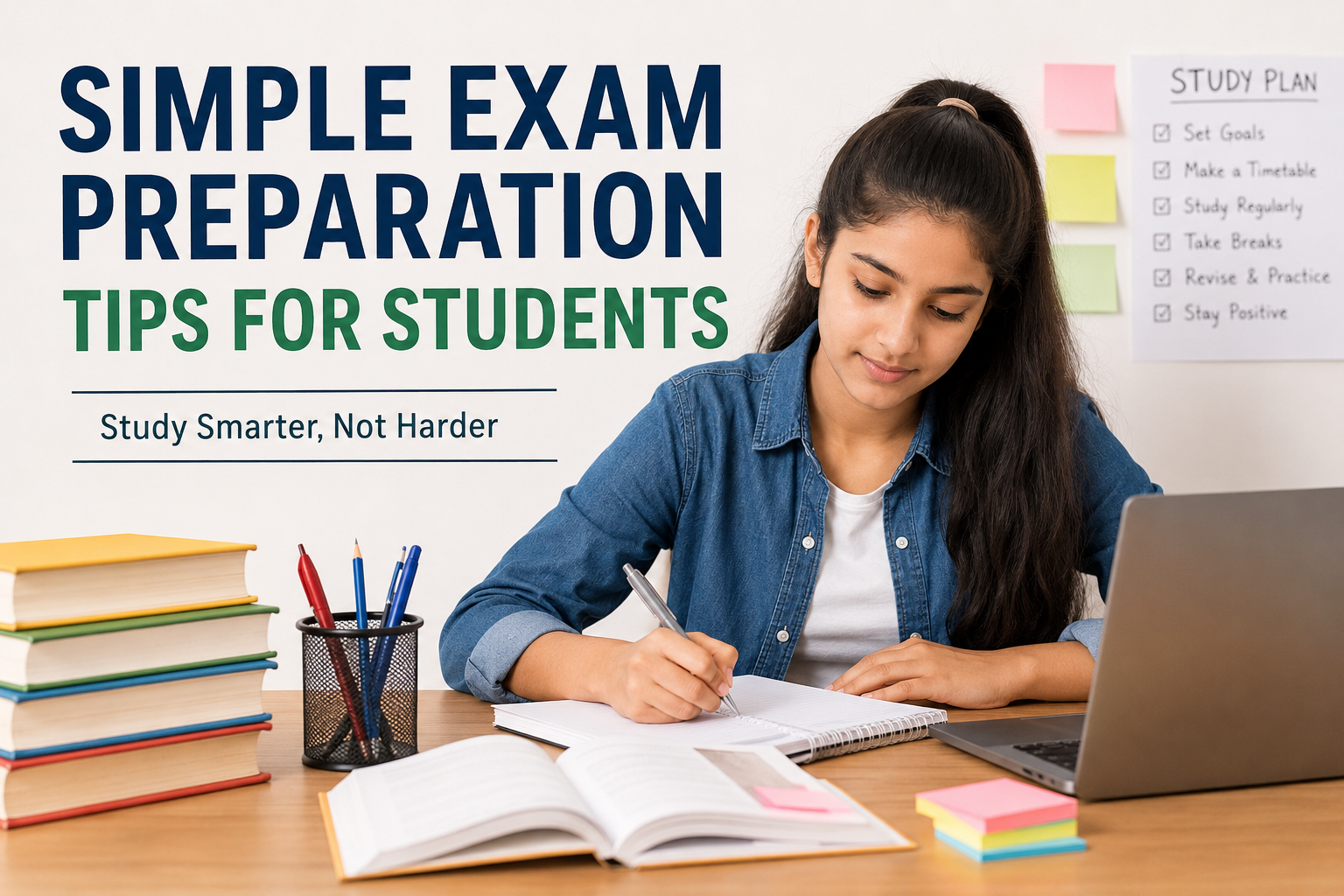
A study plan can help students manage their time and avoid unnecessary stress. Your plan does not have to be complicated. Write down your subjects and decide how much time you want to give each one.
For example, you might study mathematics in the morning, science in the afternoon, and English in the evening. If one subject is more difficult for you, give it some extra time.
I recommend creating daily study goals instead of making an unrealistic schedule. Your goal could be completing two chapters, solving twenty questions, or revising a particular topic.
A simple study plan helps you know what to do next instead of wasting time deciding where to start.
Choose a Comfortable Study Place
Your study environment can have a big effect on your concentration. Try to choose a quiet and comfortable place where you can study without unnecessary interruptions.
Keep your books, notebooks, pens, and other study materials nearby. A clean desk can also make it easier to concentrate.
I personally think students should keep their phones away while studying if they are easily distracted by social media, games, or messages. You can check your phone during your break instead of using it throughout your study session.
Understand Instead of Only Memorizing
Memorization can be useful for some subjects, but understanding the topic is usually much more helpful. When you understand an idea, you can often remember it for a longer time and explain it in your own words.
When studying a difficult chapter, ask yourself simple questions such as what the topic means, why it is important, and how it works. Try explaining the answer as if you were teaching someone else.
This method can quickly show you which areas you understand and which areas need more attention.
Use Short Study Sessions
Studying continuously for several hours does not always mean that you are learning effectively. After a certain amount of time, concentration can decrease.
I find that short and focused study sessions are more practical for many students. You can study for around forty five minutes and then take a short break.
During the break, stand up, drink some water, stretch, or walk around for a few minutes. Then return to your studies with a fresh mind.
The goal is not to sit at your desk all day. The goal is to make the time you spend studying productive.
Make Your Own Notes
Making notes is another simple exam preparation tip that can improve learning. Instead of copying entire chapters, write down important points using your own words.
You can create short summaries, definitions, formulas, examples, and important facts. These notes can become very useful when you begin your final revision.
I recommend keeping your notes simple and organized. Use headings and short points so that you can quickly find the information you need.
Writing information in your own words can also help you understand and remember it better.
Practice With Questions
Reading your textbook is important, but practicing questions is equally valuable. Questions help you discover whether you actually understand the topic.
Solve exercises from your textbook and practice questions from previous exams when they are available. Pay attention to questions that you answer incorrectly.
Instead of feeling bad about mistakes, use them as learning opportunities. Check your answer, understand where you went wrong, and try the question again.
For subjects such as mathematics, science, and accounting, regular practice can be especially helpful because students need to apply what they have learned.
Revise Regularly
Revision is one of the most important parts of exam preparation. Learning something once does not guarantee that you will remember it during the exam.
Try to revise topics regularly after learning them. You can review your notes at the end of the day and then return to the same topics later in the week.
Before the exam, focus more on important concepts, formulas, definitions, difficult chapters, and questions you previously found challenging.
Regular revision can reduce the pressure of trying to remember everything at the last minute.
Take Care of Your Sleep
Many students sacrifice sleep when exams are approaching. I understand why students do this, but staying awake all night is not always a good study strategy.
Your brain needs rest to work properly. If you are extremely tired, it can become harder to concentrate, understand information, and remember what you studied.
Try to maintain a regular sleeping routine during your exam preparation. Getting enough rest can help you feel more focused and confident when you study and when you sit for your exam.
Eat Well and Drink Enough Water
Your physical health also matters during exam preparation. Students often become so focused on studying that they forget to eat properly or drink enough water.
Try to include balanced meals in your daily routine. Fruits, vegetables, grains, protein, and other nutritious foods can support your overall energy.
Keep water nearby while studying and drink regularly. You do not need complicated foods or special products. Simple healthy habits can be enough to support your study routine.
Avoid Last Minute Cramming
Last minute studying can create unnecessary pressure. When students try to learn everything in one night, they may remember some information temporarily but forget it soon after.
Instead of waiting until the final day, divide your syllabus into smaller sections and complete them gradually.
The final day before an exam should mainly be used for light revision and reviewing important points. It is usually better to enter the exam feeling rested and prepared rather than exhausted from studying all night.
Stay Positive During Exam Preparation
Your mindset can have a major influence on your preparation. It is normal to feel nervous before exams, especially when an important test is approaching.
Try not to compare your progress with other students. Everyone has different strengths, weaknesses, and learning speeds.
If you find a difficult topic, do not immediately assume that you cannot learn it. Give yourself more time, try another explanation, practice a few questions, and ask for help when necessary.
I believe confidence does not come from knowing everything. It comes from knowing that you have prepared honestly and consistently.
Review Your Weak Subjects
Most students have some subjects or topics that they find more difficult than others. Ignoring these areas will not make them easier.
Identify your weak topics early and give them additional study time. You can start with the basics and gradually move toward more difficult questions.
At the same time, do not completely ignore subjects you already understand. A balanced study routine should include both revision of strong areas and improvement of weak ones.
Prepare Everything Before Exam Day
The night before your exam, make sure you have everything you need. Prepare your stationery, identification documents if required, water bottle, and other necessary items according to your school’s or examination center’s rules.
Check the exam time and location so you do not have to worry about these details in the morning.
I think preparing these small things in advance can make exam day much calmer. You can focus on the test instead of searching for something at the last minute.
Final Thoughts
Simple exam preparation does not have to be complicated. In my view, the best approach is to start early, create a realistic study plan, understand your subjects, practice questions, revise regularly, and take care of your health.
Remember that studying for exams is not only about spending long hours with books. Good preparation is about using your time wisely and building consistent habits.
If you study a little every day, focus on your weak areas, take useful breaks, sleep properly, and remain positive, you can approach your exams with much greater confidence.
Every student has a different learning style, so experiment with different study methods and find what works best for you. The most important thing is to stay consistent and avoid giving up when a topic feels difficult.
With a simple plan and regular effort, exam preparation can become less stressful and much more manageable.
Frequently Asked Questions
How many hours should a student study for exams?
There is no single number that works for everyone. Focus on productive study sessions rather than counting hours. Your study time should depend on your subjects, exam schedule, and personal learning needs.
What is the best way to prepare for exams?
Start early, make a realistic study plan, understand your lessons, practice questions, and revise regularly. Taking proper breaks and getting enough sleep are also important.
How can I remember what I study?
Understanding information, making your own notes, practicing questions, and revising topics regularly can help improve your memory.
Should I study the night before an exam?
Light revision can be useful, but avoid staying awake all night. Getting enough rest can help you stay focused and alert during the exam.
How can I reduce exam stress?
Prepare early, organize your study time, take regular breaks, sleep properly, and avoid comparing yourself with others. Being prepared can make exams feel much more manageable.