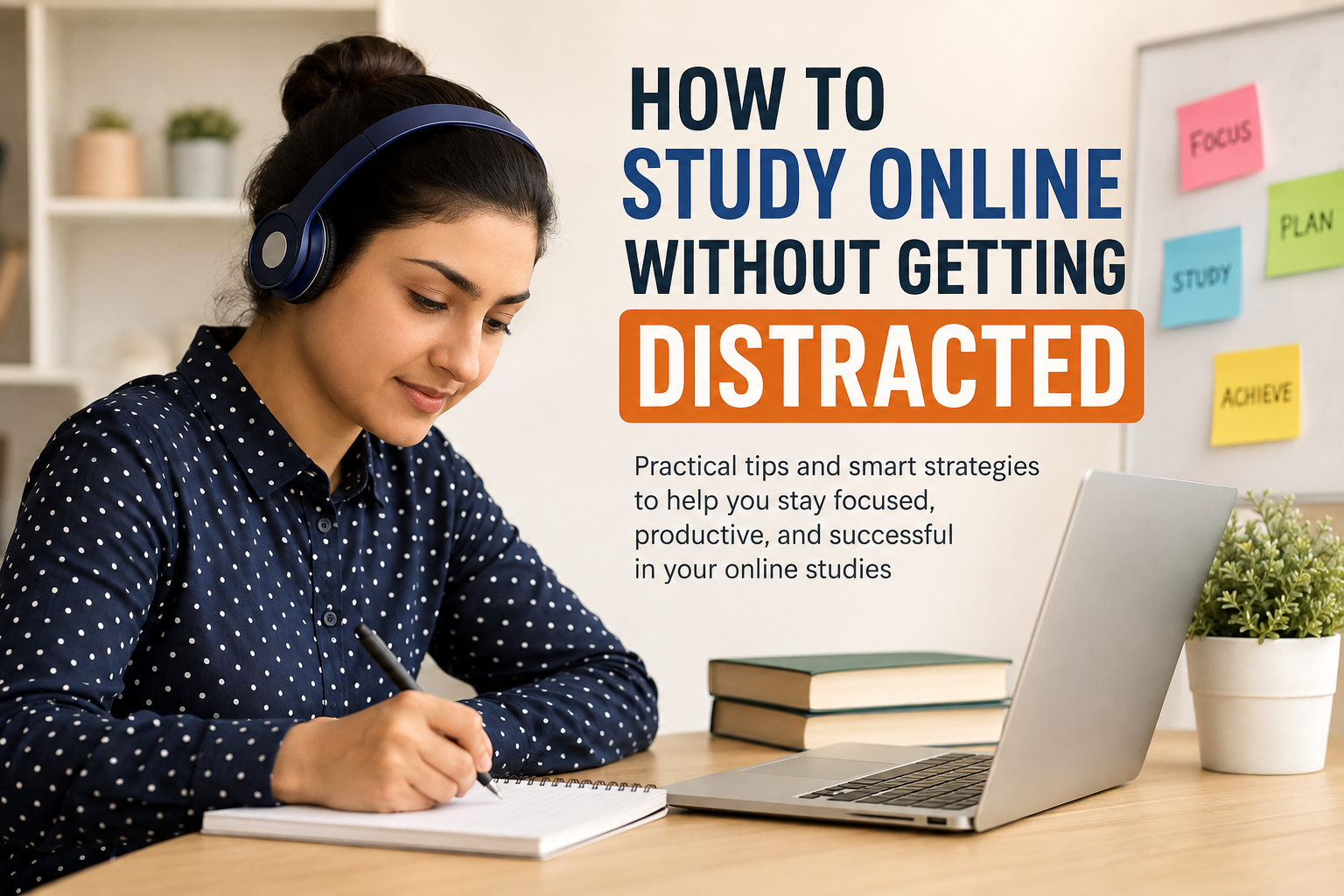
Studying online can be convenient, flexible, and affordable, but staying focused is not always easy. When I study online, I know how quickly a simple study session can turn into checking social media, watching unrelated videos, replying to messages, or browsing websites that have nothing to do with my studies. The internet gives us access to almost unlimited information, but it also provides unlimited distractions.
The good thing is that learning how to study online without getting distracted is a skill that can be developed. In my experience, the biggest difference comes from having a clear plan, creating a suitable study environment, controlling digital distractions, and taking regular breaks.
If you are a student, online learner, or someone taking courses from home, these simple strategies can help you improve your online study habits and make your study time more productive.
Why Online Studying Can Be Difficult
Online learning gives you more freedom than traditional classroom learning. You can often choose when and where to study. However, this freedom also means that you have to manage yourself.
When there is no teacher sitting in front of you, it can be tempting to open another browser tab or check your phone. Notifications can interrupt your concentration even when you only look at them for a few seconds.
Another problem is that studying online usually requires the same device that provides entertainment. Your laptop or phone can be used for education, but it can also provide games, social media, videos, shopping, and messages.
This is why successful online studying is not only about working harder. It is also about making distractions harder to access.
Set a Clear Study Goal
Before starting an online study session, I recommend deciding exactly what you want to accomplish.
Instead of saying, “I will study for three hours,” create a specific goal such as:
“Today I will complete two lessons and make notes on the main concepts.”
A clear goal gives your study session direction. It also makes it easier to know when you have completed your work.
Try to keep your goals realistic. If you create a huge list of tasks, you may feel overwhelmed before you even begin. I prefer choosing a few important tasks and completing them properly.
You can write your goal in a notebook or on a small piece of paper beside your computer. This simple habit can help remind you why you started studying whenever you feel tempted to get distracted.
Create a Dedicated Study Space
Your study environment has a major effect on your concentration.
If possible, choose one specific place for online studying. It does not have to be a large room or an expensive home office. A simple desk with a comfortable chair, good lighting, your laptop, notebook, and study materials can be enough.
I try to keep unnecessary items away from my study area. A messy desk can make it harder to concentrate because there are many things competing for your attention.
Your study space should also be comfortable without being too relaxing. Studying in bed may sound comfortable, but it can make you feel sleepy and less focused.
A dedicated study space can train your brain to associate that location with learning and concentration.
Put Your Phone Away
For many students, the phone is one of the biggest sources of distraction.
Even when you are not actively using it, a notification can make you want to check the screen. Once you pick up your phone, a quick check can easily become twenty minutes of scrolling.
When I need to concentrate, I prefer putting my phone on silent mode and keeping it away from my desk. If you need your phone for studying, turn off unnecessary notifications and keep only the applications you actually need.
You can also use focus mode or do not disturb features if your device provides them.
The goal is not to completely avoid technology. The goal is to make technology work for your studies instead of allowing it to control your attention.
Remove Unnecessary Browser Tabs
Another useful online study tip is to keep your browser organized.
If you have social media, entertainment websites, shopping pages, and unrelated videos open while studying, you are creating opportunities to become distracted.
Before starting your lesson, close unnecessary tabs. Keep only the websites and documents required for your current task.
If you need to research something online, write down what information you need before searching. This can prevent random browsing.
For example, instead of searching broadly for a topic and clicking every interesting result, decide exactly what question you need to answer.
Use Short Study Sessions
You do not always need to study for several hours without stopping.
Long study sessions can become tiring, especially when you are watching lectures or reading difficult material. I find it more useful to divide study time into smaller focused sessions.
You could study for around 25 to 50 minutes and then take a short break. During the break, stand up, drink water, stretch, or walk around for a few minutes.
The important thing is to make your break an actual break. If you spend the entire break scrolling through social media, you may find it difficult to return to your studies.
Short focused sessions can make online learning feel more manageable.
Use a Simple Study Schedule
A study schedule can help you stay consistent.
You do not need to create a complicated timetable. Start by deciding when you are normally most focused. Some people concentrate better in the morning, while others prefer studying in the afternoon or evening.
Choose a regular study time and try to follow it.
For example, you might study from 9:00 to 10:00 in the morning, take a break, and then complete another session later.
A regular schedule reduces the need to decide every day when you will study. Once the routine becomes familiar, starting your study session can become much easier.
Study Actively Instead of Just Watching
One reason online students lose focus is passive learning.
Watching a long lecture without taking notes can make your mind wander. Instead of simply watching, try to interact with the material.
Take notes, write questions, summarize important ideas, and test yourself after completing a lesson.
For example, after watching a lecture, close the video and explain the main concept in your own words. If you cannot explain it, go back and review the difficult section.
Active studying requires more mental effort, but it can also make learning more interesting.
Avoid Multitasking
Multitasking may feel productive, but it can make studying less effective.
If you are watching an online lecture while checking messages and browsing social media, your attention is constantly moving between different activities.
I prefer focusing on one study task at a time.
If you are reading a chapter, read it. If you are watching a lecture, watch it. If you are completing an assignment, focus on the assignment.
Once the task is finished, you can move to something else.
Single tasking allows you to give your full attention to the activity in front of you.
Use Website and App Blocking Tools
If you repeatedly find yourself visiting distracting websites, consider using a website blocker or focus application.
These tools can temporarily restrict access to websites that you normally visit during study time.
For example, you might block social media websites for one hour while completing an online course.
This can be especially useful if you know that self control is difficult in the beginning. Instead of depending entirely on willpower, you create an environment where distractions are less available.
Keep Your Study Materials Ready
Preparation can save time and reduce distractions.
Before starting your online study session, collect everything you need. Keep your notebook, pen, textbook, water, charger, and required websites ready.
If you constantly stop studying to search for materials, you create more opportunities to become distracted.
I like preparing my study area before beginning because it gives me a feeling that the session has officially started.
Take Care of Your Body
Concentration is not only a mental issue. Your physical condition also matters.
If you are hungry, dehydrated, tired, or uncomfortable, focusing on an online lesson can become much harder.
Try to drink enough water and eat balanced meals. Take short movement breaks during long study sessions. Make sure your chair and desk are comfortable.
Sleep is also important. Studying late into the night may seem productive, but being extremely tired can reduce your ability to understand and remember information.
Good study habits work better when they are supported by healthy daily routines.
Make Your Study Sessions Interesting
Sometimes distraction happens because the material feels boring.
If you are struggling to stay interested, try changing your learning method.
You can create diagrams, write summaries, use flashcards, answer practice questions, or explain the topic to yourself.
For difficult subjects, breaking a large topic into smaller sections can also help.
For example, instead of trying to learn an entire chapter in one session, divide it into several smaller concepts.
Small achievements can keep you motivated and make studying feel less overwhelming.
Reward Yourself After Studying
There is nothing wrong with giving yourself a small reward after completing your study goal.
For example, after finishing an important lesson, you could take a walk, have a snack, listen to music, or spend some time on entertainment.
The important point is to reward completed work rather than using entertainment as a way to avoid starting.
When you connect focused study with a positive reward, it can become easier to build a consistent routine.
Do Not Expect Perfect Concentration
One important lesson I have learned is that nobody stays focused perfectly all the time.
You will sometimes check your phone, open an unnecessary website, or lose concentration during a lecture. This does not mean you are a bad student.
When you notice that you have become distracted, simply return to your task.
Do not spend another thirty minutes feeling guilty about losing five minutes.
The goal is to improve your focus gradually.
Final Thoughts
Learning how to study online without getting distracted requires practice, but it is absolutely possible. The most useful habits are simple: create a clear study goal, prepare a dedicated study space, put your phone away, close unnecessary browser tabs, use focused study sessions, follow a schedule, and actively engage with your learning material.
In my opinion, the biggest secret is not trying to become perfectly disciplined overnight. Instead, make small changes that reduce distractions and make focused studying easier.
Online education gives us an incredible opportunity to learn from almost anywhere. When we learn how to control our attention, we can use that opportunity much more effectively.
Start with one or two strategies today. Once they become part of your routine, add more. Over time, these small habits can turn online studying from a constant battle with distractions into a more focused, organized, and productive learning experience.