Preparing for an exam can feel stressful, especially when there is a lot of material to cover and limited time available. From my experience, the biggest problem is often not a lack of intelligence or ability. It is usually the way we prepare. Students can spend many hours studying but still feel unprepared because they make common exam preparation mistakes without realizing it.
Good exam preparation is not simply about studying for longer hours. It is about using your time wisely, understanding what you need to learn, practicing regularly, and taking care of your mind and body. In this article, I will share some common exam preparation mistakes and explain how students can avoid them with simple and practical strategies.
Starting Exam Preparation Too Late
One of the most common exam preparation mistakes is waiting until the last few days before the exam. Many students believe they can learn everything quickly when the exam gets closer. This approach usually creates unnecessary pressure.
When you start studying late, you may have to cover several chapters in a short period. Instead of understanding the topics properly, you may simply try to memorize information. This can make it difficult to remember answers during the exam.
I believe the best approach is to start exam preparation early. You do not need to study for many hours from the first day. Even thirty to sixty minutes of focused study each day can make a big difference when you have several weeks available.
Studying Without a Plan
Another common mistake is opening a book and studying whatever topic seems interesting at the moment. While this may feel productive, it can leave important subjects unfinished.
A simple study plan can help you understand what needs to be completed each day. Before starting your exam preparation, look at the syllabus and divide it into smaller sections. Give yourself realistic daily goals instead of trying to finish everything at once.
For example, you can decide to study one chapter in the morning, practice questions in the afternoon, and review important points in the evening. A flexible study schedule is usually more useful than an unrealistic timetable that is difficult to follow.
Trying to Memorize Everything
Memorization can be useful for certain subjects, but relying completely on memorization is another exam preparation mistake. If you only memorize sentences from your textbook, you may struggle when the exam asks questions in a different way.
I prefer to understand the main idea first and then remember the important details. When you understand a concept, it becomes easier to explain it in your own words.
Try asking yourself simple questions while studying. What does this topic mean? Why is it important? How does it work? Can I explain it without looking at my notes?
These questions can help turn passive reading into active learning.
Ignoring Practice Questions
Reading notes repeatedly can give you the feeling that you know everything. However, reading and answering questions are two different skills.
One of the best ways to improve exam preparation is to practice questions regularly. Previous exam papers, sample questions, quizzes, and textbook exercises can help you understand the type of questions you may face.
Practice also helps you discover weak areas. If you repeatedly make mistakes in one topic, you know that you need to spend more time understanding it.
I recommend keeping a small list of difficult topics and reviewing them regularly instead of avoiding them.
Studying for Long Hours Without Breaks
Some students think that studying for five or six hours without stopping is the best way to prepare for exams. In reality, long study sessions can make concentration difficult.
Your brain needs short breaks to stay focused. After studying for a reasonable period, take a short break. Stand up, drink some water, walk around, or simply relax for a few minutes.
The goal is not to spend the entire day sitting at a desk. The goal is to make the study time you have as productive as possible.
Using Your Phone Too Much
Mobile phones can be one of the biggest distractions during exam preparation. You may plan to check one message for a minute and suddenly realize that thirty minutes have passed.
Social media, videos, games, and notifications can easily interrupt your concentration.
When I need to focus on an important task, I believe it is better to keep the phone away from the study area. You can turn off unnecessary notifications or use focus mode if needed.
You do not have to completely avoid your phone. The important thing is to control when and how you use it.
Neglecting Sleep
Staying awake all night to study may seem like a way to gain extra study time, but it can make learning harder. Lack of sleep can affect concentration, memory, mood, and energy.
Good exam preparation should include proper sleep. Try to maintain a consistent sleeping schedule, especially during the days before your exam.
If you study late every night and sleep only a few hours, you may find yourself tired when you actually need your brain to work at its best.
Ignoring Food and Exercise
Students sometimes focus so much on their books that they forget about basic health habits. Skipping meals or sitting all day can make you feel tired and uncomfortable.
You do not need a complicated fitness routine during exam preparation. A short walk, some stretching, or light physical activity can help you feel refreshed.
Eating regular balanced meals and drinking enough water can also support your energy throughout the day.
Avoiding Difficult Subjects
It is natural to prefer subjects or chapters that feel easy. However, spending all your time on topics you already understand does not improve your preparation as much as working on difficult areas.
One useful strategy is to identify your weakest topics early. Give them extra attention while you still have enough time.
You do not need to master everything in one sitting. Break difficult subjects into smaller parts and work through them step by step.
Making Beautiful Notes Instead of Learning
Creating organized notes can be helpful, but sometimes students spend more time decorating notes than actually studying.
Colorful headings, highlighting, and neat handwriting can make notes easier to read, but they should support learning rather than replace it.
Your notes should help you remember important information quickly. Keep them simple, clear, and focused on key concepts.
Comparing Your Preparation With Others
Every student has a different learning style, schedule, and level of understanding. Comparing yourself constantly with classmates can create unnecessary stress.
Someone may say they have already completed the entire syllabus, while you may still be working through the basics. This does not automatically mean you will perform poorly.
Instead of worrying about how much another person has studied, focus on your own progress. Ask yourself whether you understand more today than you did yesterday.
Not Reviewing What You Have Studied
Another mistake is studying a topic once and never returning to it. Without regular revision, information can become difficult to remember.
Revision does not always mean reading the entire chapter again. You can review summaries, flashcards, important formulas, definitions, diagrams, or practice questions.
A short review several times can be more useful than one extremely long revision session before the exam.
Ignoring Exam Instructions
Preparing academically is important, but understanding the exam itself is also necessary. Students sometimes lose marks because they do not read instructions carefully.
Before the exam, understand the question format, marking system, time limit, and types of questions. During the exam, read each question properly before answering.
Do not rush simply because other students are writing quickly. Your goal should be to use your available time effectively.
Leaving Everything for the Final Day
The day before an exam should not become a complete learning session. If you leave most of your preparation until the final day, stress can increase significantly.
Use the final day mainly for light revision and reviewing important points. Prepare your stationery and other necessary items in advance so you do not have to worry about small things at the last minute.
Getting enough sleep before the exam is often more useful than trying to learn another large chapter at midnight.
How to Improve Your Exam Preparation
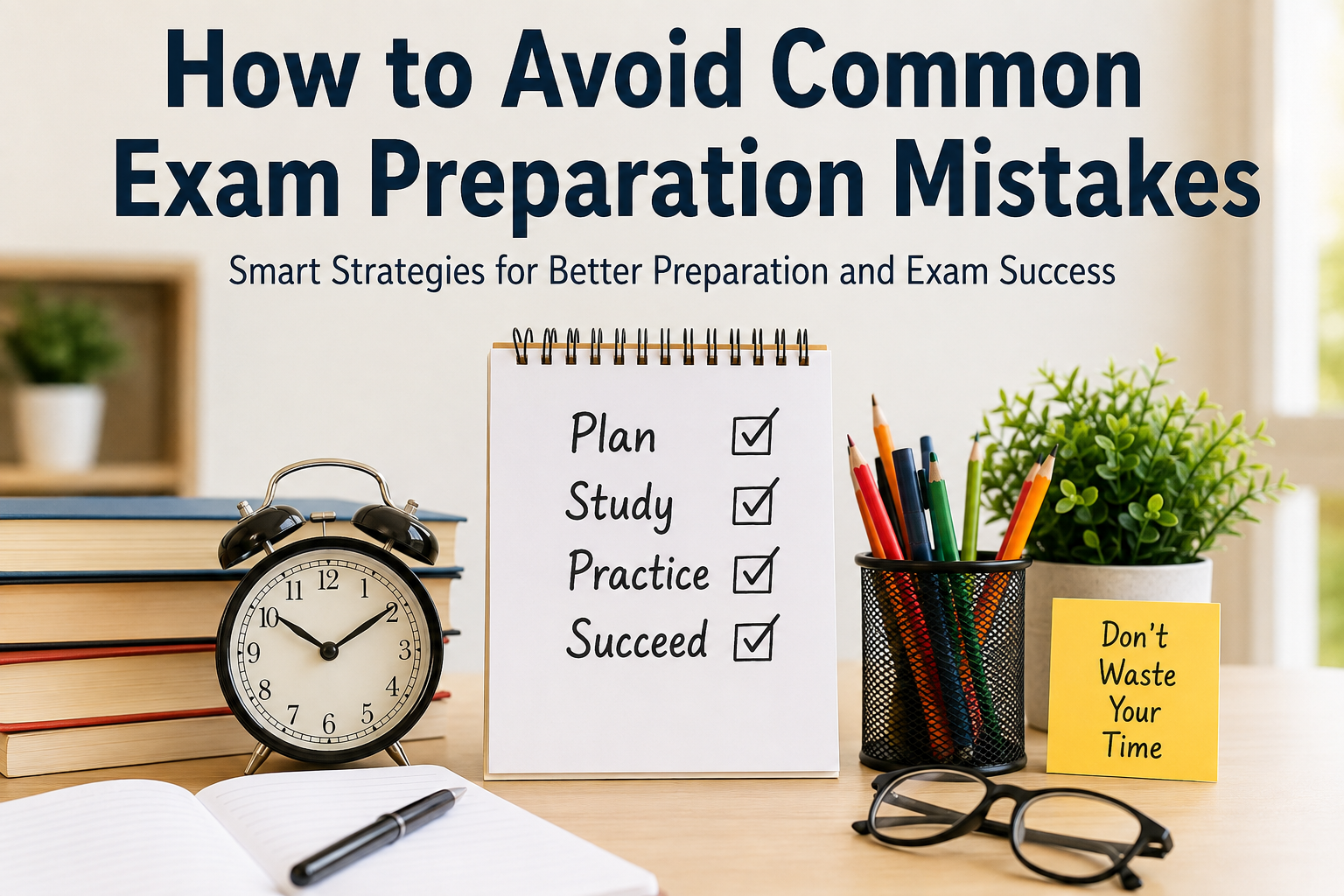
Avoiding common exam preparation mistakes becomes easier when you create a simple routine. Start early, make a realistic study schedule, understand concepts, practice questions, revise regularly, and take care of your health.
I also believe that students should track their progress. At the end of each study session, spend a minute thinking about what you learned and what still needs attention.
If something did not go well today, do not treat it as a failure. Adjust your plan and continue tomorrow.
Final Thoughts
Exam preparation does not have to be overwhelming. Many students make the same mistakes, such as starting too late, studying without a plan, ignoring practice questions, using their phones too much, and sacrificing sleep.
The good news is that these mistakes can be avoided.
From my point of view, successful exam preparation is about consistency rather than perfection. You do not need to study every minute of the day. You need to study with purpose and make steady progress.
Start early, focus on understanding, practice what you learn, revise regularly, and give yourself enough time to rest. When you build these habits, you can approach your exams with greater confidence and less unnecessary stress.
The most important thing is to remember that effective exam preparation is not about how many hours you sit with a book. It is about how well you use those hours.